
Second quarter bank earnings begin this week, with several major U.S. financial institutions set to report results in the coming days. Investors will parse loan growth, deposit trends, and credit conditions closely. But a different question is drawing attention among high-net-worth clients: where exactly their assets sit within a financial institution’s structure.
A recent intelligence assessment described parts of a major foreign banking system as resting on debt-fueled growth, raising the possibility of a banking crisis and even discussion of pension asset seizure in a worst-case scenario.
That kind of headline, even from outside North American markets, tends to prompt private clients everywhere to ask harder questions. A wealth advisor at Prime Lake Capital says this is precisely the conversation clients should be having, regardless of where they bank.
Pooled accounts versus segregated structures
Most retail banking relies on a pooled account model. Client deposits sit on the bank’s own balance sheet, technically making the client an unsecured creditor of the institution. In normal conditions this distinction rarely matters. During a banking crisis, it can matter enormously.
A segregated client account structure works differently. Client assets are held separately from the firm’s own capital, reducing exposure if the institution itself runs into financial trouble. This is standard practice in serious wealth management but far less common in everyday retail banking.
What this week’s earnings season will and will not reveal
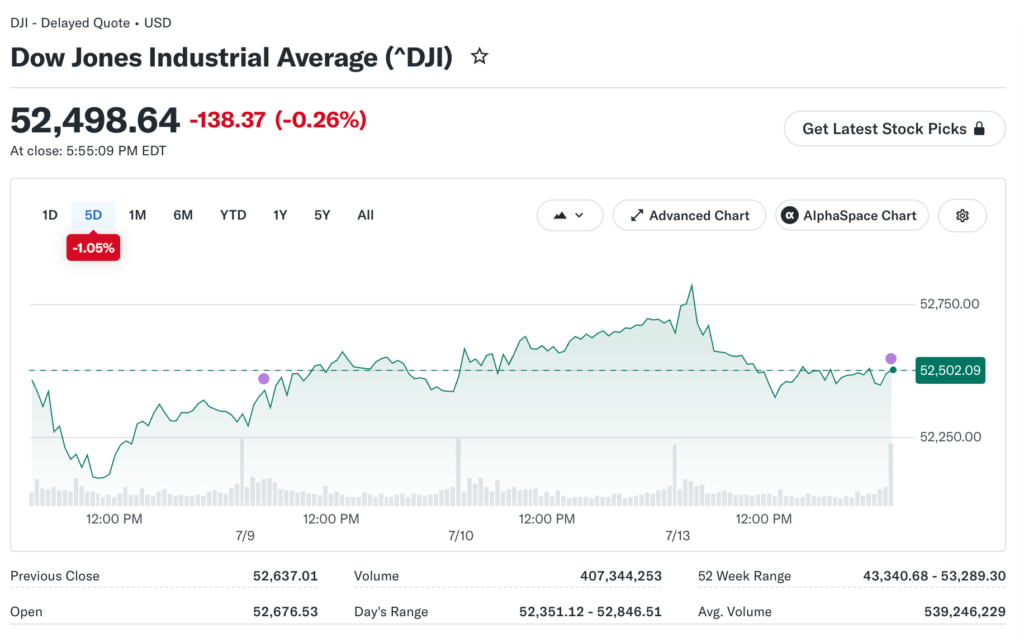
Several major financial institutions report second quarter results this week, and markets will watch closely for signs of credit stress or slowing loan growth. The Dow Jones Industrial Average closed near 52,637 last week, supported partly by strength in financial sector names.
Strong headline earnings do not, by themselves, answer the custody question. A bank can post solid quarterly profit and still hold client funds in a structure that leaves depositors exposed in a severe downturn. These are separate issues, and investors sometimes conflate them.
Questions worth asking before moving significant assets
Private clients evaluating a wealth management relationship should ask a short list of direct questions, including whether client assets are held in a segregated structure separate from firm capital, what happens to client holdings if the firm itself faces financial difficulty, and how often account statements are independently verified against actual holdings.
Client asset protection is not a marketing phrase. It is a structural feature that either exists or does not, and it is worth confirming in writing rather than assuming.
Why this matters more during volatile stretches
Markets have been unusually active this summer. Oil prices jumped roughly 5 percent this week on renewed Middle East tension, while semiconductor stocks fell sharply after a steep single-day decline in a major Asian chipmaker. Volatile stretches like this tend to expose weaknesses in financial structures that go unnoticed during calmer periods.
Clients with meaningful assets under management benefit from understanding their custody arrangement before a stress event occurs, not during one. Structural questions get harder to ask, and answer, once a crisis is already underway. No custody structure guarantees a specific outcome or eliminates market risk. It simply changes how a portfolio is positioned to absorb that risk.

How segregated structures actually function in practice
A segregated account structure typically means client securities are registered in the client’s own name or held through a custodian legally separate from the advisory firm. If the firm managing the account faces financial difficulty, those specific holdings are not part of the firm’s own assets available to its creditors.
This differs meaningfully from a pooled deposit model, where client funds effectively become part of a bank’s general liabilities. The distinction rarely affects day-to-day banking, but it becomes the single most important factor determining outcomes during an actual institutional failure.
What history shows about pooled account risk
Past banking failures have repeatedly shown the same pattern. Depositors in pooled accounts often wait months or years to learn what portion of their funds will be recovered, while assets held in properly segregated structures tend to be returned to clients far more quickly, since there is no ambiguity about ownership.
This history is part of why portfolio management built on segregated custody has become a standard expectation among serious private wealth clients, rather than an optional feature. A portfolio strategist at Prime Lake Capital notes that clients who ask about this structure early rarely need to think about it again, since the protection is built into the account from the start.
The Custody Conversation Investors Keep Postponing
Most investors focus almost entirely on returns and rarely ask where their assets physically sit. That imbalance tends to correct itself only after a crisis, when it is often too late to act.
As earnings season unfolds and markets continue reacting to geopolitical headlines, the more durable question for private clients is not which bank reported the strongest quarter. It is whether their own assets are structured to survive a bad one, wherever that risk originates.