
This has been a banner year for initial public offerings, with several high-profile listings oversubscribed and companies raising billions in fresh capital as investor appetite for new tech names has stayed strong. Brokers from Fonndure dive into this topic to look at one recent IPO that Wall Street analysts now expect to climb by more than 40% over the next 12 months.
The Year’s Biggest Chip IPO
Cerebras Systems completed the year’s biggest IPO as of May, raising more than $5.5 billion and positioning itself as a fresh challenger to AI chip leader Nvidia in a market still dominated by a single player.
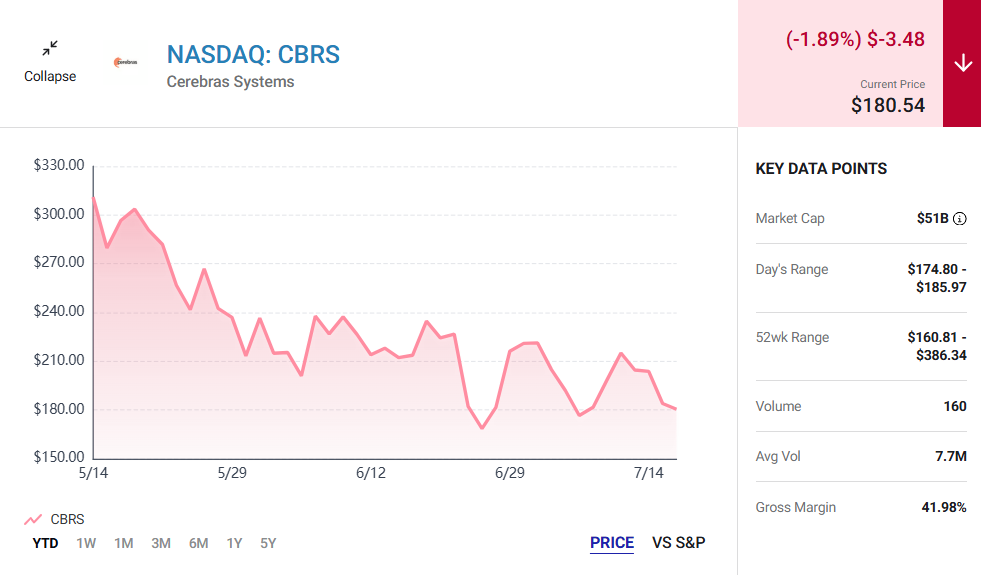
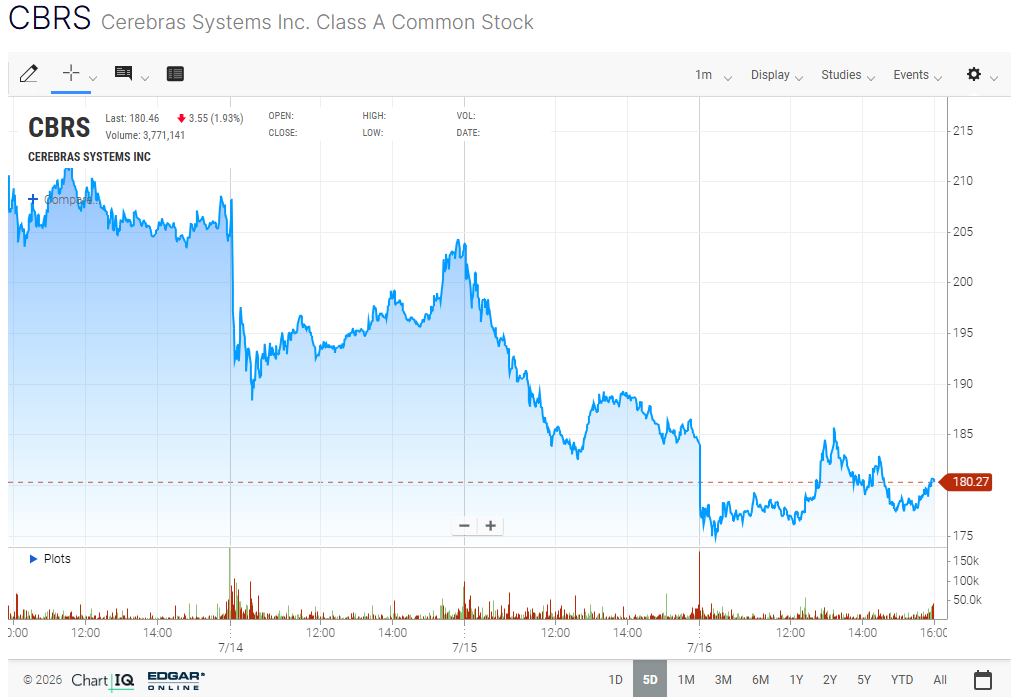
The company designs a giant chip it claims can outpace today’s top graphics processing units, and the average Wall Street price target implies a 47% gain from levels seen around July 15 trading, according to analyst forecasts compiled at the time.
What Makes the Chip Different
Cerebras’ edge comes down to sheer scale, since its chip is 58 times the size of an Nvidia B200 GPU. That size allows it to pack in far more compute and memory bandwidth than conventional chip designs typically allow.
The company says its chip carries more than 2,000 times the memory bandwidth of two Nvidia GPUs working together in tandem, and has completed inference tasks up to 15 times faster than today’s leading GPUs. Customers can access the technology through Cerebras’ own cloud infrastructure or through partner clouds such as Amazon Web Services.
Revenue Growth Is Turning Heads
Adoption numbers back up the technical claims so far, at least based on the figures the company has disclosed publicly. Revenue climbed 92% in the latest quarter to more than $193 million, a pace of growth that suggests real customer demand rather than just early hype around a new listing.
Even with Nvidia still dominating the AI chip market, current compute demand is high enough that room exists for multiple winners to grow alongside it rather than compete head to head for the same customers.
As AI gets applied more broadly to real-world problems, from training through the actual operation of AI agents, that demand for compute looks likely to keep expanding well beyond current levels.
The Risk Worth Watching
Every fast-growing newcomer to the public markets carries risk, and Cerebras is no exception to that pattern. The company has disclosed that a large share of its revenue currently comes from a small handful of customers, meaning any pullback from just one of them could meaningfully hurt overall results.
That concentration risk sits alongside another factor worth noting for anyone evaluating the stock: Cerebras is not yet profitable as a company. Both points are fairly typical for a business at this stage of growth and post-IPO development, but they matter for anyone weighing how much risk they are genuinely willing to take on.
Who This Stock Actually Suits
Whether Cerebras looks like a buy right now depends heavily on an investor’s appetite for risk and their overall time horizon. A more cautious investor may prefer to stick with established, profitable AI chip names such as Nvidia or Advanced Micro Devices, both of which have already delivered consistent earnings growth over time and years of operating history.
Investors comfortable with more volatility, on the other hand, may see this as an early opportunity to add a newer AI name to their portfolio while the growth story is still unfolding and the valuation has not yet fully caught up. Wall Street’s 47% projected gain over the coming year reflects genuine optimism about the underlying technology, even as the company still has plenty to prove on execution.
The Bottom Line
Cerebras represents one of the clearest examples of this year’s wave of high-profile tech IPOs translating into real analyst enthusiasm on Wall Street. The $5.5 billion raised, the 92% revenue growth, and the 47% upside target all point to a company Wall Street believes still has meaningful room to run from current levels.
At the same time, customer concentration and a lack of current profitability are not small details, and they are exactly the kind of risks that separate a speculative growth stock from an established, dividend-paying blue chip.
For investors deciding whether to get involved or not, the honest answer is that it comes down to time horizon, risk tolerance, and how much conviction they have in AI compute demand continuing to outpace available supply over the next several years.