
Monday’s market action offered a compact lesson in correlation risk. The S&P 500 fell about 0.4 percent while the Nasdaq Composite dropped closer to 0.9 percent, pulled down by a memory chip selloff that began overseas.
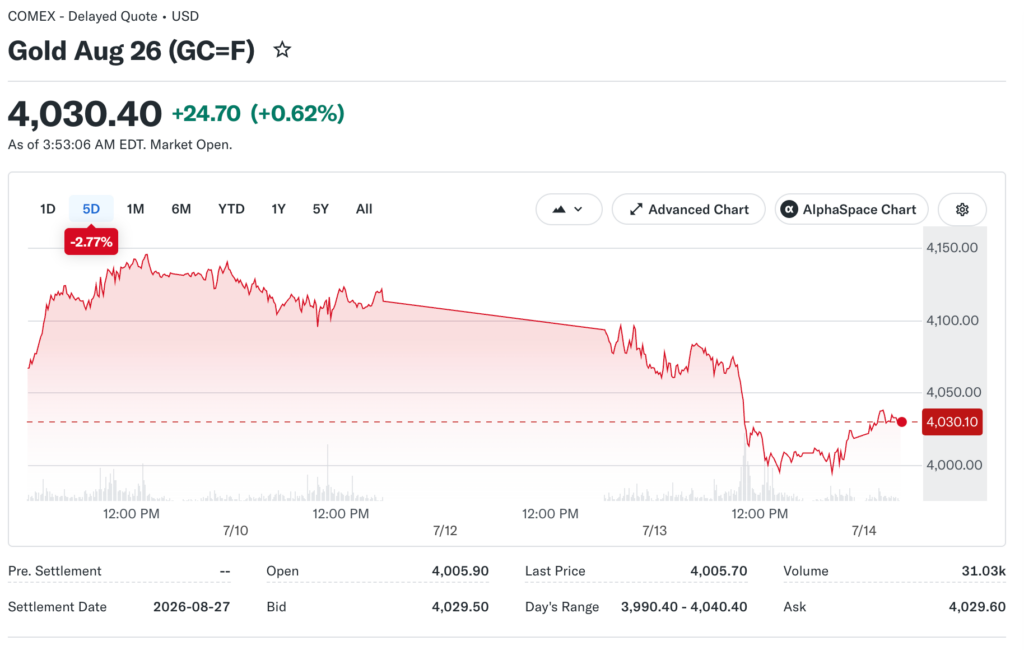
At the same time, gold slid nearly 3 percent to around $4,001 per ounce, and oil jumped roughly 5 percent on Middle East tension. Stocks and the traditional safe-haven asset moved in the same direction, which is not supposed to happen as often as it did this week.
A senior wealth advisor at Prime Lake Capital says days like this expose the limits of a portfolio built only from stocks and bonds. When multiple asset classes fall together, diversification within a single category stops doing its job.
What broke the usual pattern
The semiconductor selloff traced back to a record single-day collapse of more than 15 percent in a major South Korean memory chip maker, tied partly to weak global smartphone shipment data. That decline dragged down related names across the sector, including several major memory and storage producers.
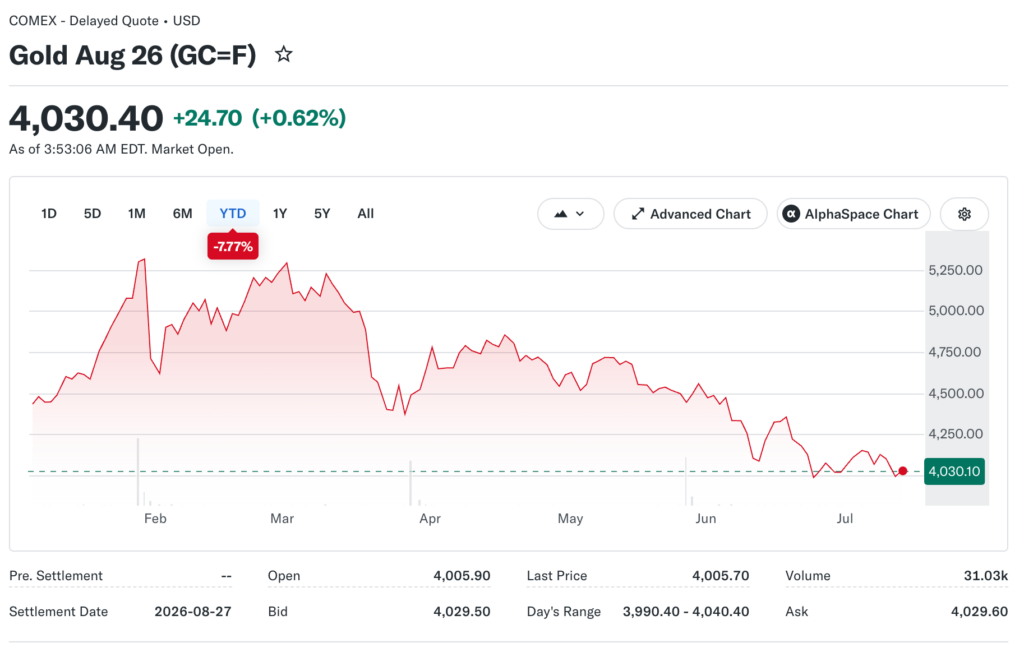
Meanwhile gold, often expected to rise when equities fall, dropped instead. Analysts pointed to profit-taking after a strong first half and technical selling once the price broke below a closely watched support level near $4,200. Correlation between assets can shift quickly, and this week was a reminder that no asset class is a guaranteed hedge in every scenario.
Alternative assets built for a different kind of diversification
Alternative investment strategies aim to reduce dependence on any single market’s daily mood. These typically include private credit, which generates income tied to lending terms rather than public market prices, real assets such as infrastructure or select real estate income streams, and portfolio-backed lending structures that provide liquidity without forcing a sale of core holdings.
None of these guarantee positive returns, and each carries its own risk, including limited liquidity compared to publicly traded securities. The appeal is structural. Their pricing does not move in lockstep with daily equity index swings the way most retail portfolios do.
How institutional investors already use this approach
Large pension funds and endowments have allocated meaningfully to alternative assets for decades, often holding 20 percent or more of total assets outside traditional stocks and bonds. Private wealth clients are increasingly asking why that same approach is not more available to them directly.
A portfolio strategist at Prime Lake Capital notes that access, not appetite, has historically been the barrier. Minimum investment sizes and structural complexity kept many alternative strategies out of reach for all but the largest institutions.
Reading This Week Without Overcorrecting
It would be a mistake to treat one volatile trading session as proof that stocks or gold no longer work as portfolio building blocks. Both remain core to most long term financial plans, and neither should be abandoned based on a single week of price action.
The more useful takeaway is narrower. Portfolio construction benefits from including assets whose returns are not driven by the same daily headlines moving equity and commodity markets.
A portfolio built with that principle in mind tends to hold up better precisely on days like this one, when stocks, gold, and even safe havens move together instead of offsetting each other.
Why access to alternatives has historically been limited
For decades, meaningful allocation to private credit, infrastructure, and similar alternative assets required minimum investments far beyond what most individual investors could commit. Large pension funds and university endowments built these positions gradually, over years, with dedicated staff managing the process.
Private wealth platforms have started closing that gap, structuring access to similar strategies at lower minimums than were previously available. This does not make alternative assets appropriate for every investor, since liquidity constraints and complexity remain real considerations. It does mean the option now exists for a broader range of serious long-term investors, beyond just the largest institutions.
Balancing new exposure without overcorrecting
Adding alternative assets to a portfolio works best as a gradual, measured process rather than a sudden shift triggered by one volatile week. A portfolio strategist at Prime Lake Capital recommends reviewing overall portfolio construction annually, adjusting allocation incrementally as circumstances change.
This measured approach avoids the common mistake of chasing whatever asset class performed best during the most recent period of stress. Gold’s decline this week, alongside falling equities, is itself a reminder that no single asset class, including alternatives, should be treated as an automatic solution to every kind of market volatility.
The Diversification Lesson Written in a Single Trading Day
Markets rarely deliver a cleaner example than this week’s session. Stocks fell. Gold fell. Oil spiked on geopolitical risk that had nothing to do with either.
For investors reviewing their own portfolios, the question worth asking is not whether they own enough stocks. It is whether they own enough that behaves differently from stocks when a day like this one arrives again.