
Space Exploration Technologies, better known as SpaceX, is about to report earnings as a public company for the very first time, and investors are already picking sides. Analysts expect a loss of $0.28 per share on revenue of $6.87 billion for the quarter, with the release scheduled for August 4.
Brokers from Bankolla dive into whether now is the moment to buy in, or whether the smarter move is to wait out the turbulence surrounding one of the year’s most talked about IPOs.
The Dip Everyone’s Watching
The appeal is easy to understand. SPCX shares have pulled back roughly 33% from their post-IPO peak, and a stronger than expected earnings print could easily spark a sharp reversal. But several factors suggest the setup is more complicated than a simple buy the dip story.
A Trillion-Dollar Price Tag, Not-Yet-There Profits
The company’s valuation still carries a lot of hype. SpaceX currently trades at a market capitalization near $1.5 trillion, yet it remains unprofitable and is only projected to generate around $40 billion in revenue this year.
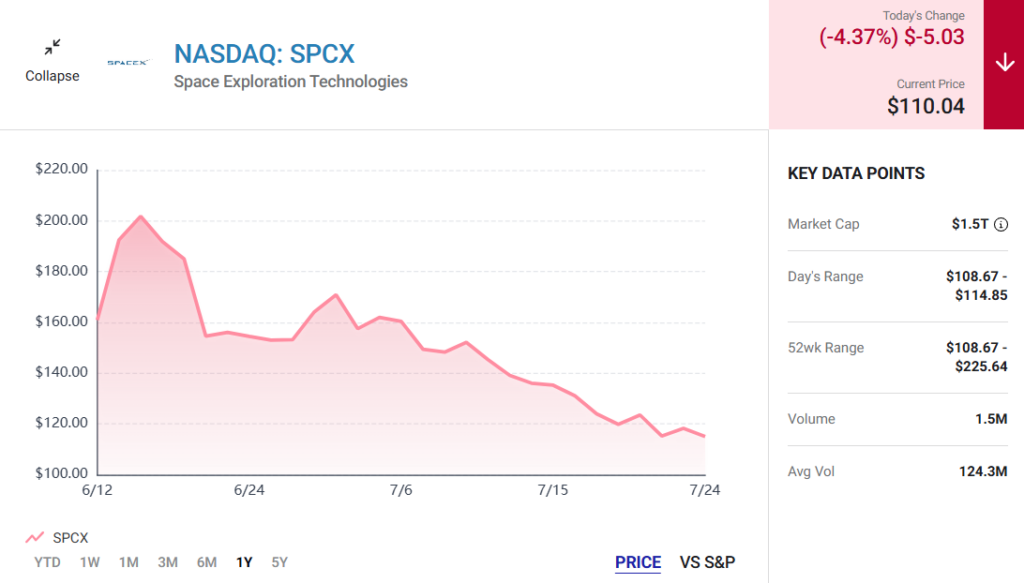
That figure is expected to climb toward $73 billion next year, which would finally push the business into positive territory, though only barely. Investors betting on a near-term turnaround are effectively paying a premium for growth that has not yet translated into consistent profit.
The Lockup Expiration Nobody’s Talking About
There is also a structural headwind building just behind the earnings date. Roughly 911.5 million shares are currently locked up, out of 7.6 billion shares outstanding, and many of those will become eligible for sale starting August 6.
Some of these shares cannot be sold until the stock hits certain performance thresholds, which creates an odd dynamic: the better SPCX performs, the more selling pressure it could invite as previously restricted shares hit the open market. That combination of a lockup expiration landing just two days after earnings adds a layer of risk that is easy to overlook amid the excitement of a first quarterly report.
What History Says About Fresh IPOs
History also offers a useful, if sobering, reference point. Brokerage research going back to the 2011 to 2020 bull market found that the average tech stock was down 14% from its IPO price six months after going public.
Longer term data is not much kinder either, with research suggesting about two thirds of newly public tech tickers were still trading below their offer price three years later.
None of this guarantees SpaceX will follow the same script, but it does suggest that newly public companies, however innovative, often take longer to find a stable floor than early investors expect.
Weighing the Risk Against the Reward
Put together, the case for caution looks stronger than the case for jumping in ahead of the print. A beat on earnings could certainly spark a rally, and SpaceX has no shortage of long-term believers given its dominant position in launch services and its ambitions in satellite internet and beyond.
But betting on an exception to a well-established pattern, especially with a lockup expiration compounding the uncertainty, is a risk that many investors may prefer to sit out.

Why Timing Matters More Than Usual Here
For those who already hold a position, this earnings report may say less about the long-term investment case and more about near-term volatility. A wider than expected loss or cautious guidance could easily extend the current slide, while unlocked shares hitting the market shortly afterward could add further pressure regardless of how the numbers land.
The combination of an unproven public trading history and a looming supply of new shares makes timing especially tricky right now.
The Bottom Line for New Investors
That does not mean SpaceX is a stock to avoid altogether. Its scale, its market position, and its growth trajectory toward profitability next year are all reasons the company continues to draw attention from both retail and institutional investors.
What it does mean is that buying purely in anticipation of an earnings pop, without weighing the lockup expiration and the historical tendency of newly public tech names to underperform in their first year or two, could expose new investors to more downside than they bargained for.
For anyone considering a $10,000 allocation to SPCX right now, patience may be the more prudent strategy. Waiting for the dust to settle after both the earnings release and the share unlock could offer a clearer picture of where the stock is likely to stabilize, and potentially a better entry point than trying to time a bounce off a single earnings report.