
The S&P 500 gained 1.91% on Monday, November 9, climbing 140 points to 7,517.64 in a session defined by falling oil prices and renewed optimism about the inflation trajectory heading into year-end.
The Nasdaq Composite rose 2.35% to 25,157.80, while the Dow Jones Industrial Average advanced 1.66% to 52,139.04. Market breadth was decisively positive, with advancers outnumbering decliners 563 to 34 on the S&P 500, the widest ratio since August.
AchievementsAI analysts evaluate whether Monday’s recovery marks the beginning of a sustainable rally back toward the October highs near 7,844, or whether Tuesday’s CPI report and the next Federal Reserve meeting remain obstacles that could reverse the recent gains and push the index back into its post-midterm trading range.
Oil’s Decline Reshapes the Sector Rotation Landscape
Brent crude’s 4.18% decline to $94.21 per barrel served as the primary catalyst for the equity rally. Lower oil prices reduce input costs for manufacturers, transportation companies, airlines, and consumer-facing businesses while simultaneously easing the inflationary pressures that have kept the Federal Reserve on a tightening path throughout 2026.
The sector rotation was pronounced and told a clear story about where the market sees the beneficiaries.
Airlines led the gainers, with American Airlines rising 6.94% on the prospect of sharply lower jet fuel costs heading into the peak holiday travel season.
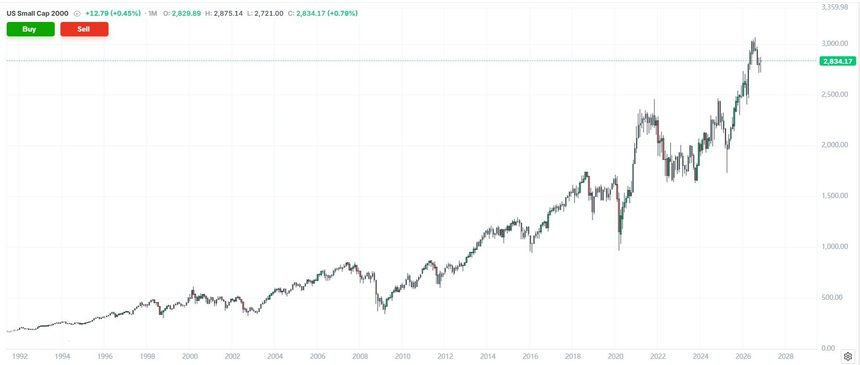
Industrials and small-cap stocks also outperformed, with the Russell 2000 advancing 2.04% to 2,810.21, signalling that the rally extended well beyond the megacap names that typically dominate index-level moves.
Power and utilities stocks rallied sharply on their own catalysts, led by Constellation Energy, which gained 6.42% after posting a strong earnings beat that exceeded analyst estimates on both revenue and margins.
Technology names contributed to the recovery despite continued weakness in Nvidia, which fell a further 3.87% to $179.42 following reports of an internal probe into its CEO.
The semiconductor sector outside Nvidia showed notable resilience. AMD surged 9.60%, Micron gained 5.91%, and Broadcom rose 5%, suggesting that the prior session’s selloff was Nvidia-specific rather than a broader referendum on semiconductor or AI infrastructure demand.
This divergence within the chip complex is a constructive signal for the sector’s medium-term health.
Volatility Retreats from Elevated Post-Midterm Levels
The VIX declined 17.58% to 21.14, retreating from Thursday’s close of 28.18 and its intraday high of 25.08. The move below 22 suggests that the market’s near-term anxiety about the AI sector selloff and midterm election uncertainty has begun to subside.
Though readings above 20 indicate that implied volatility remains elevated relative to the calm conditions that prevailed through most of September and early October.
The decline in volatility has a mechanical effect on equity positioning that could amplify the rally. Volatility-targeting strategies and risk-parity funds systematically increase their equity allocations when the VIX falls, providing a tailwind to the recovery.
If the CPI report delivers a benign reading and the VIX drops below 20, further systematic buying could push the S&P 500 toward the 7,600 level within the coming sessions.
CPI Preview and Technical Levels for the Week Ahead
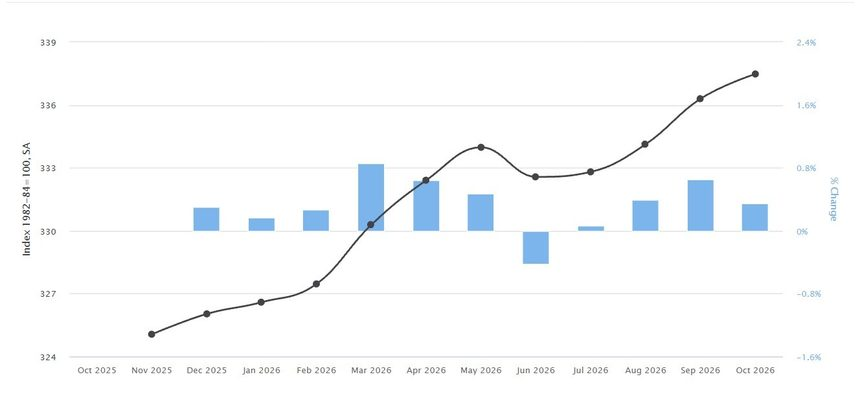
Tuesday’s October CPI report carries significant weight for the rally’s sustainability. Consensus forecasts call for headline CPI of +0.3% month over month and a core reading of +0.2% to +0.3%.
The market is particularly sensitive to the shelter component, which has been the stickiest element of the inflation basket throughout 2026 and represents the largest single weight in the index.
A print at or below consensus would validate the narrative that falling oil prices are feeding through to broader disinflation across the economy and could trigger a move toward the 7,600 resistance level.
The S&P 500’s 52-week high of 7,844.52 sits approximately 4.2% above Monday’s close, a gap that could narrow quickly in a favourable CPI scenario combined with continued oil weakness.
On the downside, the 7,422 level, which marked Monday’s session low, now serves as immediate support. Below that, the 7,300 zone aligns with the November 5 selloff trough and represents the line in the sand for the current bounce.
The 10-year Treasury yield at 4.87% remains a headwind for equity valuations; a move back above 5.00% following a hot CPI print could quickly reverse the equity rally and push the VIX back toward 25.
Equity market participants face a narrow path where oil must remain contained, inflation data must co-operate, and the AI earnings cycle must stabilise before the index can mount a credible challenge to its October record highs near 7,845.