
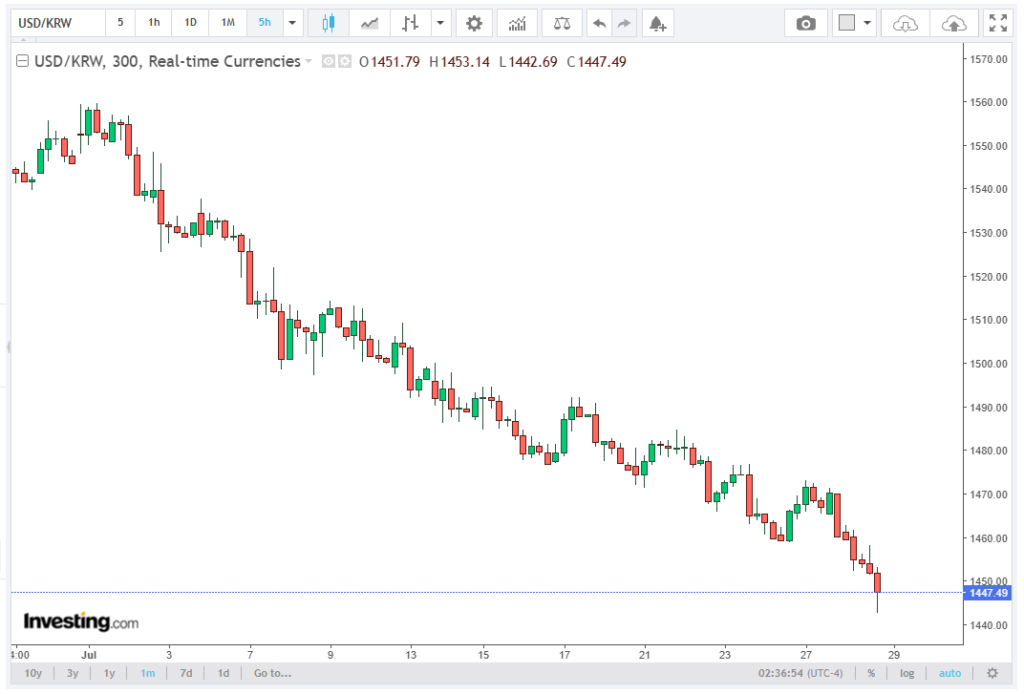
The South Korean Won (KRW) extended its recovery against the US Dollar (USD) for a second consecutive trading session, with USD/KRW approaching four-month lows near 1,438. The exchange rate is now positioned for a 6.5% monthly decline, marking one of the strongest monthly performances for the Korean currency in recent periods.
This article presents Vaulltier’s brokers’ views on the issues and developments connected to this topic.
The KRW appreciation has occurred despite a severe correction in South Korea’s equity market, highlighting the influence of improving macroeconomic fundamentals, stronger-than-expected economic indicators, and expectations of a more restrictive monetary policy stance from the Bank of Korea (BoK).
While the KOSPI Index selloff has increased market volatility and weakened investor sentiment toward Korean equities, the currency market has responded differently. The Won has benefited from expectations that higher domestic interest rates and stronger economic conditions could continue attracting capital inflows.
KOSPI Index Falls 35% in July as AI Valuations Correct
The South Korean stock market has experienced an aggressive correction, with the KOSPI Index declining approximately 35% in July. The benchmark index dropped more than 12% during Wednesday’s session following a previous 10% decline on Tuesday, triggering temporary 20-minute trading halts for two consecutive sessions.
At the latest reading, the KOSPI was down 6.4% at 5,638, reflecting intense selling pressure across major technology shares. The correction has been concentrated in Artificial Intelligence (AI)-related stocks, where concerns over excessive valuations, overinvestment, and slowing future returns have triggered widespread risk reduction.
The decline represents one of the sharpest monthly corrections in recent years and has raised concerns about market liquidity, leveraged exposure, and the impact of highly concentrated positions in technology sectors.
Despite the equity market weakness, the foreign exchange market has remained relatively stable, suggesting that investors view the current stock correction as a valuation adjustment rather than a broader economic deterioration.
Economic Data Strengthens Case for Higher Korean Interest Rates
The KRW has received significant support from stronger domestic economic data. South Korea’s Gross Domestic Product (GDP) increased by 0.6% in Q2, exceeding market expectations and reducing concerns about a prolonged economic slowdown.
The stronger growth figure has improved confidence in the Korean economy and provided additional support for the currency. At the same time, inflation pressures have intensified, with consumer prices rising to a 30-year high of 3.2% in June.
The combination of above-target inflation and resilient economic activity has increased expectations for additional monetary tightening. Higher interest rate expectations generally support a currency by improving the attractiveness of domestic assets and increasing potential returns for international investors.
Hawkish Bank of Korea Policy Supports KRW Strength
Expectations of a more hawkish Bank of Korea policy outlook have become a major driver of the Won’s recent gains. The central bank’s focus on controlling inflation has strengthened market expectations that interest rates may remain elevated for longer.
The widening appeal of Korean fixed-income assets has contributed to stronger demand for the KRW, helping offset negative sentiment from the equity market decline. The currency’s performance indicates that investors are currently prioritising interest rate differentials, economic resilience, and inflation dynamics over short-term equity market volatility.
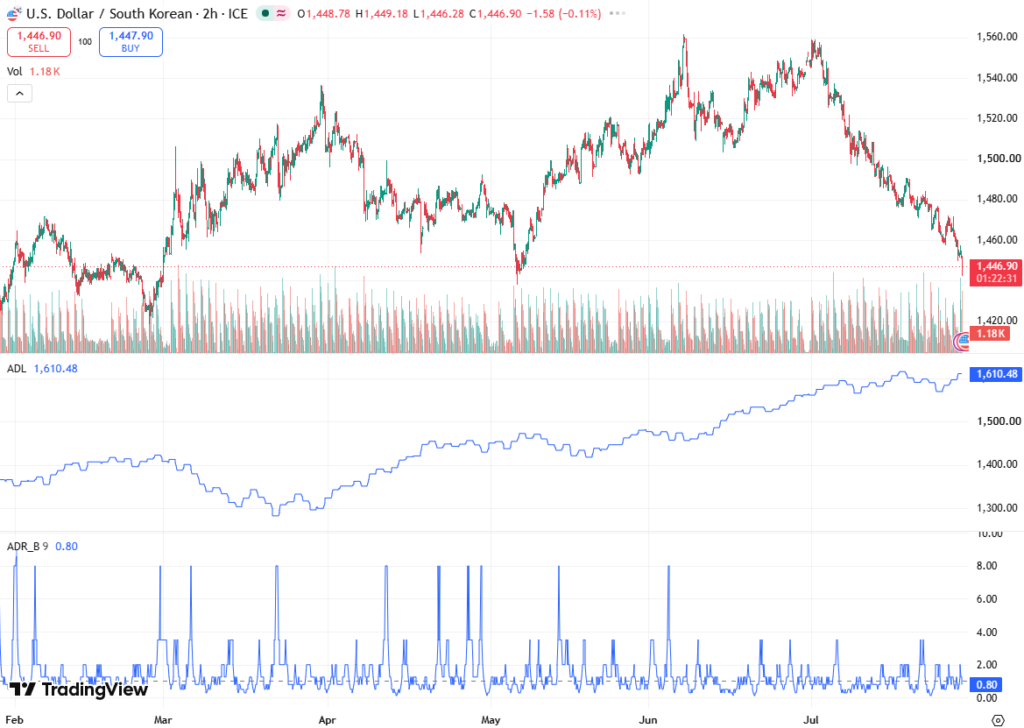
The divergence between the KRW exchange rate and the KOSPI Index is notable. Historically, sharp equity declines in South Korea have often created pressure on the Won due to concerns over foreign capital outflows.
However, the current environment suggests that stronger macroeconomic fundamentals and monetary policy expectations are providing a counterbalance.
Government Measures Target Excessive Market Volatility
Authorities have responded to the equity market disruption by preparing additional market stabilisation measures. Proposed actions include tighter regulation of single-stock leveraged ETFs, which have been identified as potential contributors to increased price volatility.
Leveraged financial products can amplify market movements by increasing forced buying and selling during periods of rapid price changes. Regulators are therefore focusing on reducing systemic risks while maintaining orderly market conditions.
The government’s intervention highlights concerns over market structure, investor leverage, and the speed of the recent correction. However, these measures have not significantly damaged confidence in the KRW market, which continues to benefit from supportive economic factors.
USD/KRW Outlook: Focus on Monetary Policy and Risk Sentiment
The near-term direction of USD/KRW will depend on several factors, including Bank of Korea policy expectations, US Dollar movements, and the recovery prospects of Korean equities. A sustained break below the 1,438 level could open the possibility of further KRW appreciation, while renewed risk aversion could limit gains.
The South Korean Won has demonstrated unexpected strength despite the severe KOSPI correction, supported by 0.6% GDP growth, 3.2% inflation, and expectations of continued monetary tightening. Although equity market volatility remains a key risk, current fundamentals continue to provide a strong foundation for the KRW’s ongoing recovery.