
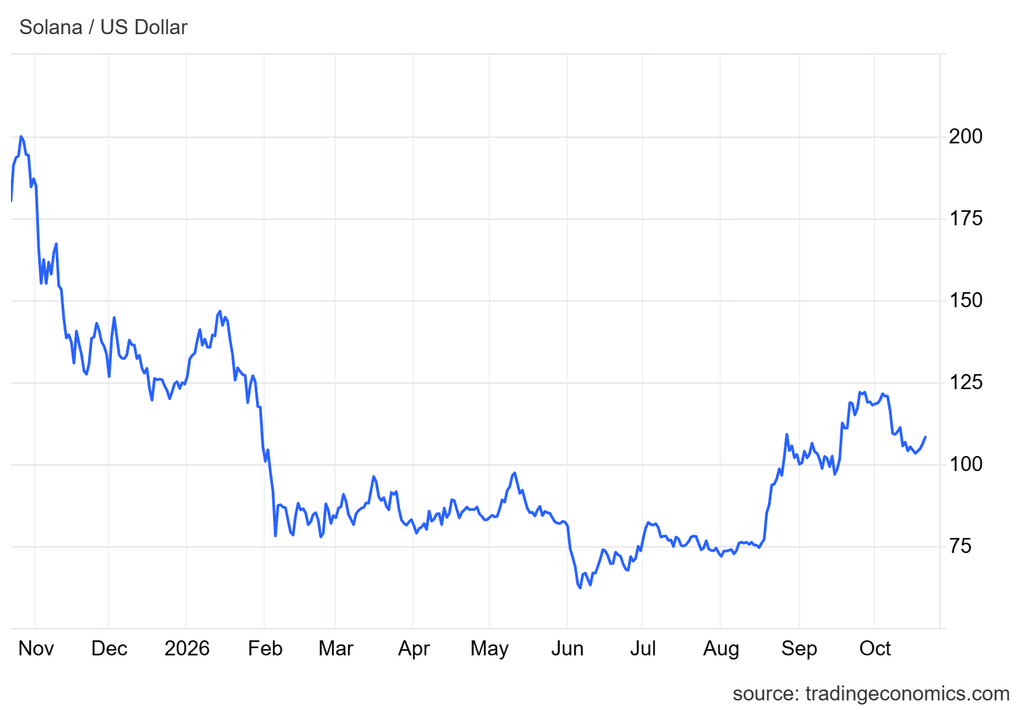
Solana’s native token SOL traded near $108 as of mid-October 2026, with a market capitalization of approximately $63.4 billion.
The blockchain network is set to deploy its highly anticipated Alpenglow upgrade in October. An overhaul designed to reduce transaction finality to roughly 150 milliseconds, positioning Solana as one of the fastest settlement layers in the entire digital asset ecosystem.
Analysts at AchievementsAI assess whether the upgrade and rising on-chain activity can reverse SOL’s prolonged price decline from its January highs, or whether broader crypto market headwinds and macroeconomic uncertainty will continue to weigh on the token through the remainder of 2026 and into the new year.
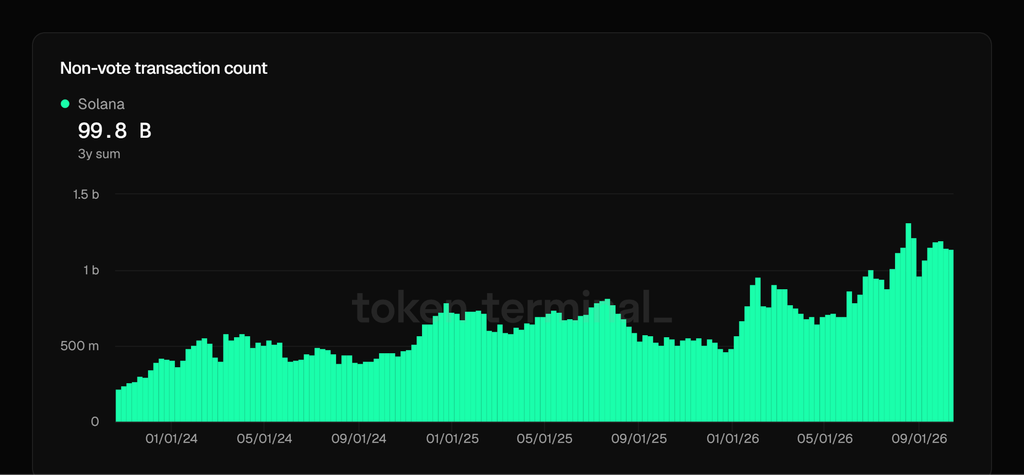
Q3 Transaction Volume Tells a Different Story Than Price
The most striking data point in Solana’s recent performance is the divergence between network usage and token price. Non-vote transactions surged 104% in Q3 2026, reaching 8.92 billion for the quarter.
This figure represents genuine economic activity rather than validator consensus overhead, suggesting that developer and user adoption has continued to accelerate even as the token price consolidates within a multi-month range.
SOL-denominated total value locked hit all-time highs earlier in 2026, and stablecoin transaction volumes on the network surpassed $650 billion in February alone, establishing Solana as a leading venue for on-chain dollar settlement.
The real-world asset market cap on Solana reached $1.71 billion, further evidence that institutional experimentation with the network is intensifying beyond speculative trading and into tokenised financial products such as treasury bills and corporate bonds.
In March 2026, the SEC classified SOL as a digital commodity, removing a significant regulatory overhang that had weighed on institutional participation for years.
Western Union announced plans to launch its USDPT stablecoin on Solana, adding a major global payment brand to the network’s growing ecosystem of enterprise integrations and signalling broader corporate confidence in the chain’s reliability.
Technical Setup and Price Levels
SOL has spent most of Q3 and early Q4 within a range of $95 to $147. The token rebounded from a low of $118 in recent sessions, with buyers defending this level on multiple occasions through concentrated spot buying.
The 50-day SMA and 200-day SMA have both flattened, indicating a lack of clear directional momentum in the intermediate timeframe and suggesting the market is awaiting a catalyst.
The RSI on the daily chart sits near 42, leaning slightly bearish but not yet in oversold territory. A break above the moving average cluster near $120 would represent the first meaningful bullish signal since August and could trigger a wave of short covering.
Conversely, a close below $95 would open the path toward the $83 level that marked the lowest point of the 2026 correction.
SOL’s 52-week range spans from $62.16 to $247.56, illustrating the extreme volatility that has characterised the token throughout this market cycle.
At $108, SOL sits roughly in the lower third of that range, a position that may attract value-oriented buyers if the fundamental picture continues to improve through Q4.
The Alpenglow Upgrade and Its Market Implications
Alpenglow represents Solana’s most significant protocol change since the Firedancer validator client launch. By targeting 150-millisecond finality, the upgrade would give Solana a performance advantage over virtually every competing Layer 1 blockchain currently in production.
For comparison, Ethereum’s finality currently operates in the range of 12 to 15 minutes under standard conditions, a gap that Alpenglow would widen dramatically in Solana’s favour.
The practical implications extend beyond raw speed metrics. Faster finality enables use cases in high-frequency trading applications, real-time payment processing, and gaming, all categories where Solana has been building ecosystem depth through dedicated developer programmes, hackathons, and grant initiatives.
If Alpenglow delivers on its technical promises without introducing network instability or validator coordination issues, it could serve as a catalyst for renewed developer interest and institutional capital allocation.
Asset manager 21Shares outlined a base case target of $150 for SOL in 2026, representing roughly 40% upside from current levels. Standard Chartered’s more optimistic projection sits at $250, citing the network’s growing dominance in stablecoin settlement.
On the bearish side, Polymarket data showed a 79% probability that SOL drops below $100 at some point before year-end, reflecting continued scepticism among derivatives traders.
The broader cryptocurrency market remains a critical variable for SOL’s Q4 trajectory. Bitcoin’s price path, the regulatory environment in the United States following the SEC’s commodity classification, and global macro liquidity conditions will all influence SOL’s ability to translate its strong on-chain metrics into sustained price appreciation.
The Alpenglow deployment offers a clear near-term catalyst, but lasting upside will require sustained capital inflows into the digital asset space more broadly and a resolution of the risk-off sentiment that has weighed on altcoins throughout the second half of 2026.