
US natural gas futures traded near $2.90 per MMBtu in mid-October 2026, holding in a narrow range after a volatile September that saw prices swing between $2.77 and $2.98.
European benchmark prices have climbed more aggressively, with the TTF Front Month contract settling above €75 per MWh in late September, reflecting growing concern over storage levels heading into the winter heating season across the continent.
Analysts at AchievementsAI assess the supply-demand balance for natural gas on both sides of the Atlantic and examine whether the current price environment offers an early signal of winter tightness or simply reflects seasonal noise.
European Gas Prices Reflect Genuine Supply Concern
European natural gas prices have risen for four consecutive months, with the French CRE reference price increasing 8% in October versus September 2026.
The raw commodity component embedded in this reference price sits at €61.22 per MWh, a 17.1% increase month over month. It highlights the pace at which wholesale costs have escalated across the region and raises concerns about the impact on household and industrial energy bills this winter.
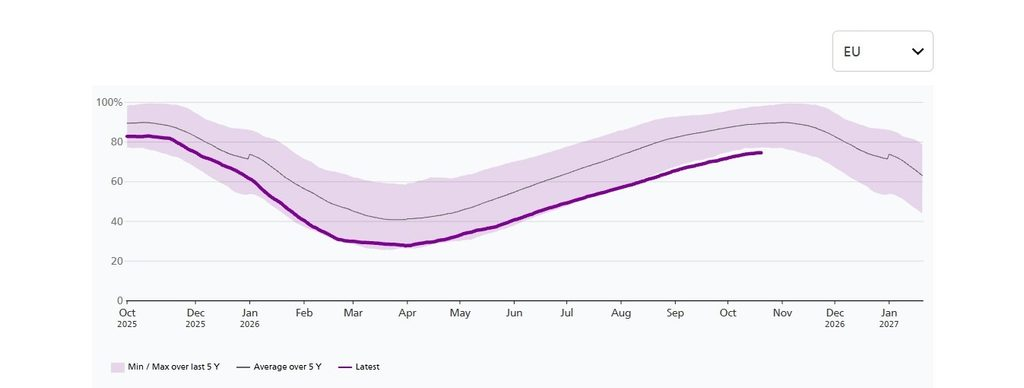
The most recent Gas Infrastructure Europe data showed aggregate storage at approximately 87% of capacity in late September, below the five-year average for the same date. This shortfall is particularly notable given that the heating season has not yet begun in earnest, meaning any early cold snap could accelerate draw rates beyond current projections.
Forward pricing tells a revealing story about market expectations. The winter 2026-2027 contract was trading at €74.49 per MWh, roughly 2% below the front-month contract.
This mild backwardation suggests the market expects some relief after the immediate winter period, though the entire forward curve remains elevated by historical standards, well above the sub-€30 levels that prevailed before the European energy crisis of 2022.
US Supply Dynamics and LNG Export Growth
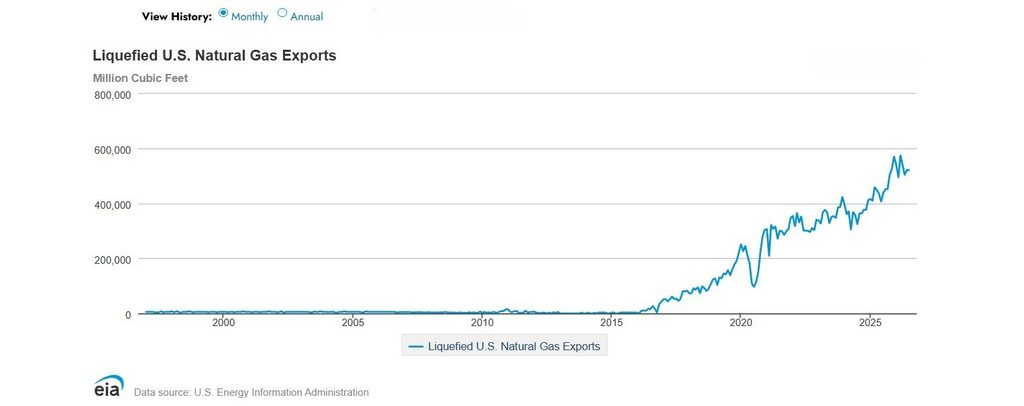
On the US side, Morgan Stanley published a base case forecast for natural gas reaching $5 per MMBtu in 2026, driven by rising LNG export demand and constrained domestic supply growth.
October LNG feedgas flows hit a record, averaging 16.5 bcf/d, up from September levels. The commissioning of new liquefaction capacity along the Gulf Coast has created a structural pull on domestic supply that is beginning to reshape the US gas market balance.
Production data tells a mixed story. October output has averaged roughly 1 bcf/d lower than September, with the Haynesville shale posting the largest declines according to pipeline flow data.
Gas rig counts edged up by four rigs over the prior month, but overall drilling activity remains far short of what is required to meet growing export commitments while maintaining adequate domestic supply buffers for the winter heating season.
US storage exited October at an estimated 3.97 trillion cubic feet, roughly 5% above the seasonal norm.
Morgan Stanley expects inventories to tighten sharply in the coming quarters, with a storage deficit re-emerging during the winter months and growing through 2027 as LNG export capacity continues to outpace domestic production growth and associated gas volumes from oil-directed drilling plateau.
Technical Levels and Seasonal Patterns
The NYMEX natural gas front-month contract trades in a consolidation range between $2.77 and $3.00. The 50-day SMA sits near $2.85, and price has oscillated around this level for the past three weeks without establishing a clear directional bias.
The 200-day SMA is trending higher, currently at approximately $2.60, confirming the broader uptrend from the multi-year lows established in early 2024.
The RSI on the daily chart reads approximately 53, neutral territory consistent with the range-bound price action observed since early October.
Bollinger Bands have narrowed considerably over the past two weeks, a classic technical precursor to a volatility expansion. Historically, natural gas experiences its highest volatility between November and February, when heating demand uncertainty and weather-driven supply disruptions combine to produce outsized directional moves.
A breakout above $3.00 would confirm bullish seasonal momentum and open the path toward $3.40 and then the $3.50 level that served as resistance during the spring 2026 rally.
On the downside, a break below $2.77 would undermine the current range and target the $2.60 support zone near the 200-day SMA, a level that would likely attract buying interest from utilities hedging winter supply.
Weather remains the single largest variable for natural gas into the year-end. A colder-than-average winter scenario would rapidly deplete storage across both the United States and Europe, potentially pushing US prices toward the $4.00 handle and TTF contracts toward new cycle highs.
Conversely, mild conditions similar to the 2023-2024 winter would keep the market in surplus and limit upside.