
Nine months into a bear market, crypto prices are not behaving like a typical fire sale, and that unusual resilience is forcing investors to be far more selective about where they put new money right now. Brokers from Vaulltier dive into this topic to break down why one closely watched analyst is narrowing an entire portfolio of buy candidates down to just two names.
Why Ethereum and Solana Are Being Left on the Shelf
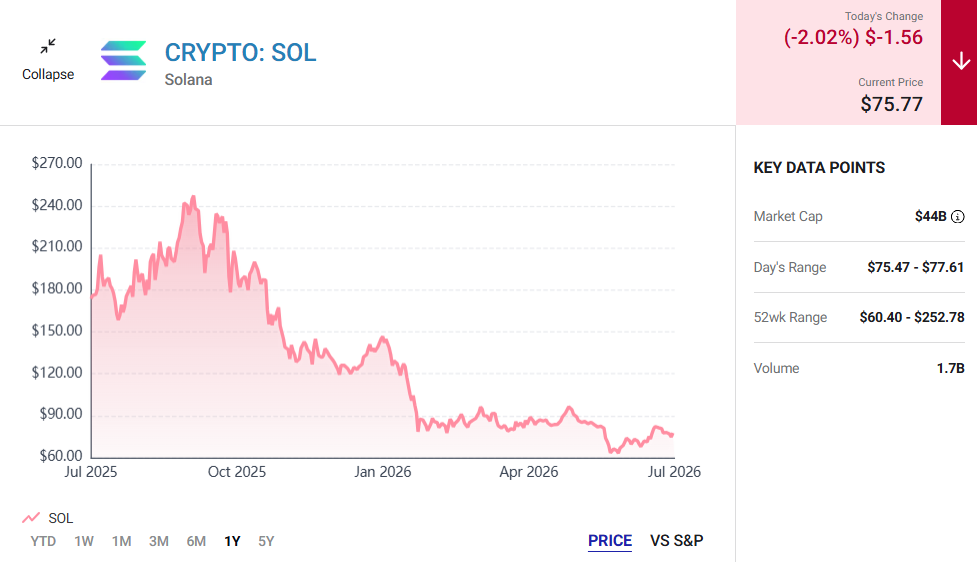
Ethereum and Solana have both posted solid short-term gains, rising roughly 11% and 12% over the past 30 days, yet neither is being treated as a fresh buy right now despite that momentum. Renewed conflict risk is the main culprit, since a recent ceasefire collapse has reintroduced the kind of daily volatility that tends to hit these coins hardest and makes new entries feel poorly timed for cautious investors.
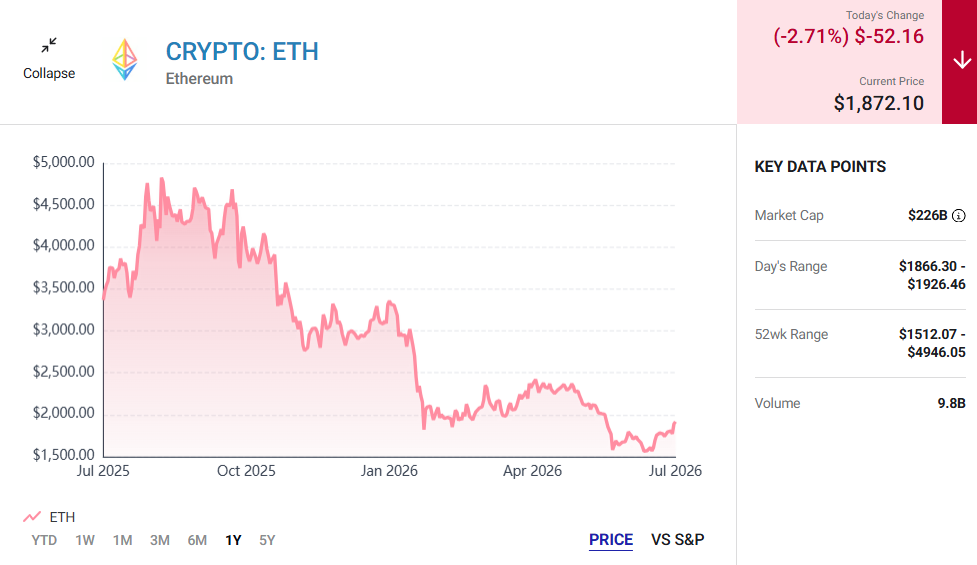
Ethereum in particular has historically been punished two to three times harder than Bitcoin during past escalations, making new entries feel poorly timed for most investors. Solana faces a related structural issue, since its transaction fees do little to shrink circulating supply, which makes it harder for holders to count on steady long-term appreciation.
Bitcoin’s Resilience Through the Storm
Bitcoin is the first of the two coins earning fresh buying interest, largely because of how it has absorbed bad economic and geopolitical news without falling apart in the way many expected. It is currently trading around $64,000, and its price mostly held up even through the worst capital-outflow stretch on record for spot Bitcoin ETFs, a period that tested confidence across the broader crypto market.
That outflow streak has already started to reverse in a meaningful way. Spot Bitcoin ETFs pulled in $221.7 million on July 2 alone, snapping a 10-day outflow run that had totaled $2.7 billion, a signal that marginal buyers are stepping back in whenever the price dips.
Hyperliquid’s Buyback-Style Tokenomics
The second name drawing attention is Hyperliquid, a decentralized exchange that has kept showing strength even inside a broader bear market environment. Its market capitalization currently sits near $14 billion, and the coin is trading around $62.51.
The resilience comes down to design. Every trade on the exchange generates fees paid in HYPE, and nearly all of those fees are funneled into automatic buybacks of the token, creating a mechanism that behaves a lot like a corporate stock buyback tied directly to trading volume.
An Upgrade That Opened New Markets
A recent upgrade called HIP-3 allows anyone staking 500,000 HYPE tokens to launch a permissionless perpetual futures market for virtually any asset. That has led to a wave of round-the-clock markets covering tokenized stocks, commodities, gold, silver, and oil.
During the June Middle East strikes, Hyperliquid’s oil markets stayed open through the weekend while many traditional exchanges were closed, giving traders one of the few venues for price discovery during that window of heightened uncertainty. That kind of uptime advantage helps the platform generate fees, and by extension token value, precisely when volatility is highest elsewhere in the market.
A Hedge Against Rate Hikes
There is also a structural hedge worth noting through a recent agreement with two major partners. Hyperliquid will be able to capture yield from the USDC stablecoins that traders hold as collateral on its platform, meaning that even a Federal Reserve rate-hike cycle, normally bad news for crypto broadly, would actually boost the network’s revenue.
That dynamic flips a typical headwind into a tailwind for one specific asset, which is part of why it stands out from the broader field of crypto assets right now. Few other tokens in the sector currently offer that kind of built-in offset to rising interest rates.
The Bottom Line
The overall takeaway is that selectivity, not broad exposure, is driving this particular approach to the current market environment. Bitcoin offers proven resilience backed by returning ETF demand, while Hyperliquid offers a newer but structurally different kind of protection tied to trading activity and stablecoin yield generation.
Ethereum and Solana are not being written off entirely, but both need clearer signs of stabilizing fee dynamics and reduced geopolitical sensitivity before they look attractive again to a selective buyer.
Until that shifts, the case being made favors concentration over diversification within the cryptocurrency sphere, a stance that will only prove right or wrong as the next few months of price action and ETF flows continue to play out.