
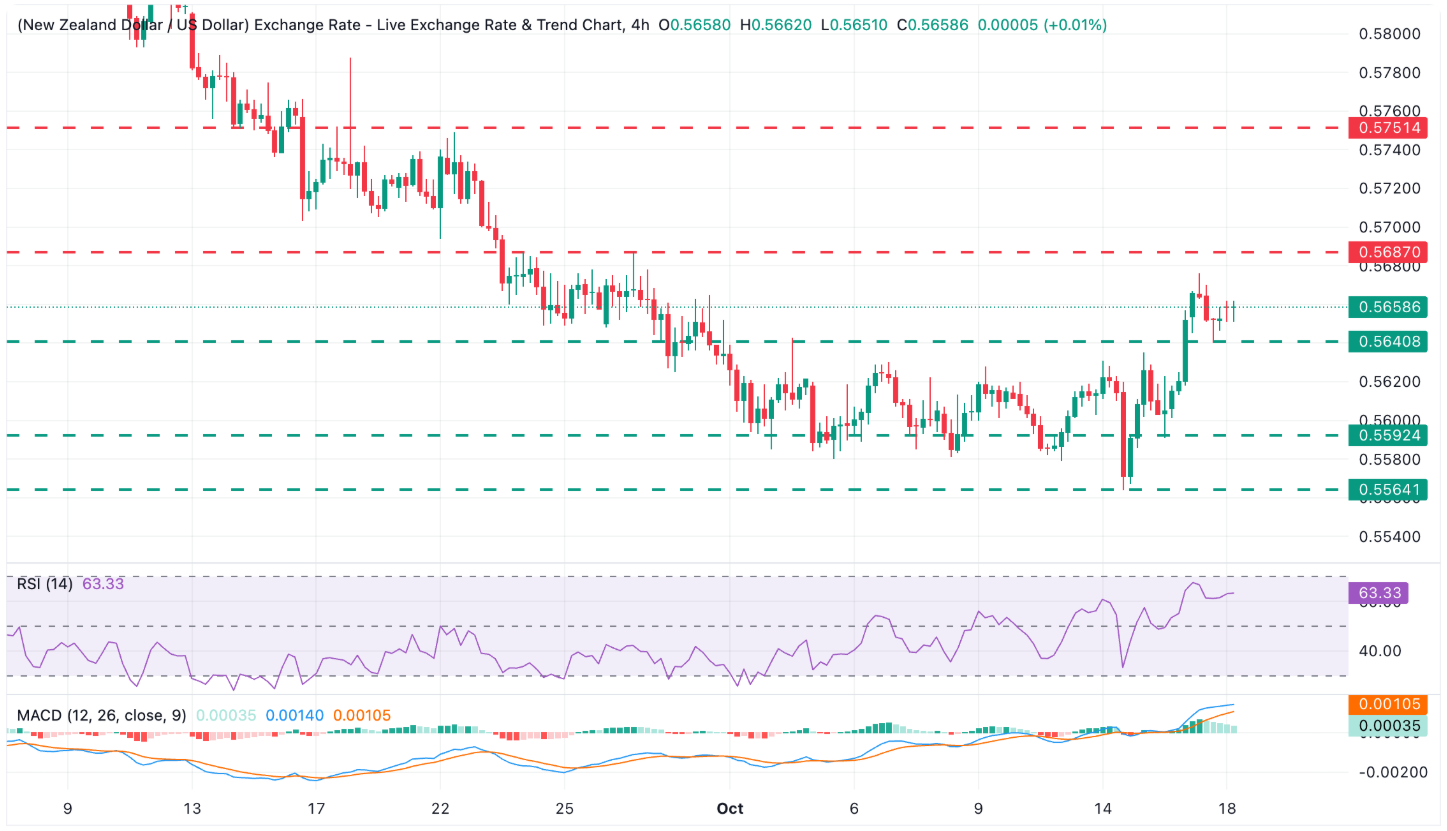
The NZD/USD pair maintains a short-term bullish bias around 0.5660, with price action indicating that buyers remain in control following a sustained recovery above the 0.5630–0.5640 support zone. Learn more about this topic through the detailed insights shared by Fonndure’s brokers.
The pair is approaching the 0.5690 resistance level, which represents the next upside objective for bullish traders. A confirmed breakout above this threshold could extend the recovery toward 0.5750, provided momentum indicators and broader market conditions continue to favor the New Zealand Dollar (NZD).
From a technical perspective, the pair’s ability to consolidate above previous resistance-turned-support suggests that bullish market structure remains intact. The immediate outlook favors additional upside while the exchange rate holds above 0.5630.
Fundamental developments, including stronger Chinese economic data and persistent weakness in the US Dollar (USD), are reinforcing the positive near-term technical setup.
Chinese Economic Growth Supports NZD Demand
China’s third-quarter GDP growth accelerated to 4.5%, exceeding the previous quarter’s 4.3% expansion and surpassing the 4.4% market consensus. The upside surprise indicates stronger-than-expected economic activity in New Zealand‘s largest trading partner, supporting expectations for resilient regional trade and demand for New Zealand exports.
Chinese retail sales increased by 1.1% in September, exceeding forecasts by more than twofold and easing concerns about weak domestic consumption. These figures provide a supportive fundamental backdrop for the Kiwi, given New Zealand’s exposure to Chinese demand for agricultural commodities and dairy products.
Stronger Chinese activity may improve New Zealand’s export prospects, support commodity-linked sentiment, and increase demand for the NZD.
Sustained improvements in Chinese consumption and industrial activity would strengthen this transmission mechanism, although the exchange rate’s response will also depend on relative interest-rate expectations and broader risk appetite.
New Zealand Trade Data Presents a Fundamental Headwind
New Zealand’s external accounts delivered a weaker signal, with the trade deficit widening to NZD 1.97 billion from NZD 1.54 billion. The deterioration indicates increased pressure on the trade balance and could limit NZD appreciation if the trend persists.
The Business Performance of Services Index (PSI) also eased to 50.9 from 51.0, remaining only marginally above the 50.0 expansion-contraction threshold. This reading points to subdued growth in services activity, while concerns about political uncertainty and elevated living costs continue to weigh on business confidence.
Federal Reserve Expectations Keep the US Dollar Under Pressure
The US Dollar remains on the defensive as markets assess the Federal Reserve’s (Fed) next policy decision. Although US inflation remains above the Fed’s 2% target, policymakers are evaluating the cumulative effects of previous interest-rate increases before determining whether additional monetary tightening is necessary.
Expectations of a potential interest-rate pause have limited demand for the USD, providing an additional tailwind for NZD/USD. From a relative-value perspective, the pair’s direction depends partly on changes in the interest-rate differential between New Zealand and the United States.
Lower US Treasury yields or reduced expectations for further Fed tightening could favor additional NZD/USD appreciation.
Technical Analysis: 0.5690 Breakout in Focus
NZD/USD trades near 0.5660, with the Relative Strength Index (RSI) in the low 60s and the Moving Average Convergence Divergence (MACD) above its neutral line. These indicators suggest positive momentum without an immediate overbought signal from the RSI.
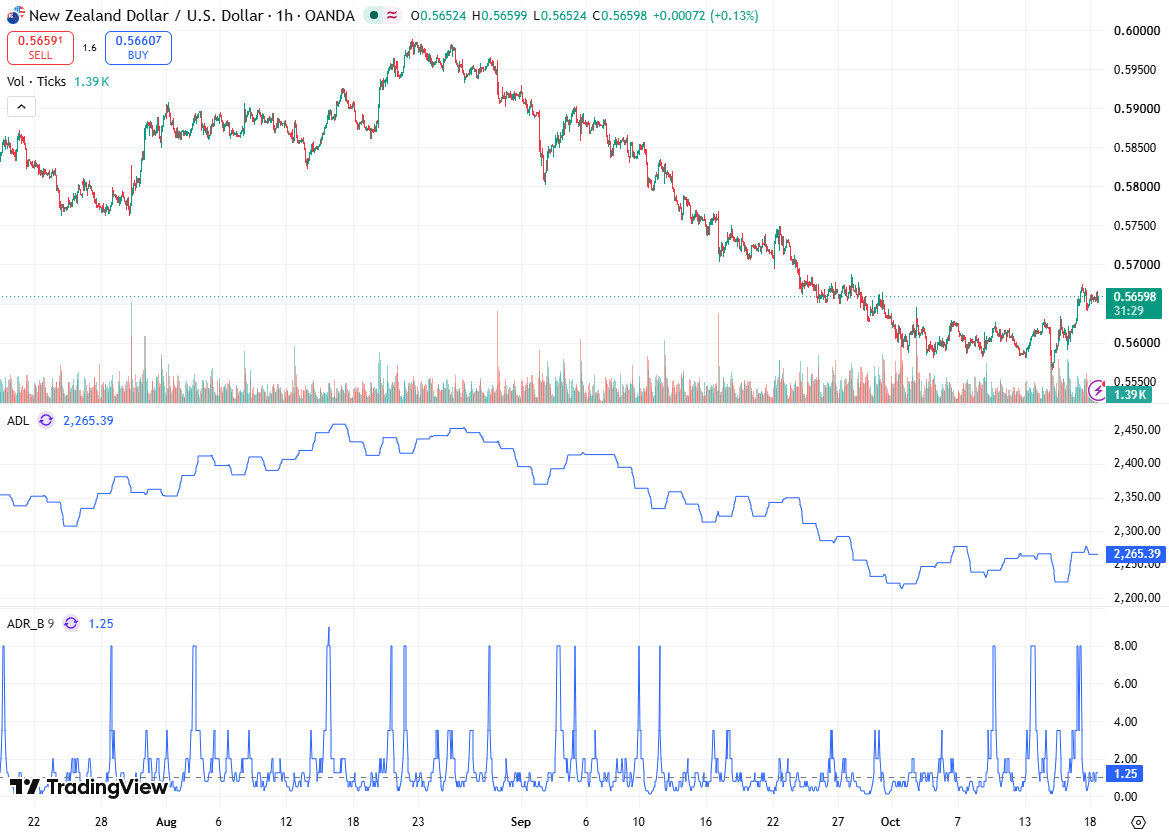
The first technical hurdle is the 0.5660 resistance area. A sustained move above this level would strengthen the probability of a test of 0.5690, the primary upside target. A confirmed breakout above 0.5690 could expose 0.5750 as the next resistance objective, representing approximately 60 pips of additional upside from 0.5690.
On the downside, 0.5640–0.5630 forms the immediate support zone. A sustained break below 0.5630 would weaken the bullish structure and shift attention toward 0.5590, followed by 0.5565. From 0.5660, these levels represent potential declines of approximately 70 pips and 95 pips, respectively.
The 0.5590–0.5565 region therefore represents an important downside reference area if selling pressure accelerates. A move below 0.5565 would indicate a more substantial deterioration in the recovery structure.
Conclusion
The NZD/USD forecast remains cautiously bullish while the pair holds above 0.5630–0.5640. Stronger Chinese GDP growth, improving retail sales, and a defensive US Dollar support the Kiwi despite New Zealand’s widening trade deficit and subdued services activity.
Technically, a sustained break above 0.5660 would strengthen the case for a test of 0.5690, with 0.5750 as the next upside objective. A breakdown below 0.5630 would expose 0.5590 and 0.5565.
The decisive factors will be price acceptance above resistance, momentum confirmation, US Treasury yield movements, and evolving Federal Reserve expectations.