
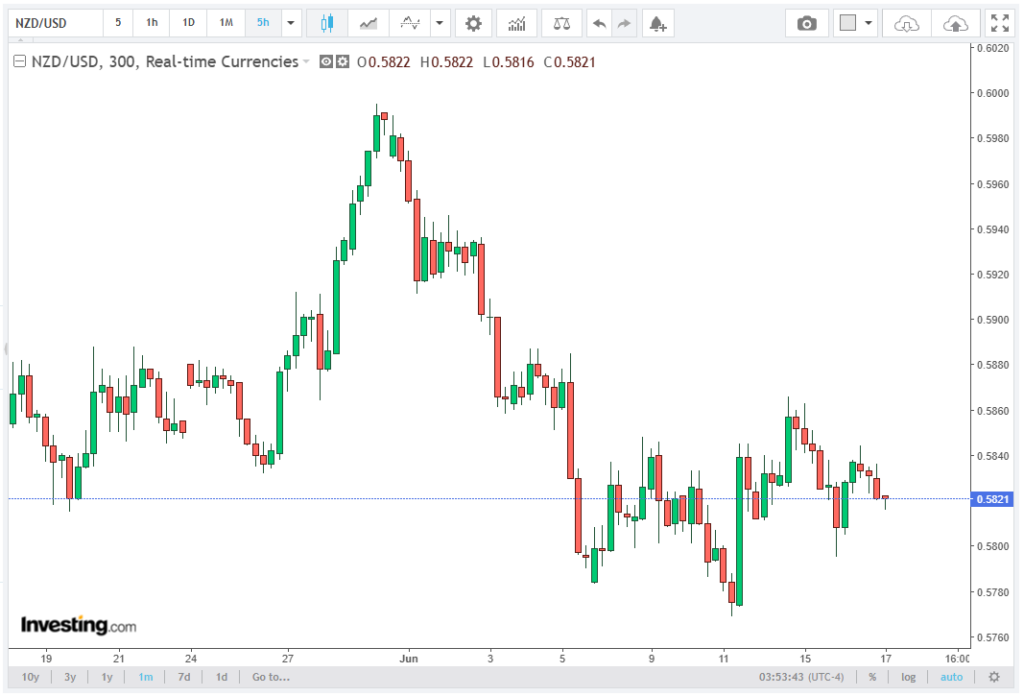
The New Zealand Dollar (NZD) weakened against the US Dollar on Wednesday, with NZD/USD trading near 0.5820 during early European hours. This move follows a modest rebound in the previous session, but momentum quickly faded as traders repositioned ahead of a key monetary policy decision from the Federal Reserve (Fed).
In this article, Sollventis’ brokers take a structured approach to explain the topic, making even complex points more approachable.
Overall sentiment in FX markets has shifted toward caution and defensive positioning, with investors reducing exposure to higher-beta currencies such as the NZD. The pair’s decline reflects a broader environment where traders are prioritizing policy clarity, interest rate differentials, and macro risk hedging over short-term yield opportunities.
Federal Reserve Outlook and Interest Rate Expectations
Attention is firmly centered on the upcoming meeting of the Federal Reserve, which is widely expected to maintain its benchmark interest rate in the 3.50% to 3.75% range. This reinforces a prevailing wait-and-see monetary stance, as policymakers assess the trajectory of inflation and labor market resilience.
Markets are also pricing in the possibility that incoming commentary from Fed leadership could lean more hawkish than expected, particularly given speculation that newly appointed Fed Chair Kevin Warsh may emphasize the need to keep monetary policy restrictive for longer under the Federal Reserve.
From an FX perspective, this expectation supports the US Dollar (USD) through sustained interest rate differentials, making it harder for the NZD to gain traction. Higher US yields tend to attract capital inflows into USD-denominated assets, thereby exerting downward pressure on NZD/USD.
The key technical implication is that the pair remains highly sensitive to any deviation from the expected steady-rate narrative, especially forward guidance around inflation persistence and balance sheet policy.
Risk Sentiment and Geopolitical Developments
While macro caution dominates, some support for risk-sensitive currencies has emerged from improving geopolitical expectations. Markets are increasingly pricing a potential diplomatic breakthrough between the United States and Iran.
US Vice President JD Vance said the US President may soon announce a preliminary framework to end the conflict. Earlier comments also hinted that a foundational agreement may already exist.
Meanwhile, Iranian Foreign Minister Seyed Abbas Araghchi confirmed new negotiations in Switzerland, aimed at a comprehensive peace deal.
These developments have eased global risk aversion, which could support currencies like the NZD. However, this optimism has not yet led to sustained buying, as traders remain focused on monetary policy catalysts rather than geopolitical headlines.
New Zealand Macro Data Weakens Sentiment
Domestic fundamentals in New Zealand have added another layer of pressure on the currency. The latest data showed the Q1 2026 current account deficit widening to NZD 1.01 billion, compared to NZD 0.71 billion previously. While slightly better than expectations of a NZD 1.03 billion gap, the widening trend still signals external imbalance pressures.
More importantly, consumer conditions continue to deteriorate. Consumer Confidence dropped to 80.4 in June, marking its lowest level since 2023. The decline has been attributed to rising living costs, fuel price pressures, and geopolitical uncertainty, all of which weigh heavily on household sentiment and spending potential.
These weak sentiment indicators reduce expectations for near-term economic acceleration and reinforce the narrative of a fragile domestic demand environment. For FX markets, this weakens the structural case for NZD appreciation, particularly against a backdrop of a comparatively resilient US economy.
Technical Outlook: NZD/USD Range Vulnerability
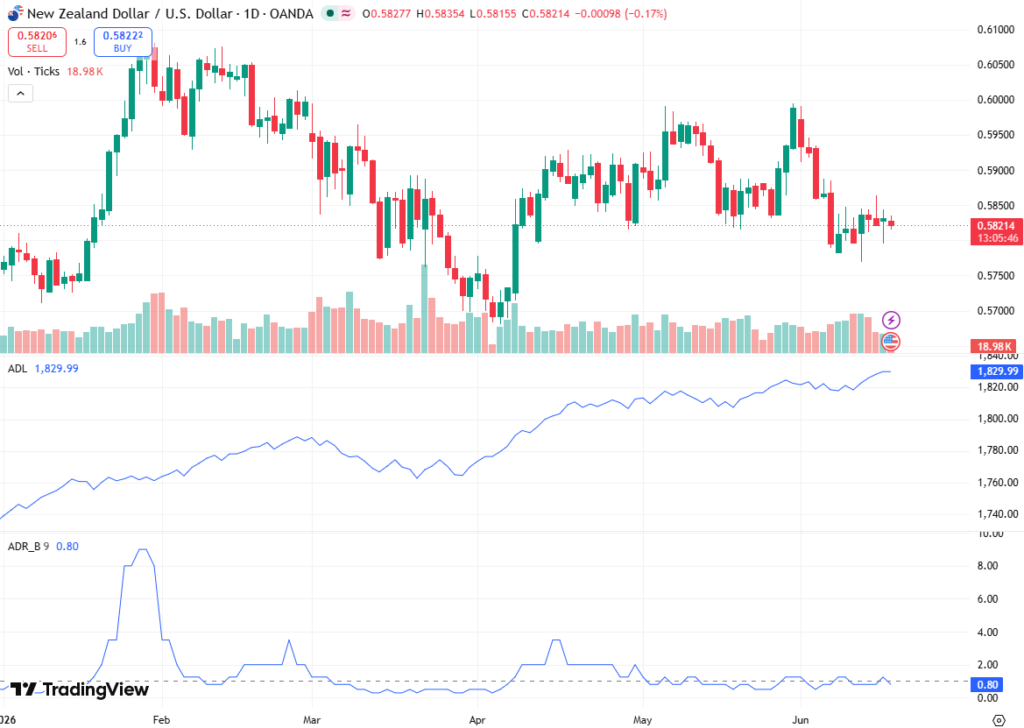
From a technical standpoint, NZD/USD remains structurally weak, with price action consolidating below short-term resistance zones. The recent rejection near the mid-0.58 region highlights persistent selling pressure on rallies, suggesting that bullish momentum is lacking.
Key resistance remains clustered around 0.5850–0.5880, where previous recovery attempts have stalled. On the downside, immediate support is seen near 0.5780, with a break below this level potentially exposing the pair to deeper losses toward the 0.5700 psychological threshold.
Momentum indicators continue to reflect neutral-to-bearish bias, with traders awaiting a macro catalyst, most likely the Fed decision, to define the next directional move. Until then, price action is expected to remain range-bound but skewed to the downside.
Conclusion: Fed Decision as the Primary Catalyst
In summary, the decline in the New Zealand Dollar reflects a combination of Fed-driven caution, weak domestic data, and fragile risk sentiment dynamics. While geopolitical developments have introduced some optimism, they are insufficient to offset the dominant influence of US monetary policy expectations.
With the Federal Reserve set to maintain rates at 3.50%–3.75%, market focus will shift almost entirely to forward guidance and tone. Until clearer signals emerge, the NZD/USD pair is likely to remain under pressure, with downside risks still prevailing in the short term.