
Micron Technology posted the most compelling single quarter in its corporate history after the June 24 close, and markets wasted no time responding. Shares surged roughly 16% on June 25, adding to a year that had already taken the stock from near record lows to all-time highs.
Revenue came in well above the $35 billion consensus, and Q4 guidance of $50 billion in expected revenue for the quarter ending in August landed far above even the most optimistic pre-earnings forecasts.
A senior financial analyst at Kepler-Group says the Micron print is not just a company milestone. It is a direct confirmation that AI memory infrastructure spending has moved from a trend into a structural reality that is now visible in reported quarterly results.
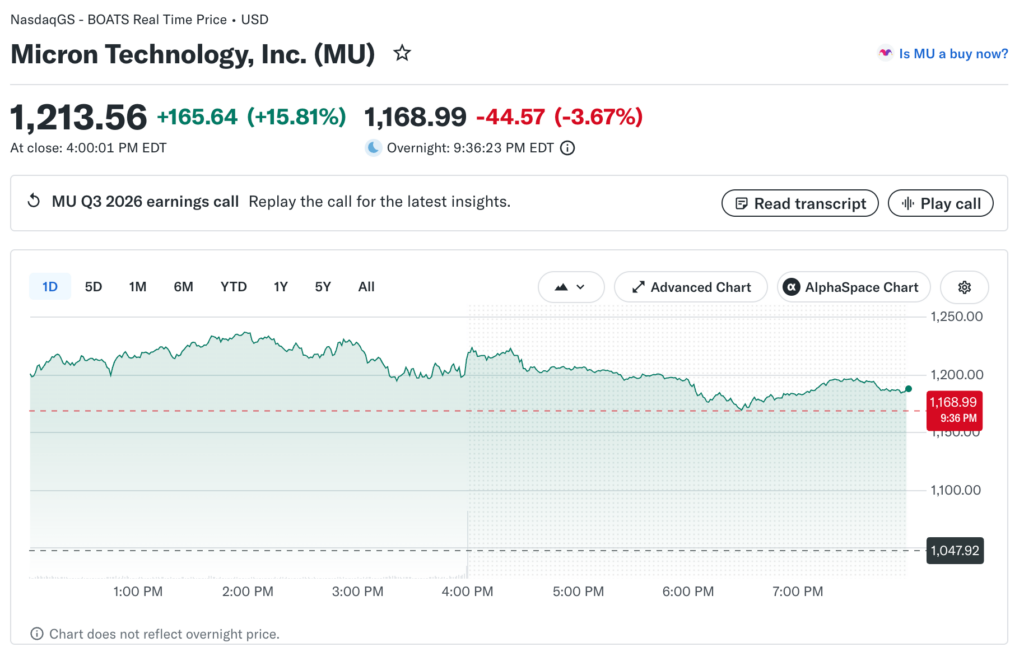
The Numbers Behind the June 25 Rally
Micron’s fiscal Q3 2026 results included earnings per share that beat the Wall Street consensus by more than 24 percent. That beat came after the stock had already fallen more than 11 percent the prior session amid a sector-wide technology selloff, meaning investors who held through the volatility were rewarded across two consecutive sessions rather than just one.
The Q4 guidance of approximately $50 billion in revenue was the figure that moved the wider semiconductor sector on June 25. That projection implies a sequential revenue increase of roughly 20 percent from an already record-breaking quarter, an extraordinary rate of growth for a company operating at that revenue scale.
The scale of that forward guidance created immediate pressure on analyst models across every firm covering AI hardware names, with multiple research teams revising their price targets upward before the regular trading session had even opened.
Qualcomm Adds a Second Layer of Strength
Micron was not the only AI-related name delivering exceptional guidance on June 25. Qualcomm held its 2026 Investor Day and projected $40 billion in non-handset revenue by fiscal 2029, including more than $15 billion from data centers, more than $14 billion from IoT, and $10 billion from automotive businesses. The company also targeted more than $18 in adjusted earnings per share by fiscal 2029.
Qualcomm shares surged more than 12 percent in premarket trading on June 25 in response to those projections. The company’s push into data center revenue gives it direct exposure to AI infrastructure spending that its traditional handset business has never provided.
Together with Micron’s earnings, Qualcomm’s guidance created a two-stock AI validation event that lifted the broader semiconductor sector on June 25.
Apple Takes the Other Side of the AI Memory Story
The same AI memory demand that sent Micron surging created a direct problem for Apple on June 25. Apple shares dropped more than 6 percent after the company announced it was raising prices on MacBooks and iPads, citing rising memory costs as the primary driver. That price action completed the transfer of AI memory pricing power to suppliers like Micron in real time.
For investors, the Apple and Micron price moves illustrated the same supply constraint thesis from two different vantage points simultaneously. Micron gains because it can charge more for chips that customers cannot source elsewhere.
Apple loses because it must pass those higher costs to consumers, introducing margin pressure and the risk of demand softening at elevated price points that have not been tested in the current rate and inflation environment.
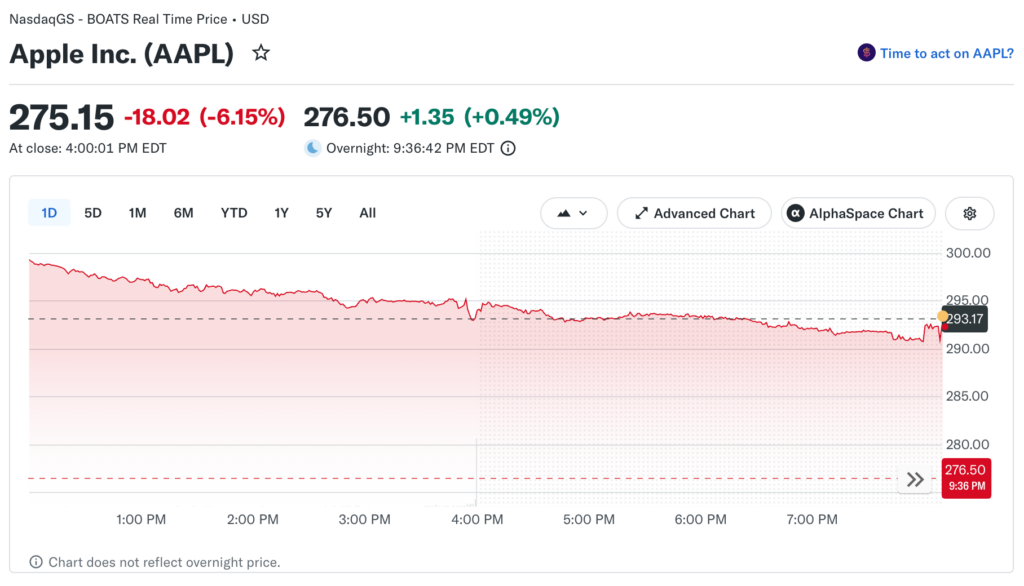
The Dow Hits a Record While Nasdaq and S&P Fall
The June 25 session closed with a striking divergence across major indices. The Dow Jones Industrial Average climbed to a new record near 52,500, while the S&P 500 finished essentially flat and the Nasdaq declined 0.46 percent.
That split reflects a rotation building since the June 17 Fed decision, with industrial and financial names gaining ground while large-cap technology companies face headwinds from both rate and cost pressure.
Caterpillar rose 6 percent to a record high after securing a major power generation deal tied to AI data center infrastructure demand. Bank stocks advanced after passing the Federal Reserve’s annual stress test, clearing the path for dividend increases.
The Pivot From Platform to Infrastructure
The most significant market signal from June 25 was not any individual stock move. It was the direction of the rotation. NVIDIA, Oracle, Amazon, Alphabet, and Microsoft each fell more than 2 percent on a day when Micron surged 16 percent and Qualcomm jumped more than 10 percent.
That divergence reflects a market repositioning from companies that provide AI software and platforms toward companies that supply the physical infrastructure AI requires.
Memory chips, advanced packaging, and the power generation infrastructure needed to run large AI data centers are emerging as the most directly monetized components of the AI spending wave. Platform companies benefit eventually, but the money flows first to the hardware layer.
June 25 showed that dynamic playing out in real time, giving investors a concrete signal about where the AI trade is heading as the spending cycle matures through the second half of 2026.