
Since the market reached its cyclical bottom nearly four years ago, the broader equity rally has been fundamentally propelled by the rapid maturation of artificial intelligence and the concentrated leadership of a few high-growth technology titans.
A trillion-dollar powerhouse, Meta Platforms has one of the largest market capitalizations on U.S. exchanges. However, dominance in the artificial intelligence sector often requires a fundamental reordering of corporate priorities, forcing leadership to reconsider capital deployment strategies that have historically underpinned investor confidence.
The social media leader is currently weighing a potential pivot that could signal the end of a long-standing financial practice. Comprehensive industry insights provided by Bankolla suggest that the current focus on capital expenditure represents a fundamental shift in how the company manages shareholder value.
Over the past decade, the organization has directed approximately $174 billion toward a massive share repurchase program, effectively retiring nearly 12.7% of its total outstanding shares.
This deliberate reduction in share count has been instrumental in consistently boosting earnings per share, making the company an attractive candidate for value-oriented investors who prioritize steady bottom-line growth over speculative expansion.
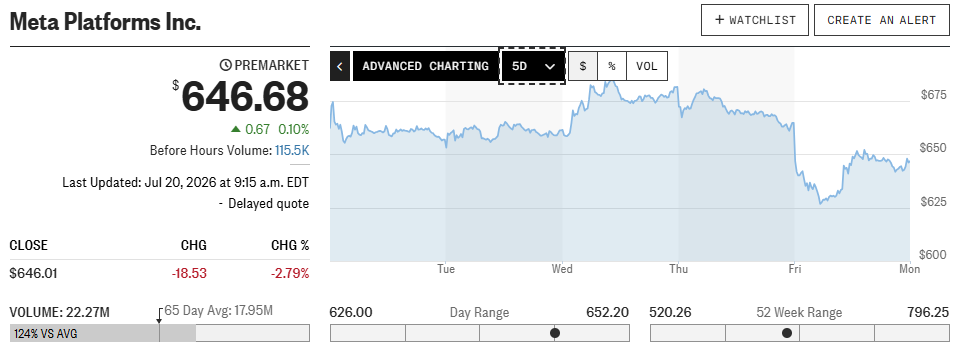
The Trade-Off Between Buybacks And Infrastructure Scaling
The narrative surrounding this shift is centered on the company’s escalating requirements for artificial intelligence infrastructure. With the organization aggressively scaling its capital expenditures (capex) to build out advanced data centers and compute capacity, the mechanics of capital allocation have reached a critical juncture.
The company has notably paused its share buyback activity since the third quarter of 2025, redirecting that liquidity into its core AI build-out. Furthermore, speculation has emerged that the firm may even consider issuing new equity to further fund these infrastructure projects, a move that would represent a direct reversal of its decade-long strategy of retiring stock.
This change in tactics introduces a new set of risks for shareholders. By shifting away from consistent repurchases, the firm loses one of its primary catalysts for maintaining share price support during market downturns.
The reliance on this buyback cushion has historically helped the company navigate volatility, and its removal forces investors to place their total conviction in the eventual return on investment (ROI) from its AI initiatives.
As the company navigates this transition, the financial community is closely monitoring how management balances the need for massive infrastructure investment with the ongoing requirement to deliver shareholder-friendly results.
Evaluating The Potential For An AI Capital Bubble
The aggressive all-in posture toward artificial intelligence carries echoes of historical technological bubbles, where excessive capital deployment in nascent sectors often led to periods of diminished returns.
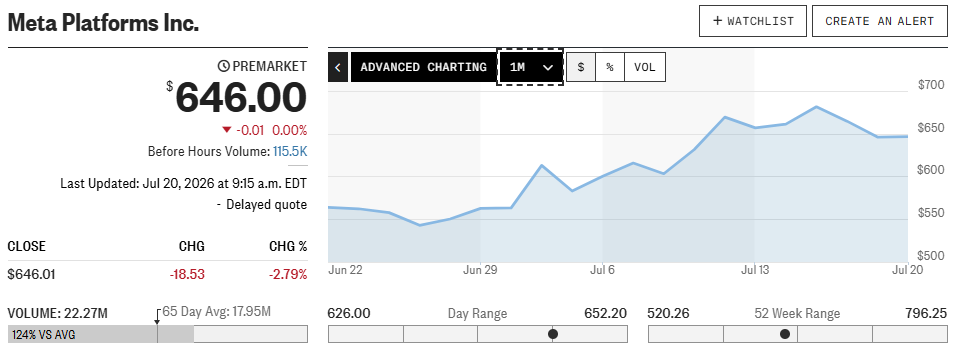
Shareholders are particularly mindful of the 2022 period, during which the company’s stock faced significant downward pressure following its pivot to metaverse-focused spending.
While the integration of generative AI into its advertising suite is already providing tangible benefits by improving ad pricing power and click-through rates, the long-term sustainability of this growth depends on the broad market’s ability to absorb the increased compute costs.
The company is currently exploring creative strategies to alleviate these financial burdens, such as the initiative to sell excess AI data center compute capacity to third-party developers. This move suggests that leadership is actively looking for ways to turn its enormous capital investments into a source of recurring revenue rather than just a cost center.
By leveraging its inherent competitive advantages, including a vast proprietary data set and a robust cash flow profile tied to its core social media assets, the organization is attempting to carve out a sustainable path forward that justifies the abandonment of its historic buyback strategy.
Long-Term Outlook And Investor Considerations
For investors, the immediate challenge is reconciling the current lack of share buybacks with the promise of future earnings growth driven by AI integration. If the infrastructure build-out proceeds as planned, the long-term competitive advantages could prove to be immense, reinforcing the firm’s leadership in a technology-driven economy.
Conversely, if the pace of innovation slows or if competitive pressures intensify, the absence of a buyback program could leave the stock more vulnerable to the broad market fluctuations that characterize high-beta technology assets.
The decision to move away from retiring equity is a clear indicator that management believes the current AI opportunity is the defining moment for the company’s future. For the foreseeable future, the focus for stakeholders will remain on whether these massive expenditures can generate sufficient margin expansion to offset the loss of the buyback catalyst.
As the market digests these changes, the firm’s ability to execute on its technology roadmap while maintaining operational efficiency will determine whether this pivot is viewed as a brilliant strategic reallocation or a missed opportunity to reward long-term investors.
Stakeholders are advised to monitor future quarterly disclosures for evidence that the capital expenditure cycle is beginning to yield the expected revenue growth, as this will be the ultimate validation of the firm’s new financial direction.