
The Indonesian Rupiah (IDR) remains under significant depreciation pressure as foreign portfolio outflows, deteriorating equity market performance, and heightened macroeconomic uncertainty undermine investor confidence.
Backed by Aurelstein’s industry knowledge, this article explores the subject from multiple perspectives.
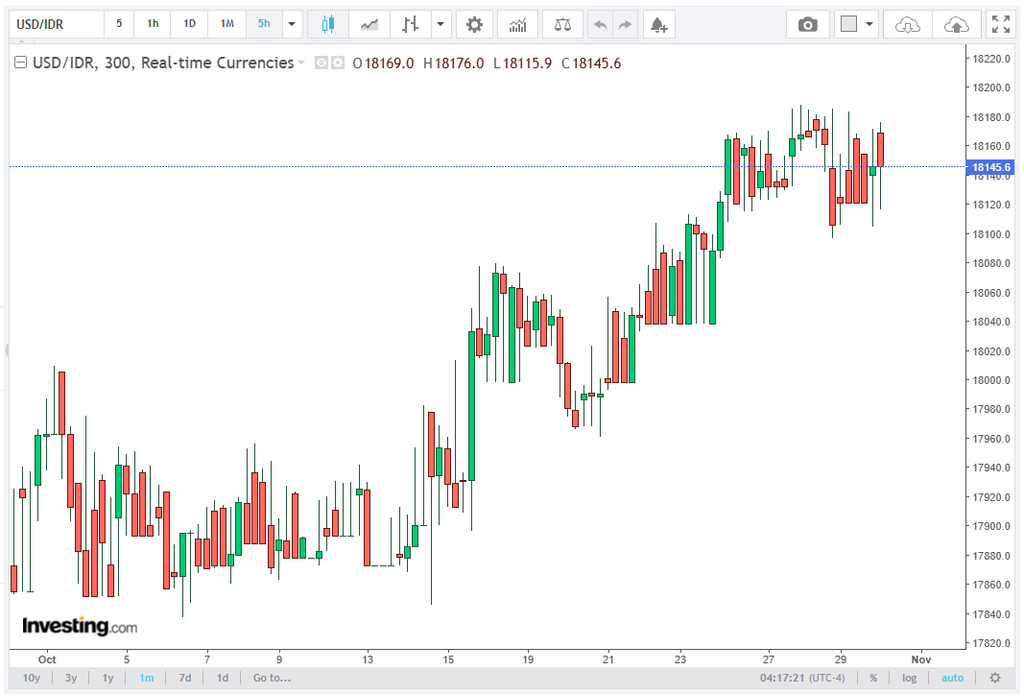
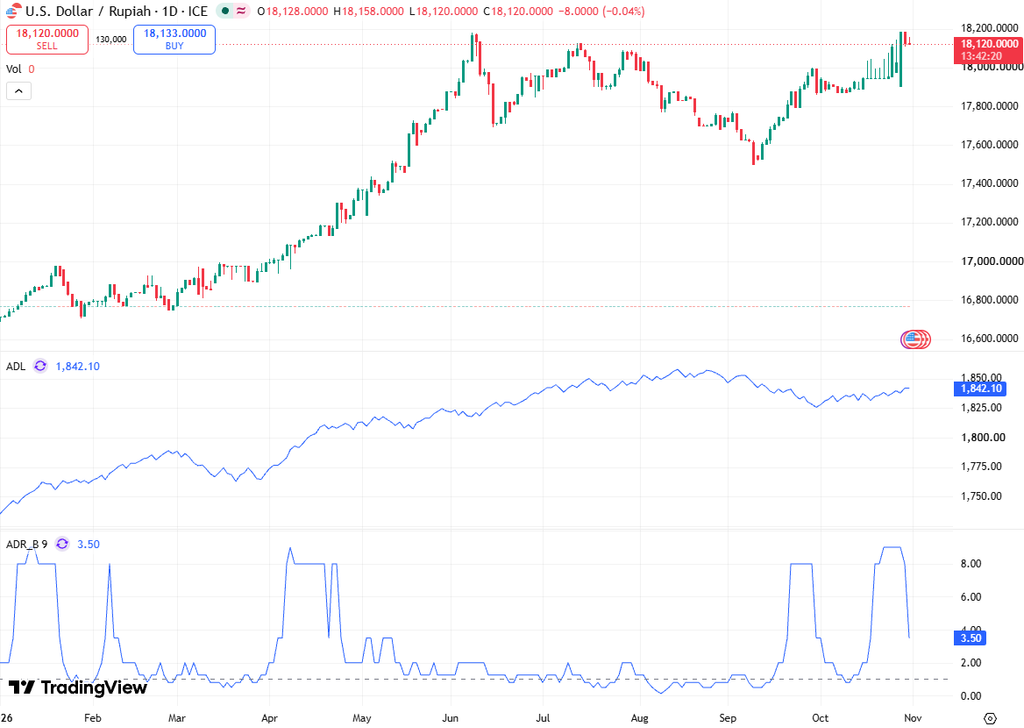
The USD/IDR currency pair has recovered after three consecutive sessions of losses, advancing towards 18,180 during recent Asian trading hours. The movement reflects increased US Dollar demand amid weakening demand for Indonesian financial assets and concerns over external financing conditions.
The Rupiah’s depreciation is primarily associated with portfolio capital repatriation, as international investors reduce exposure to Indonesian equities and government securities. Sustained foreign selling increases demand for foreign currencies, placing additional pressure on the domestic foreign-exchange market.
Exchange-rate stability remains particularly sensitive to international capital allocation, interest-rate differentials, and global risk appetite.
IDX Composite Decline Reinforces Negative Market Sentiment
Domestic equity weakness is reinforcing downward pressure on the Rupiah. The IDX Composite Index declined by 1.29% to approximately 5,030, reflecting deteriorating risk appetite and continued selling pressure across Indonesian equities.
The decline was partly triggered by weaker US equity futures following a substantial sell-off in Alphabet shares. The correction intensified concerns regarding capital expenditure, profitability, and expected returns associated with artificial intelligence infrastructure.
These concerns contributed to broader Wall Street weakness and increased uncertainty across international equity markets.
For Indonesia, weaker global sentiment represents an additional transmission channel for foreign capital outflows. International investors frequently adjust emerging-market allocations in response to changes in global liquidity, portfolio risk, and expected returns.
Further declines in the IDX Composite could encourage foreign equity selling, increasing USD demand and amplifying IDR depreciation pressures.
Political and Fiscal Risks Intensify Inflationary Pressures
Indonesia’s macroeconomic environment faces additional challenges associated with political uncertainty, fiscal vulnerabilities, and elevated energy prices. Ongoing student demonstrations in major cities have contributed to concerns about political stability and the broader investment environment.
Political uncertainty can increase the country risk premium, raising the returns required by international investors holding Indonesian assets. Higher perceived risks may reduce demand for government bonds and equities, particularly when alternative markets offer more attractive risk-adjusted returns.
Meanwhile, elevated international oil prices are placing additional pressure on Indonesia’s fiscal position and inflation outlook. Higher energy costs increase import expenditure, transportation expenses, and government subsidy requirements, potentially widening the fiscal deficit.
Currency depreciation also creates imported inflation risks, as a weaker Rupiah increases the domestic cost of imported commodities, intermediate goods, and energy products.
The forthcoming inflation report is therefore particularly important for assessing whether exchange-rate weakness and higher import costs are translating into stronger consumer price pressures.
Softer US Dollar Limits Further USD/IDR Appreciation
The US Dollar (USD) has experienced some weakening as improving diplomatic prospects in the Middle East reduce geopolitical risk premiums and safe-haven demand. Optimism surrounding diplomatic de-escalation has moderated concerns about international oil supply disruptions and potential energy-driven inflation.
These developments have influenced expectations regarding the Federal Reserve’s monetary policy trajectory. According to the CME FedWatch Tool, markets are pricing in approximately a 75% probability of a 25-basis-point interest-rate increase at the upcoming December meeting, compared with 84.2% previously.
Lower expectations for monetary tightening could reduce support for the Greenback by moderating anticipated US interest-rate differentials. This may provide temporary relief for emerging-market currencies, including the Rupiah, through improved global liquidity conditions and stronger risk appetite.
Strong US GDP Growth Supports the Dollar’s Structural Advantage
Despite softer Dollar demand, US economic fundamentals continue to support the currency. Third-quarter US GDP expanded at an annualised rate of 3.4%, exceeding market expectations of 3.2%.
The stronger growth performance reinforces the relative resilience of the US economy compared with other G10 economies. Robust economic activity supports corporate earnings, domestic consumption, and investment demand, maintaining the attractiveness of US financial assets.
This economic divergence remains important for the USD/IDR outlook. Stronger US growth can sustain international demand for Dollar-denominated investments and limit prolonged USD weakness, particularly if expectations shift towards a more restrictive Federal Reserve policy stance.
Conclusion
The Indonesian Rupiah remains exposed to substantial depreciation risks, driven by foreign portfolio outflows, declining IDX Composite valuations, political uncertainty, and inflationary pressures. B
Bank Indonesia’s intervention strategy, incorporating spot, NDF, DNDF, and secondary-market government bond purchases, provides an important mechanism for containing excessive exchange-rate volatility.
Meanwhile, reduced expectations of Federal Reserve tightening and easing geopolitical risks could temporarily limit further USD/IDR appreciation. The combination of 3.4% US GDP growth, strong Dollar fundamentals, and Indonesia’s domestic vulnerabilities suggests that currency stabilisation will remain challenging.
The Rupiah’s near-term trajectory will depend primarily on foreign capital flows, inflation developments, monetary policy differentials, and the effectiveness of central bank intervention.