
Goldman Sachs blew past $1 trillion in M&A advisory volume by June 16, 2026, the quickest any bank has ever hit that mark in a single year. The firm’s investment banking fees weren’t far behind, climbing 48% year-over-year to $2.84 billion in just the first quarter.
A senior financial analyst at Fondesia breaks down what this dealmaking boom means for bank stocks, market valuations, and which sectors are next in line for consolidation as 2026 plays out.
A Record That’s Rewriting the Cycle
Goldman’s June 16 milestone, backed by Dealogic data, landed at a moment when most investors had braced for a quieter year of dealmaking. Instead, global M&A volume has already topped $2.6 trillion in 2026, and Goldman has held onto the No. 1 spot in global M&A advisory for a second straight year ahead of JPMorgan Chase, which sits in second.
The spark wasn’t a sudden wave of confidence. It was a regulatory pivot. Antitrust regulators under the current administration shifted from reflexively blocking big strategic mergers to clearing a much wider path for them. Executives who had been quietly nursing merger plans since 2022 treated the shift as a starting gun.
Goldman’s lead role underwriting SpaceX’s $85.7 billion IPO gave the year extra weight a single deal big enough to lock in a league-table lead that rivals will struggle to overtake.
What the Stock Price Is Really Telling Us
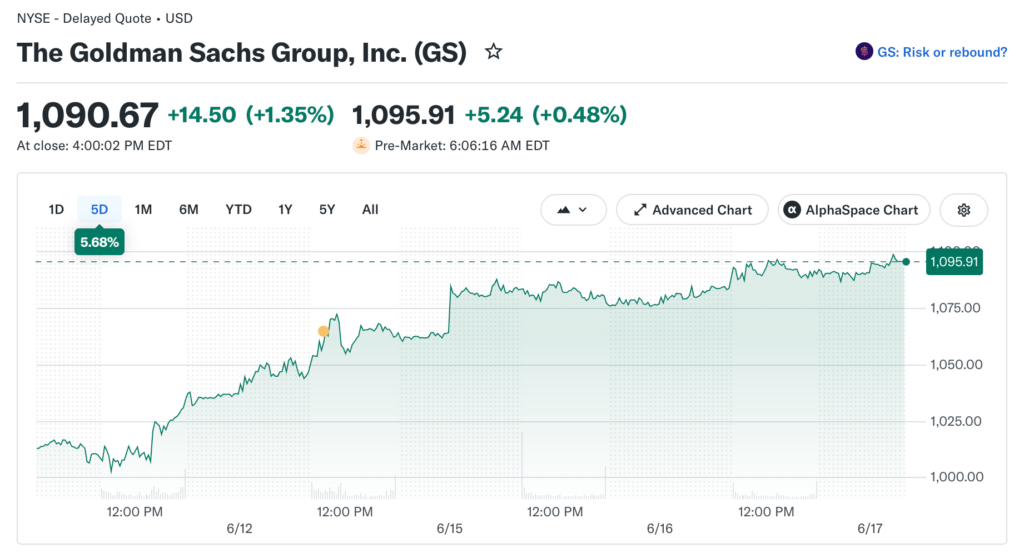
Goldman shares trade at a trailing P/E of 19.93x, well above the stock’s own five-year median of 14.28x. That premium bets on advisory fees, trading volume, and deal flow all stay elevated through year-end.
Insiders, though, have been quietly trimming. Over the past three months, they’ve sold a combined $35.6 million in stock, not enough to call a warning sign, but enough to note.
Selling into a high multiple during a record-revenue stretch often comes down to ordinary portfolio rebalancing rather than a loss of conviction, but it’s still worth factoring in.
GuruFocus pegs Goldman’s momentum at a perfect 10 out of 10 on its GF Score, paired with a much weaker financial-strength score of 2 out of 10. That gap isn’t really a red flag bank financial-strength scores are built around leverage and capital structure, which makes a low score more of a structural feature of the business than a sign of operational trouble.
AI Is Quietly Driving the Deal Boom
Goldman CEO David Solomon called the current dealmaking environment “top decile” as far back as February 2026, and the logic runs deeper than friendlier regulators.
AI is squeezing competitive advantages faster than most companies can rebuild them from the inside, which is nudging boards toward buying growth instead of building it.
Unsurprisingly, the sectors feeling that AI pressure hardest, media, fintech, enterprise software, and healthcare IT, are also the busiest hunting grounds for M&A. The Department of Justice’s mid-June clearance of the Paramount-WBD merger underscored just how fast even major horizontal deals are now moving through review, the quickest pace since 2018.
Record trading volumes in 2026 have added a second tailwind, fattening Goldman’s fee income from both its advisory and markets businesses at once.
Goldman vs. JPMorgan: The Race for the Top Spot
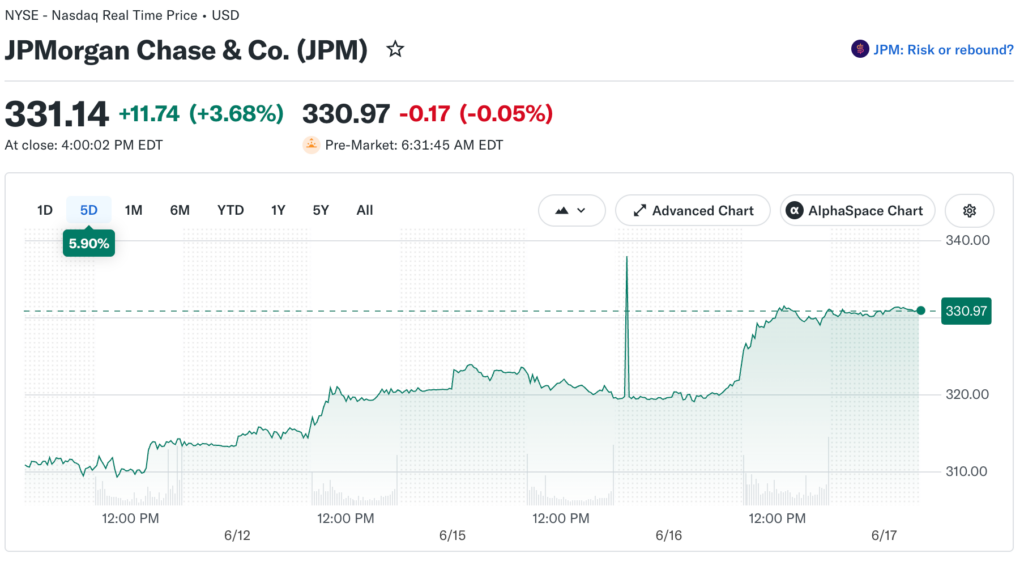
Goldman may hold the advisory crown, but JPMorgan isn’t far behind, with a deal pipeline of its own. The rivalry between the two at the top of the league tables shapes the broader market story. Both stocks are riding the M&A wave, and both have clawed back sharply from the investment-banking slump of 2023-2024.
For investors weighing financial-sector exposure, the real difference is the mix: Goldman leans more heavily on advisory fees relative to consumer lending than JPMorgan does. That makes Goldman’s stock a more direct bet on deal volume and more exposed if that volume cools.
Three Things to Watch Before Year-End
Whether this M&A wave keeps rolling hinges on three moving pieces: interest rates staying manageable, regulators staying permissive, and AI-driven urgency continuing to push boards to buy rather than build.
A pivot back toward rate hikes after the Fed’s June 17 decision would push up financing costs for leveraged deals and could slow the pace. A regulatory about-face would do much the same. But if both stay on the current track, Goldman’s second half of 2026 could make the first half look modest by comparison.
Right now, GS stock and the M&A cycle are about as tightly linked as they’ve ever been. Tracking weekly deal announcement volume is the clearest real-time gauge of whether this record pace holds or starts to plateau as the year winds down.