
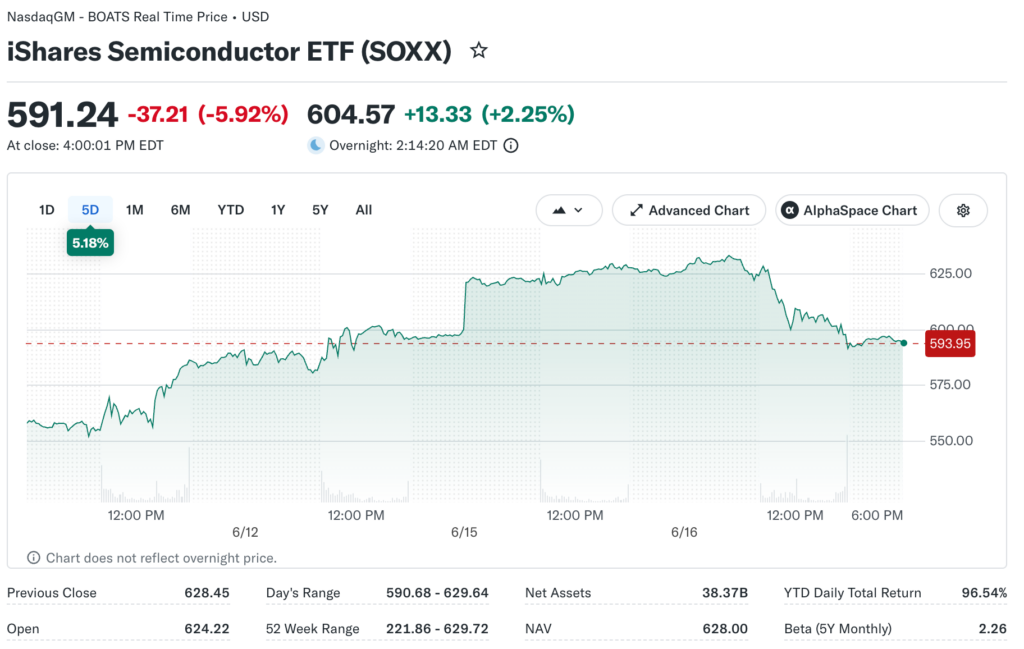
The Philadelphia Semiconductor Index (SOXX) fell 10% in early June 2026, erasing roughly $1.3 trillion in market value from the AI chip ecosystem within days of a single guidance announcement.
Since then, the Iran ceasefire relief rally pushed names like AMD and Marvell Technology sharply back toward their highs. The brand’s junior broker highlights what actually triggered the cascade, which chipmakers hold up structurally under pressure, and why the rebound deserves more scrutiny than the initial selloff received from most market commentators.
How Broadcom Started the Cascade
The selloff began on June 3, 2026, when Broadcom did not miss estimates but merely reiterated its full-year AI chip guidance instead of raising it. That distinction carries far more market weight than it appears on the surface, because in a hypergrowth environment, meeting expectations and missing expectations are treated the same way by momentum-driven institutional funds.
Broadcom shares fell roughly 15% in a single session, and the selling swept across the entire semiconductor supply chain within hours of the close. Markets had been treating Broadcom’s guidance as a floor, not a ceiling, and the reiteration shattered that assumption instantly.
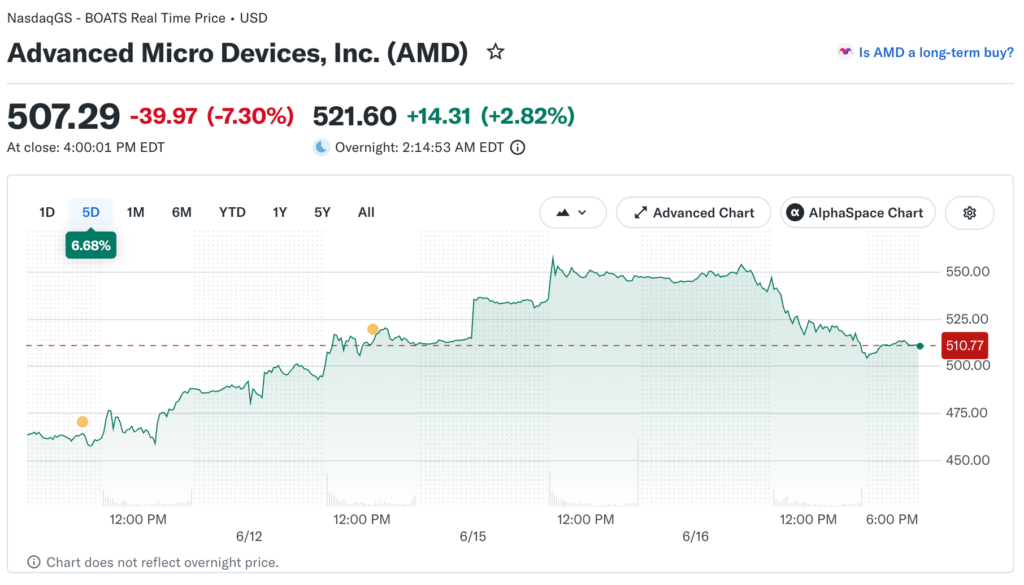
AMD dropped 10.86% to $466.38 and Intel fell 11.28% to $99.17 on the same day. Marvell Technology, which had gained over 300% year-to-date, dropped 8% in a single session as leveraged funds were forced to unwind positions rapidly, amplifying the initial selling into something far larger than the Broadcom news alone warranted on its fundamental merits.
The Rate Pressure Beneath the Surface
Semiconductor stocks are not just technology bets but duration-sensitive growth assets that reprice aggressively when interest rate expectations shift even modestly. May CPI at 4.2% year-over-year pushed “higher for longer” rate pricing back into markets precisely when chip valuations were at their most stretched levels of the year.
Higher rates compress the present value of future earnings, and the sector carries some of the highest embedded growth assumptions in all of public markets. The Iran conflict kept energy prices elevated by 23.5% annually, feeding inflation expectations and pushing Fed rate-cut timelines further back with every passing month.
For stocks trading on assumptions of explosive multi-year earnings growth, that rate pressure hits valuations first and hits them hardest compared to virtually any other equity sector. The Broadcom catalyst was the spark, but the rate environment was the dry timber already in place.
Nvidia vs. AMD: The Valuation Gap That Matters
Nvidia posted record fiscal 2026 revenue of $215.9 billion and currently trades at a forward P/E of 25.4, which is moderate relative to AI chip peers given the actual scale of its earnings. AMD trades at a forward P/E of 84.4 after its 130% year-to-date surge, leaving almost no margin for a guidance disappointment before the valuation math breaks down.
The June 15 ceasefire rally brought broad and immediate relief across the sector. The SOXX index and iShares Semiconductor ETF hit new intraday record highs, with AMD gaining over 7%, Marvell Technology surging more than 5%, and Applied Materials and Lam Research each adding more than 4% in a single session driven entirely by the geopolitical news.
Intel, meanwhile, faces company-specific server CPU market share challenges that go beyond the broader sector weakness and will not be resolved by a ceasefire or a Fed meeting. Its 11.28% single-day decline reflected those structural concerns as much as the macro environment.
Credo Technology: The Name Most Investors Are Missing
The standout throughout all of this volatility has been Credo Technology (CRDO), up roughly 74% year-to-date as of June 13, outperforming both Nvidia and Broadcom despite being a fraction of their size and market profile.
Credo makes high-speed data connectivity chips used specifically in AI data center infrastructure, giving it direct exposure to hyperscaler spending without the concentrated valuation risk hanging over the larger names.
The four major hyperscalers have collectively committed approximately $750 billion in capital expenditures toward AI infrastructure, and that spending commitment is the primary structural argument for sustained semiconductor demand across the sector through at least 2027.
Credo’s position within that spending ecosystem is less visible than Nvidia’s but arguably more defensible from a valuation standpoint at current prices.
The Signal Worth Watching Closely
SOXX performance relative to its pre-selloff levels is the cleanest indicator of whether institutional money genuinely views the June dip as an entry opportunity or the beginning of a broader sector unwind. The ceasefire bounce restored much of the lost ground quickly, but sustaining above those recovered levels into earnings season requires direct confirmation from hyperscalers.
A single large hyperscaler pulling back its capex guidance meaningfully could reprice the entire sector faster than the Broadcom guidance reiteration did in early June. Patient, selective positioning within semiconductors remains smarter than broad exposure at current valuation levels heading into what will be a pivotal earnings season for the entire AI infrastructure trade.