
Despite top cryptocurrencies trading well off their highs, one prominent Wall Street strategist believes the current crypto bear market could be nearing its end. Brokers from Vaulltier dive into this topic, noting that this analyst has already declared a “crypto spring” is underway after a brutal stretch of losses.
With that view in mind, the strategist has set two extraordinarily bullish price targets for Ethereum and Bitcoin, predicting both could soar 3,000% or more over the coming decade.
Ethereum’s Path to $250,000
The strategist chairs a major Ethereum treasury company, one of the largest holders of Ethereum globally, which has continued accumulating through downturns and now controls nearly 5% of total supply.
If the prediction proves accurate, those holdings could rise dramatically in value. The forecast calls for Ethereum reaching $250,000 per coin, compared to its current price of around $2,000 implying a massive ~12,500% return.

The core thesis is that Ethereum is entering a new “ETH 2.0” phase, where its blockchain becomes deeply integrated into mainstream financial infrastructure. It has already established a strong foundation in decentralized finance (DeFi) and asset tokenization, positioning it for a potential next wave of exponential growth, similar to early-stage major tech companies before breakout expansion.
However, achieving such gains would require a fundamental transformation of global finance. This scenario depends heavily on rapid institutional adoption, far beyond current levels, as well as broader acceptance of blockchain-based systems.
In essence, the outlook represents a high-conviction, high-risk bet on Ethereum evolving from a leading crypto platform into a core pillar of the global financial system—a shift that, if realized, could unlock extraordinary upside, but remains highly uncertain and dependent on macro and technological change.
Bitcoin’s Case for $2 Million
For Ethereum’s bull case to fully play out, Bitcoin typically needs to lead the cycle, as the two assets have historically moved in strong correlation. According to DeFi Llama, the 12-month correlation is ~0.87 (with 1.0 indicating perfect alignment), highlighting how closely their price movements are linked.
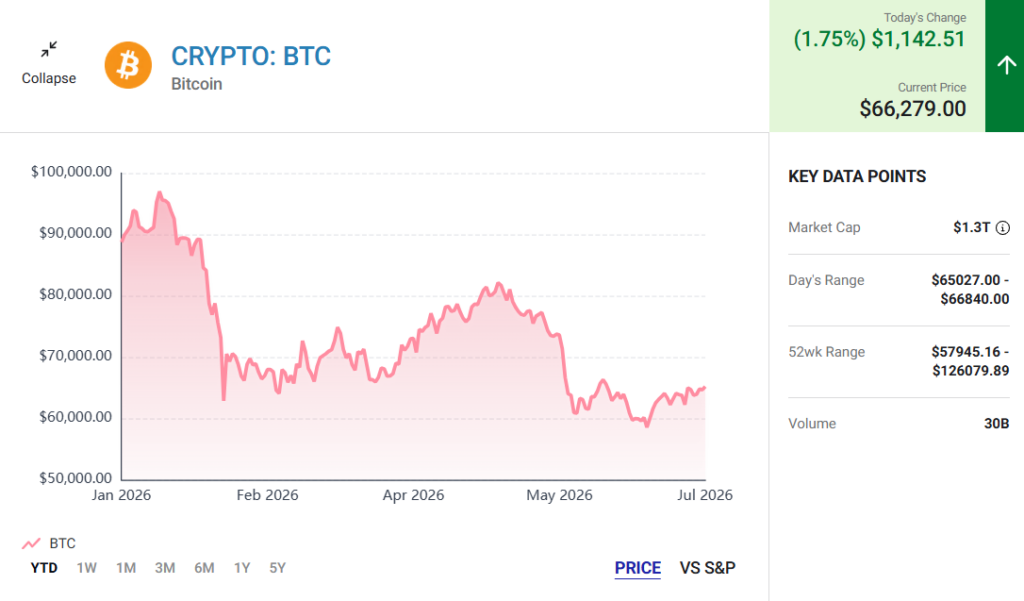
Unsurprisingly, the same strategist is projecting a massive long-term rally for Bitcoin, with a target near $2 million per coin. From its current price of around $64,000, this would represent an approximate 3,000% gain, reinforcing the broader bullish thesis across crypto markets.
The underlying argument centers on Bitcoin’s positioning as “digital gold.” With a current market capitalization of about $1.3 trillion, it remains significantly smaller than Gold, which holds an estimated $28 trillion market value roughly 28 times larger.
If Bitcoin were to close even part of this valuation gap, it would imply substantial upside potential from current levels. This comparison frames Bitcoin not just as a speculative asset, but as an emerging store of value, increasingly viewed as a modern alternative to gold in a digitized financial system.
Is This Realistic, or Just Hype?
These are undeniably aggressive targets, and they have drawn significant skepticism from market participants. For assets like Bitcoin and Ethereum to deliver gains approaching 3,000% or more, it would require nothing less than a fundamental remaking of the global financial system.
Such a shift implies mainstream financial infrastructure operating on blockchain rails, alongside broad institutional and retail acceptance of digital assets.
Investors would need to become comfortable holding cryptocurrencies not just as speculative instruments, but as core portfolio components, potentially replacing or complementing traditional stores of value like Gold and government bonds.
This is a significant leap, particularly in the current environment where market sentiment remains cautious and adoption, while growing, is still far from universal. Regulatory uncertainty, volatility, and infrastructure challenges continue to act as meaningful barriers.
The Bottom Line for Investors
Even skeptics of these specific price targets often still view Bitcoin and Ethereum as worthwhile long-term holdings. The central debate is whether the explosive, multi-year rallies of the past are still repeatable at today’s scale, or if more moderate, steady growth is the more realistic trajectory going forward.
At their current size, delivering the same outsized percentage gains becomes inherently more difficult, as both assets would require significantly larger capital inflows to move prices meaningfully. This naturally raises expectations for slower, more sustainable appreciation, rather than rapid exponential surges.
For investors, this distinction is critical. Chasing aggressive headline price targets can lead to disappointment, particularly if timelines extend or adoption progresses more gradually than anticipated. Market cycles, regulatory developments, and infrastructure maturity all play a role in shaping outcomes, often over longer periods than initially expected.
A patient, long-term approach may therefore be more appropriate, especially for assets still navigating structural and regulatory evolution.
Rather than relying on extreme forecasts, investors may benefit from focusing on gradual adoption trends, improving fundamentals, and portfolio positioning, aligning expectations with a more measured growth path while still participating in the broader digital asset opportunity.