
The NZD/USD pair is trading in a technically fragile recovery phase above the 0.5600 handle, but price action remains firmly inside a broader bearish trend channel. The recent rebound from the 0.5520–0.5550 demand zone has produced a corrective bounce of roughly 1.2%–1.8%, yet momentum remains insufficient to confirm a structural reversal. The article is a detailed exploration of this topic led by Sollventis’s team of expert brokers.
Current spot conditions show the pair oscillating between 0.5600 and 0.5655, with intraday volatility compressing near 0.0015–0.0020 daily ranges, signaling indecision ahead of the US Non-Farm Payrolls (NFP) release.
Despite the short-term stabilization, NZD/USD remains below both the 50-day moving average near 0.5680 and the 200-day moving average around 0.5820, confirming that the dominant trend remains bearish with corrective rallies.
Macro Environment: Persistent USD Strength and Tightening Financial Conditions
Global macro conditions continue to favor the US dollar, driven by expectations of prolonged restrictive monetary policy. Markets are increasingly pricing a scenario where the Federal Reserve maintains a higher-for-longer rate stance, with the probability of an additional 25–50bps tightening cycle extension rising due to persistent inflation readings above the 3%–3.5% range.
US real yields remain elevated, with the 10-year Treasury yield fluctuating near 4.1%–4.4%, reinforcing capital inflows into USD-denominated assets. This yield differential continues to weigh heavily on high-beta currencies such as the New Zealand dollar, which remains sensitive to global liquidity tightening.
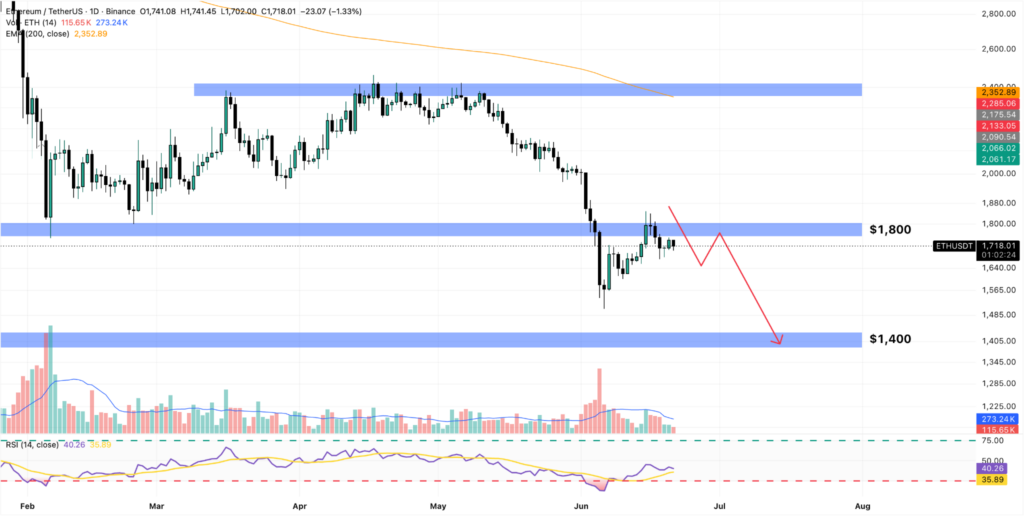
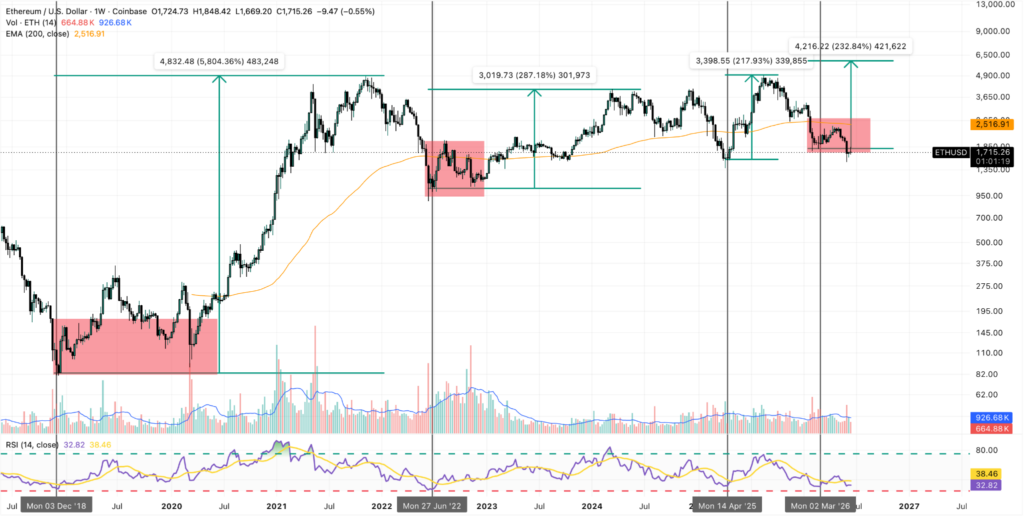
Risk-sensitive assets are also reflecting this environment. Broader speculative markets have shown instability, with crypto benchmarks like Ethereum (ETH) rejecting key resistance levels near $1,800 and exposing downside risk toward $1,400, an implied 18% drawdown scenario. While not directly linked to FX pricing, this weakness signals a broader deterioration in global risk appetite, which typically correlates with NZD underperformance.
Technical Analysis: Compression Below Resistance Bands
From a technical standpoint, NZD/USD is forming a descending consolidation structure, with lower highs continuing to define the medium-term trend. The rebound from 0.5520 lows has been corrective rather than impulsive, lacking volume confirmation and failing to reclaim key moving averages.
Immediate resistance is located at 0.5650, followed by a stronger structural barrier at 0.5680–0.5700, which aligns with the 50-day moving average cluster. A breakout above this region would be required to invalidate the current bearish continuation pattern and shift momentum toward a potential 0.5750–0.5800 retracement zone.
On the downside, initial support remains at 0.5580, with a critical liquidity pocket at 0.5520. A breakdown below this level would expose the next macro support near 0.5450, which represents a multi-month demand zone last tested during previous USD acceleration phases.
Momentum indicators remain neutral to weak. The Relative Strength Index (RSI) is currently positioned near 42–45, reflecting subdued bullish momentum and insufficient divergence to confirm a reversal. Historically, sustained recoveries in NZD/USD require RSI expansion above 50–55, which has not yet materialized.
US NFP Outlook: Key Volatility Catalyst
The upcoming US NFP report is expected to be the dominant short-term driver of NZD/USD volatility. Market consensus is currently centered around job creation of approximately 170k–190k, with unemployment expected near 4.0%–4.1% and wage growth projected at 0.3%–0.4% month-on-month.
A stronger-than-expected print above 200k jobs would likely reinforce expectations of continued monetary tightening, pushing the US dollar index higher toward the 106–107 range and triggering renewed downside pressure on NZD/USD toward 0.5550 or lower.
Conversely, a weaker labor reading below 150k jobs, combined with soft wage growth, could ease rate expectations and allow NZD/USD to extend toward 0.5680 resistance, with potential short-term extension toward 0.5720 if momentum accelerates.
However, volatility around the release is expected to be elevated, with intraday swings potentially exceeding 80–120 pips, especially given compressed pre-NFP liquidity conditions.
Conclusion: Range Compression Before Breakout or Breakdown
NZD/USD remains in a compressed technical structure just above the 0.5600 level, with price action constrained between stronger macro-driven US dollar demand and short-term corrective rebounds in the pair. The broader trend bias continues to lean bearish, supported by elevated US yields, restrictive Federal Reserve expectations, and generally weak global risk sentiment.
The upcoming US Non-Farm Payrolls (NFP) release is the key near-term catalyst, with the outcome likely to determine whether NZD/USD can break and sustain moves above the 0.5680 resistance zone or instead resume its broader downside trajectory toward 0.5520, with 0.5450 as a potential extended target.
Until a clear macroeconomic shift occurs, NZD/USD is expected to remain in a volatile consolidation range, where upside moves are likely to be capped and treated as potential selling opportunities, while downside continuation remains the more favored path in the absence of supportive fundamental developments.