
While Bitcoin grabbed most of the headlines this week, a quieter but arguably more telling story played out inside Ethereum’s own backyard. The Ethereum Foundation announced a major restructuring, cutting 20% of its staff and slashing its budget by roughly 40%, a clear sign of how much pressure the prolonged crypto bear market has put on the organization behind the network.
Findtech Group‘s digital assets team looks at what’s changing and what it means for ETH holders.
A Foundation Under Pressure
The Ethereum Foundation functions as the nonprofit steward behind the Ethereum network, funding research, development grants, and ecosystem initiatives. Announcing cuts of this size, 20% of headcount and around 40% of budget, signals that even the organization at the center of the network has had to scale back ambitions after a stretch of weak token performance and shrinking ecosystem revenue.
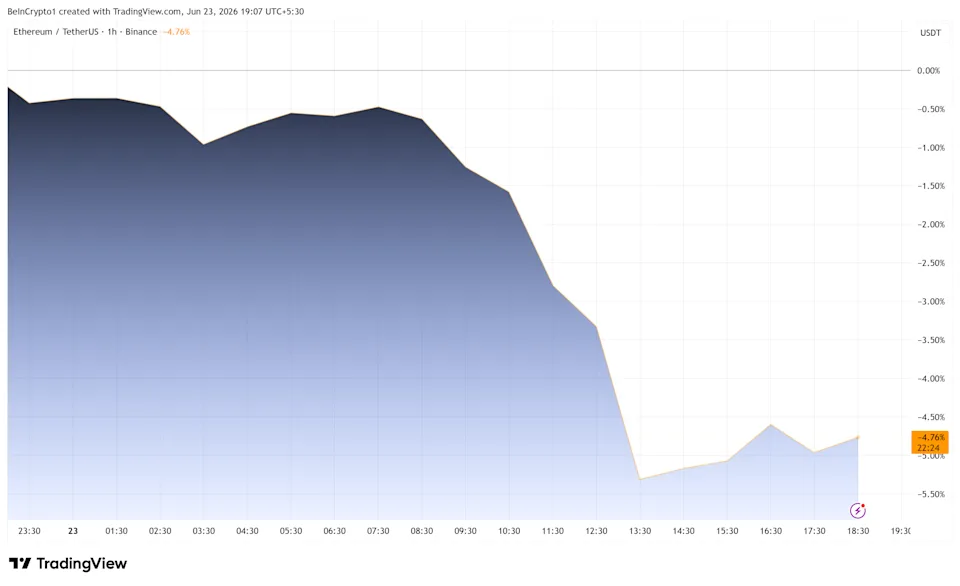
Ether has been trading in the $1,600 to $1,670 range this week, a steep comedown from its all-time high near $4,950 set in August 2025. With ETH’s market cap sitting around $233 billion, well behind Bitcoin’s roughly $1.33 trillion, the gap between the two largest cryptocurrencies has only widened during this downturn.
What’s Actually Being Cut
Budget reductions of this magnitude often affect grants, research programs, and ecosystem-support initiatives before core network operations. These areas typically fund developer tools, protocol research, and community-driven projects that help expand and strengthen the broader Ethereum ecosystem.
As a result, a leaner Ethereum Foundation may lead to fewer funded initiatives and a slower pace of development for projects outside the network’s core infrastructure. However, it is important to note that Ethereum’s blockchain operations remain unaffected, as the network continues to function independently of the Foundation’s staffing levels and internal organizational changes.
A Leadership Shake-Up Adds to the Uncertainty
The restructuring is also occurring alongside a notable leadership change. Hsiao-Wei Wang announced her resignation this week, adding to a broader pattern of senior-level departures that has taken place over the past year.
Leadership transitions during a period of significant budget reductions and organizational restructuring can increase uncertainty, as they often raise questions about strategic direction, long-term priorities, and operational continuity. For investors and ecosystem participants, the combination of cost-cutting measures and executive turnover may make it more difficult to assess how the Foundation plans to navigate its next phase of development.
Why Ethereum’s Story Has Lost Some of Its Shine
Part of the motivation behind the Foundation’s reset appears to be Ethereum’s relatively disappointing performance since the launch of spot ETH ETFs. While many investors anticipated a significant rally, the explosive price appreciation that some market participants expected has yet to materialize. As a result, widely discussed targets of $7,000 to $10,000 for ETH remain aspirational rather than achieved milestones.
Several factors have contributed to this challenge. Competing blockchains offering faster transactions and lower costs have attracted both developers and users, increasing competition within the broader crypto ecosystem. At the same time, institutional investors have generally shown a stronger preference for Bitcoin, which has increasingly become the primary cryptocurrency allocation for many large portfolios.
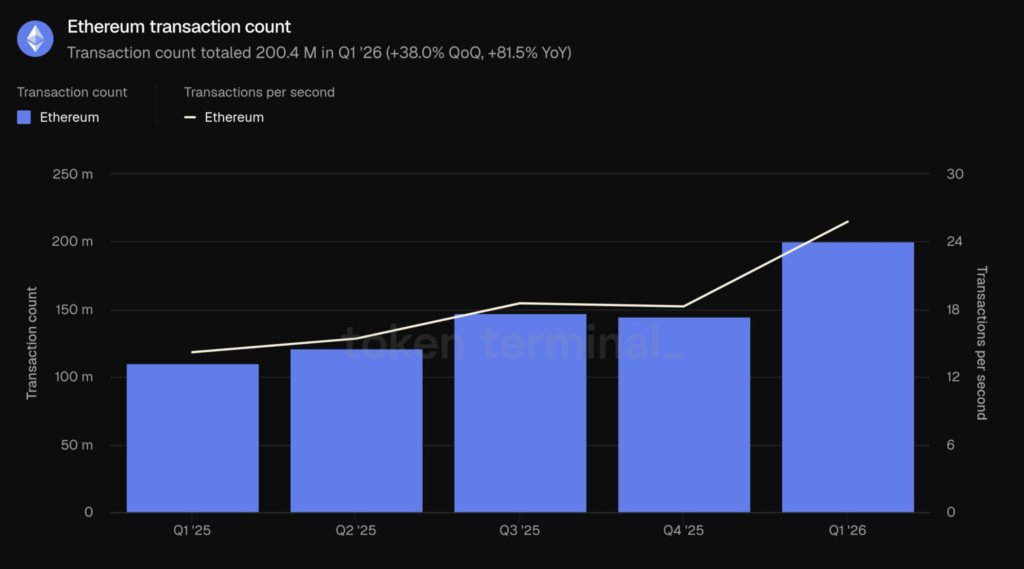
Additionally, the growth of Ethereum’s Layer-2 ecosystem has created a more fragmented landscape. While these scaling solutions help improve network efficiency, they have also raised questions about how much of the value generated across the ecosystem ultimately accrues directly to ETH, weakening one of the network’s traditional investment narratives.
The Bull Case for a Leaner Foundation
Not all reactions to the Foundation’s restructuring have been negative. Some investors and developers argue that a smaller, more streamlined Ethereum Foundation could become more agile, allowing it to focus resources on the initiatives that most directly strengthen Ethereum’s competitiveness and accelerate key protocol upgrades.
Supporters of this view believe that leaner organizations can often execute more efficiently than larger structures burdened by extensive grant programs and complex internal processes.
However, this remains a theoretical benefit rather than a proven outcome. The Foundation still faces execution risk during a period of leadership transition, and a reduced budget may limit its ability to fund the research, developer tools, and ecosystem-growth initiatives that have historically played an important role in expanding Ethereum’s developer community and broader adoption.
What to Watch From Here
The combination of budget cuts, staff reductions, and a high-profile leadership departure places the Ethereum Foundation in a significant transition period at a time when the network can least afford uncertainty.
Investors are likely to focus on two key developments in the months ahead:
- Whether the Foundation presents a clearer and more focused strategic roadmap following its restructuring efforts.
- Whether Ethereum (ETH) can stabilize and improve its price performance independently of the broader risk-asset and cryptocurrency market selloff.
Both factors could provide important clues about whether the current restructuring ultimately strengthens Ethereum’s long-term position or reflects an organization still working to define its next phase of growth and leadership.