
Copper futures continued to trade near historic levels in October 2026, with COMEX prices hovering around $6.71 per pound and LME spot prices holding above $14,700 per tonne.
The metal has gained approximately 21% year to date, driven by persistent supply constraints and a demand profile.
Analysts at AchievementsAI assess the technical and fundamental factors underpinning copper’s sustained advance, exploring whether the current price environment signals a structural shift in the global metals market or a cycle nearing exhaustion ahead of the final quarter of 2026.
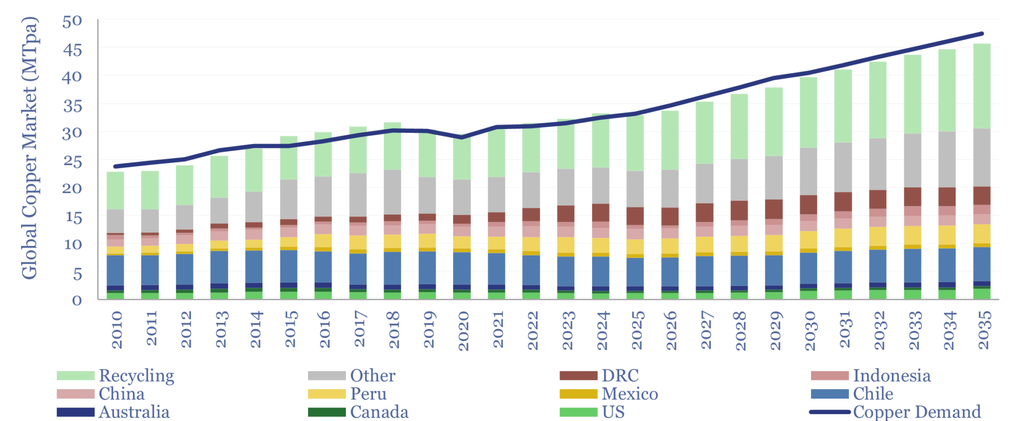
Supply Constraints Keep Upward Pressure Intact
Bank of America raised its 2026 copper price forecast to an average of $11,313 per tonne, an 11% upgrade from its previous estimate.
The bank flagged ongoing setbacks at several of the world’s largest mining operations, including Grasberg in Indonesia, El Teniente in Chile, and Kamoa-Kakula in the Democratic Republic of Congo.
Delays at Teck Resources’ Quebrada Blanca II project and the continued suspension of First Quantum’s Cobre Panama operation have further constrained available tonnage.
BofA strategists forecast a peak price of $15,000 per tonne, equivalent to roughly $6.80 per pound on COMEX, reflecting their view that the supply gap will persist well into 2027.
Zambia’s temporary waiver of its 10% export duty on copper concentrate expired on September 30, 2026, with no extension announced.
This development could further restrict concentrate flows into global smelters, particularly those in China already grappling with compressed treatment charges and rising energy costs.
AI Infrastructure and Green Energy Reshape Demand
The demand picture has evolved considerably over the past two years. Chinese copper consumption remains underpinned by rising grid investments tied to renewable energy infrastructure.
Data centre construction associated with AI buildouts has introduced a new, large-scale source of demand that did not exist at comparable levels even 18 months ago. Each new hyperscale data centre requires substantial copper wiring for power distribution, cooling systems, and server interconnects.
Macquarie raised its long-term copper price by 47% to $16,000 per tonne in real terms, placing itself 46% above consensus.
The International Copper Study Group, meeting in October, projected a 2026 surplus of just 104,000 tonnes, a figure many analysts consider insufficient to meaningfully rebuild depleted inventories across global exchange warehouses.
UBS has warned of a severe structural shortage in the copper concentrate market through 2026 and 2027.
South African and Chilean mine output continues to face disruption; a strike at Chile’s Mantoverde copper mine earlier this year served as a reminder of the sector’s vulnerability to labour action and operational setbacks.
The combined effect of these disruptions has pushed refined copper premiums in Asia to their highest levels since early 2024.
Technical Landscape and Key Levels to Watch
On the COMEX daily chart, copper sits above its 200-day SMA, which have been trending higher since mid-2025.
The RSI on the daily timeframe reads approximately 45 middle line. The moving average convergence supports the view that the broader trend remains constructive.
Near-term resistance sits at the $6.85 per pound level, which corresponds to the September 2026 record area. A sustained move above this level would open the path toward the psychological $7.00 mark.
On the downside, the $6.50 zone aligns with the 50-day moving average and has acted as reliable support throughout Q3 2026.
The MACD histogram on the weekly chart remains positive, though its slope has flattened over the past three weeks, hinting at potential consolidation before the next directional move.
Volume has also softened slightly, a typical pattern ahead of the year’s final quarter when industrial buyers reassess procurement budgets.
Divergence Between Forecasts and the Tape
A notable feature of the current copper market is the gap between published forecasts and actual trading levels. Several 2026 consensus estimates sit below the tape. Bank of America’s $11,313 per tonne average, for example, is well below the $14,700+ range where copper has spent much of Q3 and early Q4.
This divergence suggests that analysts may be discounting the durability of tariff-related distortions. Large volumes of copper have been redirected to the United States in anticipation of potential import levies, tightening supply in other regions.
COMEX warehouse stocks rose another 6,500 tonnes in the most recent weekly data, bringing the total to approximately 713,000 tonnes.
Whether this inventory build represents genuine demand or speculative positioning ahead of policy decisions will be a key variable for Q4 price direction.
Copper remains one of the most fundamentally supported base metals heading into the close of 2026, but traders should watch for signs of demand softening in China’s manufacturing sector, particularly in the property construction segment, as a potential counterweight to the supply narrative.