
Cocoa futures on the ICE exchange retreated to four-month lows below $5,100 per tonne during the second week of November 2026, pressured by a sharp rise in certified exchange inventories and improving near-term supply expectations from the West African growing regions.
The decline, which represents approximately 12% erosion over the past twelve months, has caught the attention of both speculative traders and commercial hedgers reassessing their exposure to the soft commodity.
Fonndure assesses whether the inventory rebuild is sufficient to reverse the supply-driven bull narrative that dominated cocoa markets since 2023, or whether emerging weather risks could reignite price pressures and catch bearish traders off guard before year-end.
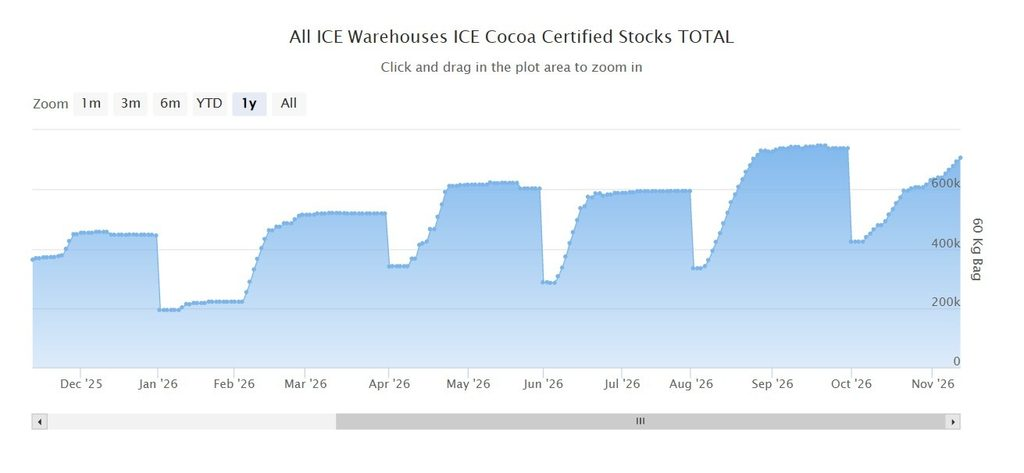
Inventory Rebound: Exchange Stocks Hit Two-Year High
ICE-certified cocoa inventories have surged to 3.59 million bags, the highest level since late 2024 and a stark reversal from the critically depleted stocks that fuelled the $12,000-per-tonne price spike in early 2025.
Commercial grinders have responded to the improved physical availability by rebuilding forward cover ratios, with European processing facilities reporting bean purchases extending four to five months ahead.
This marks a significant shift from the hand-to-mouth procurement strategy that characterised the deficit years, when grinders competed aggressively for each available container of certificated beans.
The contango structure across the forward curve has steepened in recent weeks, indicating that the market no longer prices acute near-term scarcity and is instead reflecting carry costs for warehoused inventory.
West African Supply: Recovery With Significant Caveats
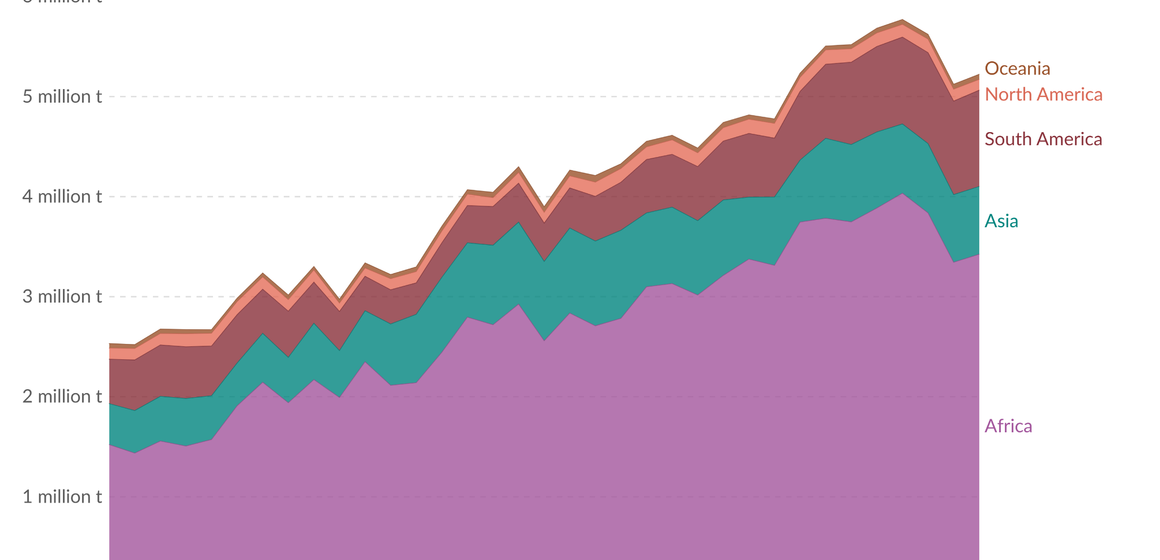
Ivory Coast, the world’s largest cocoa producer with roughly 40% of global output, is expected to deliver approximately 1.8 million metric tonnes during the 2026/27 season.
While representing a meaningful recovery from the previous year’s 1.5 million tonnes, this figure remains well below the 2.2 million-tonne benchmark achieved during the 2020/21 season.
Ghana’s Cocobod has set an official production target of 700,000 tonnes for the current campaign, although independent forecasters estimate actual output closer to 550,000 tonnes due to ageing tree stock and the lingering effects of cocoa swollen shoot virus disease across the Eastern Region.
Farmgate price increases implemented across both nations have improved producer incentives. Ivory Coast raised guaranteed prices by 20% to approximately CFA 1,800 per kilogram, while Ghana enacted a comparable adjustment.
Weather Risk: Harmattan Winds and El Nino Threaten Mid-Crop
Seasonal weather patterns introduce a significant wildcard into the supply equation during the final quarter of the calendar year.
The Harmattan season, characterised by dry, dusty northeasterly winds blowing from the Sahara across the Gulf of Guinea coast, typically begins in late November and persists through February, coinciding with the critical pod development phase for the mid-crop harvest.
Extended Harmattan conditions can desiccate cocoa pods on the tree, reduce soil moisture below critical thresholds for root uptake, and increase the prevalence of black pod disease.
The 2023/24 season demonstrated the damage potential of adverse weather, when an abnormally prolonged dry spell contributed to a 14% production shortfall across the West African cocoa belt.
The US National Oceanic and Atmospheric Administration currently assigns a 60% probability to El Nino conditions developing during the first quarter of 2027.
Price Outlook: Surplus Narrative Versus Weather Tail Risk
The International Cocoa Organization estimates a global surplus of approximately 142,000 tonnes for the 2025/26 season, the first surplus in three years.
This statistical overhang justifies the market’s retreat from crisis-era pricing levels, but the margin of surplus is narrow enough to be completely erased by a single poor mid-crop harvest in either Ivory Coast or Ghana.
From a technical perspective, the $4,800 level represents the next major support zone, corresponding to the June 2026 low and the 200-week moving average. Resistance sits at the $5,400 to $5,500 zone, where sellers emerged consistently during October’s attempted rallies.
Cocoa’s path through the year-end likely depends on early Harmattan intensity and rainfall data from the key growing regions. Benign weather conditions would validate the surplus narrative and could push prices toward the $4,500 level.
Severe dryness, conversely, would trigger rapid speculative re-entry and a potential retest of $6,000, particularly given the relatively thin liquidity that characterises cocoa futures compared to major commodity benchmarks.
Speculative positioning on the ICE exchange has shifted meaningfully over the past two months. Managed money accounts have reduced their net long exposure by approximately 35% since September, liquidating positions that were established during the 2024 supply panic.
The coming weeks of Harmattan weather data will determine whether this evolving surplus story holds or whether crop fears transform from a background concern into the dominant market driver once again.