
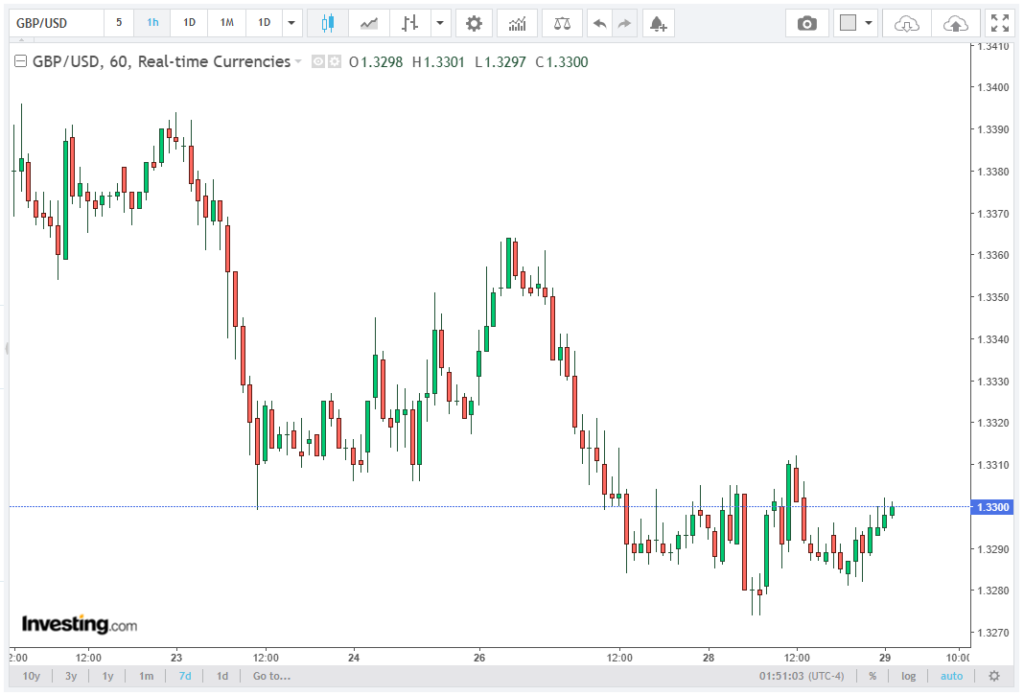
The GBP/USD currency pair extended its recovery during Wednesday’s Asian trading session, rising toward the 1.3300 psychological level after closing largely unchanged in the previous session. In this article, Vaulltier’s brokers share their expertise and perspective on this subject.
The British Pound (GBP) gained momentum as the US Dollar (USD) weakened ahead of the Federal Reserve’s monetary policy decision, with traders reassessing the outlook for US interest rates, inflation, and future policy tightening.
Market pricing reflects an unusually high level of uncertainty surrounding the Fed’s next move. Although the central bank is widely expected to keep interest rates unchanged, financial markets are currently assigning a 30.5% probability of an immediate rate increase.
This elevated pricing suggests investors remain concerned about the persistence of inflationary pressures and the possibility that monetary policy may remain restrictive for an extended period.
Looking further ahead, market participants are pricing in a 76.6% probability of a rate hike in September, indicating expectations that US borrowing costs could stay elevated despite signs of economic moderation. The possibility of prolonged higher-for-longer interest rates continues to shape demand for the Greenback, creating volatility across major currency pairs.
US Dollar Under Pressure Despite Inflation and Rate Risks
The US Dollar Index (DXY) has faced selling pressure as traders reduce exposure before the Fed announcement. A lack of clear policy direction has increased uncertainty, with investors closely monitoring any changes in the central bank’s assessment of consumer prices, economic growth, and labor market conditions.
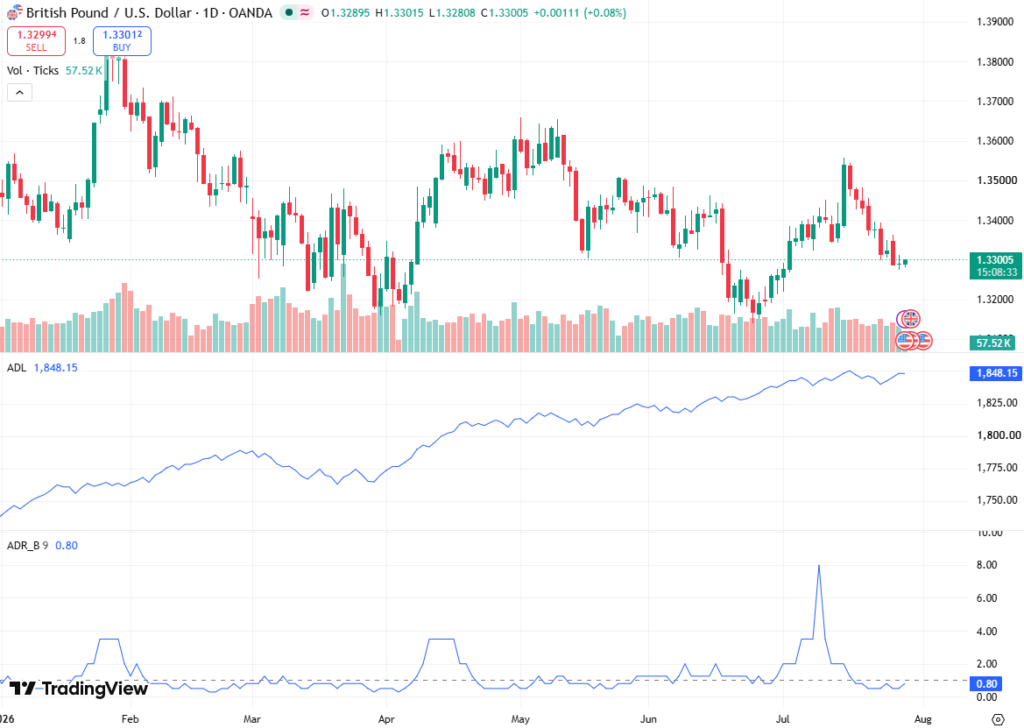
From a technical perspective, the recent weakness in the USD has allowed GBP/USD to challenge higher resistance areas near 1.3300. A sustained move above this level could reinforce bullish momentum toward higher targets, while a failure to maintain gains may expose the pair to renewed downside pressure.
However, the Greenback continues to receive underlying support from several fundamental factors. Persistent concerns over US inflation, combined with renewed geopolitical tensions in the Middle East, may increase demand for the Dollar as a safe-haven currency.
Higher geopolitical risks could also affect energy prices, potentially creating additional inflationary pressure and influencing future Fed decisions.
Geopolitical Developments Maintain Demand for Safe-Haven Assets
The return of geopolitical uncertainty has added another layer of complexity for financial markets. Historically, periods of heightened global risk have increased demand for defensive assets, particularly the US Dollar, due to its role as the world’s primary reserve currency.
Renewed tensions in key regions could create volatility across commodity markets, especially if concerns emerge regarding energy supply disruptions. Rising energy costs may slow progress on inflation reduction and could encourage central banks to maintain tighter monetary conditions.
For the currency market, this creates a balancing effect. While USD weakness has supported the GBP/USD recovery, stronger demand for safe-haven assets could limit further Dollar declines.
Bank of England Expected to Maintain Restrictive Policy
The British Pound is also benefiting from expectations surrounding the Bank of England’s (BoE) upcoming policy decision. Markets widely anticipate that the central bank will leave its benchmark interest rate unchanged at 3.75%, maintaining a restrictive monetary stance.
The latest UK inflation data has strengthened expectations for a stable policy decision. Annual consumer price inflation slowed to 2.6% in June, reaching a 15-month low and falling below the BoE’s previous forecasts.
The decline in inflation represents continued progress toward the central bank’s inflation objective, but policymakers remain focused on underlying price pressures. Key indicators such as services inflation, wage growth, and domestic demand conditions will continue influencing expectations for future rate adjustments.
Sterling Outlook Depends on Monetary Policy Divergence
The outlook for GBP/USD is expected to be shaped primarily by changing monetary policy dynamics between the Federal Reserve and the Bank of England. Should the Fed move toward a less aggressive stance while the BoE continues to keep policy relatively tight, the yield advantage may gradually shift toward the UK currency, providing potential support for the British Pound.
Technically, the pair’s ability to hold above the 1.3300 region will remain important for short-term momentum. A successful break above nearby resistance levels could encourage additional buying interest, while renewed Dollar strength may push the exchange rate back toward lower support zones.
Fundamentally, the market remains focused on three major drivers: Federal Reserve policy expectations, UK inflation trends, and global geopolitical risks. The combination of uncertain US monetary policy and relatively stable UK rate expectations has created a supportive environment for the Pound.
Overall, GBP/USD strength reflects a temporary advantage for Sterling as the US Dollar faces uncertainty ahead of the Fed decision. However, with inflation risks, rate expectations, and geopolitical developments continuing to influence market sentiment, currency volatility is likely to remain elevated in the coming sessions.