
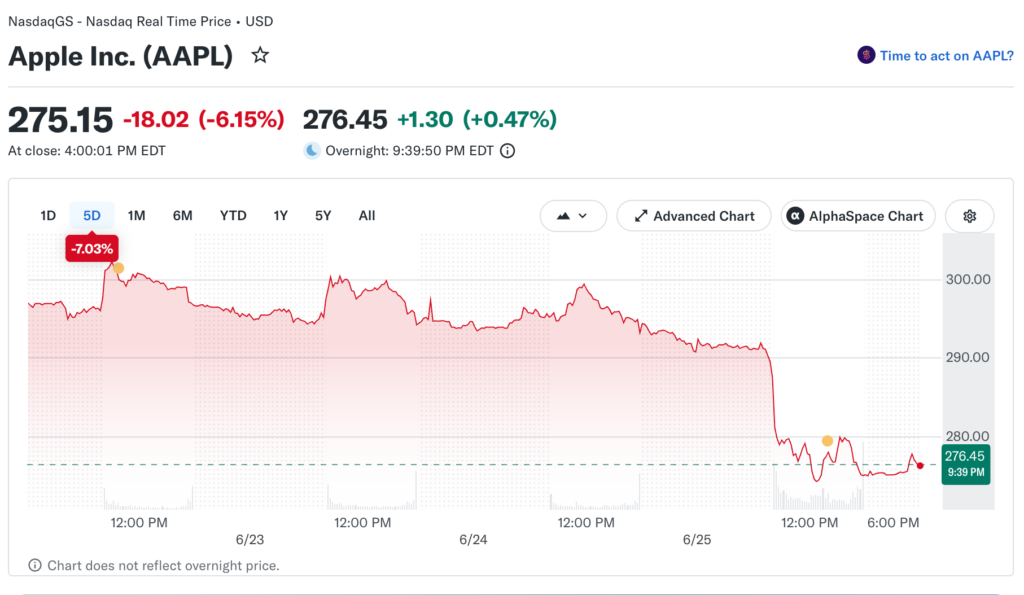
Apple shares fell more than 6 percent on June 25 after the company announced it would raise prices on MacBooks and iPads, citing rising memory costs as the primary reason.
The selloff was sharp enough to rank among the largest single-day percentage declines Apple has seen in recent years, and it arrived on a day when the broader equity market was absorbing Micron’s blowout earnings and fresh PCE inflation data simultaneously.
A financial analyst at Kepler-Group notes that the price increase itself is not the story. The story is what the price increase reveals about Apple’s supply chain positioning at a moment when AI memory demand is rewriting the cost economics of consumer electronics across the entire industry.
Why Memory Costs Are Hitting Apple Now
Micron’s fiscal Q3 2026 earnings confirmed what the memory market had been signaling for months. High-bandwidth memory demand from AI data centers is so strong it is consuming supplier capacity that would otherwise serve consumer device markets. Apple, which depends on memory chips for every product it sells, is now competing for components in an allocation environment where hyperscalers are the priority customers and consumer electronics companies are secondary.
The connection between Micron surging 16 percent and Apple falling 6 percent on the same day is not coincidental. They represent opposite sides of the same supply constraint.
When one party gains pricing power because demand exceeds supply, the buyers downstream face higher costs that must either compress their margins or be passed to their own customers. Apple chose the latter, and markets responded with selling that reflected concern about demand elasticity at the new higher price points.
The Consumer Reaction Risk
Apple’s decision to raise MacBook and iPad prices puts it in a difficult position entering the second half of 2026. PCE data released the same morning confirmed May inflation running at 4.1 percent annually, the highest since April 2023. Asking consumers to pay more for Apple devices in that inflation environment carries real demand softening risk that the company cannot fully hedge through marketing or product positioning.
The concern investors are pricing is not that one price increase kills Apple’s business. The concern is what happens to unit volumes over the next two quarters if consumers delay upgrades in response to higher price points. Apple’s earnings model is highly sensitive to iPhone, Mac, and iPad upgrade cycles.
How This Differs From Previous Apple Headwinds
Apple has navigated supply chain disruptions and price pressure before. The 2021 chip shortage created similar component cost pressures that the company managed through supplier diversification and careful inventory management that limited the impact on end consumer prices.
The current situation differs in one key way. The memory shortage driving MacBook and iPad price increases is being caused by structural demand from AI infrastructure, not by a temporary manufacturing disruption that resolves as factories return to normal production schedules.
That makes the relief timeline harder to predict than past disruptions. Micron’s Q4 guidance of $50 billion in revenue assumes demand continues accelerating rather than moderating through August.
Apple cannot simply wait for the supply constraint to resolve the way it could with pandemic-era chip shortages, because the structural demand driver is ongoing and backed by $750 billion in committed hyperscaler capital expenditure.
The Rotation Away From Platform Companies
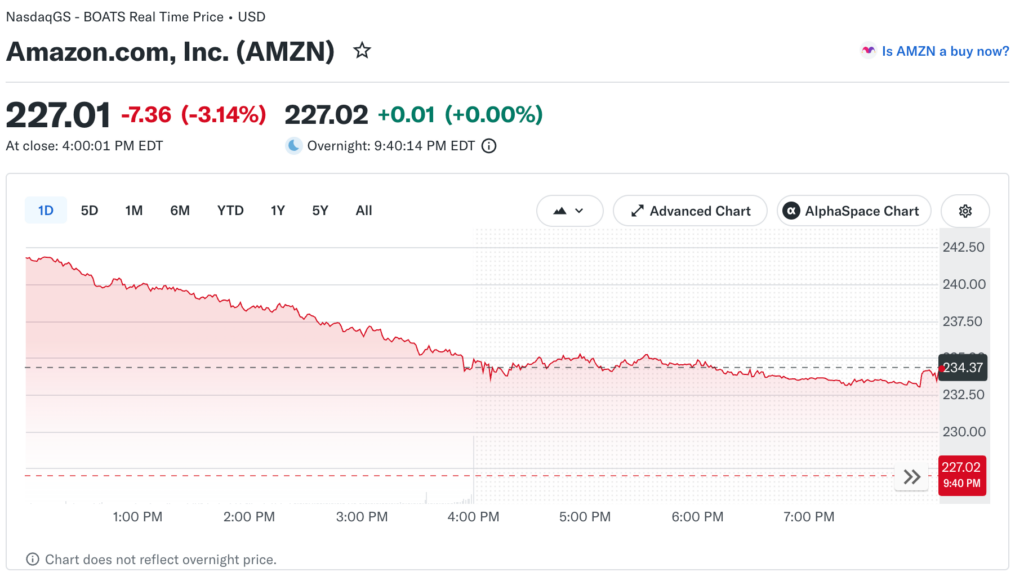
Apple was not the only large-cap technology name declining on June 25. NVIDIA, Oracle, Amazon, Alphabet, and Microsoft each fell more than 2 percent on a day when semiconductor infrastructure names surged by double digits.
That combination reveals a market rewarding the hardware layer of AI while simultaneously penalizing companies whose earnings are tied to software, platforms, and consumer devices.
Markets are beginning to demand evidence of AI revenue conversion rather than accepting it on the basis of AI optimism and management guidance. Apple’s price increase announcement arrived exactly when investors were already applying more scrutiny to the platform side of the AI value chain, which compounded the selling pressure beyond what a component cost story alone would have generated.
What Investors Should Watch on Apple From Here
The key variable for Apple heading into the second half of 2026 is whether the memory cost environment begins to ease or continues tightening as Micron’s Q4 plays out.
If HBM supply remains fully allocated to AI customers through the quarter ending in August, Apple’s component cost pressure persists directly into the fall product launch cycle, which is when the company generates the largest portion of its annual revenue.
Any announcement of iPhone price increases ahead of the fall cycle would accelerate the investor concerns that sent Apple down 6 percent on June 25 and likely extend the pressure on the stock well into Q3 2026. The June 25 session drew a clear line between companies that supply AI infrastructure and companies that pay for it.