
The equity landscape for technology mega-caps experienced a notable structural shift as Alphabet expanded its capitalization parameters beyond traditional common equity frameworks. While the tech giant initiated a common stock dividend roughly twenty-four months ago, the current payout of $0.22 per quarter translates to a minor annualized distribution yield of 0.24%.
This minimal return profile has traditionally left cash-flow-focused institutional allocators looking elsewhere for meaningful portfolio income.
To balance its capital requirements against institutional demand, the parent entity of Google executed a massive capital raise, pulling in $85 billion in fresh funding.
Approximately 20% of this aggregate financing round was secured via specialized hybrid equity instruments, specifically mandatory convertible preferred stock. These newly issued instruments provide an elevated yield threshold exceeding 6%, trading actively under the market tickers GOOGM for Class A pairings and GOOGN for Class C pairings.
Market data audited by the analytical team at Winseterra indicates that while this 6% yield provides a compelling near-term mechanism, the underlying structural mechanics demand careful navigation.
Because these instruments carry a mandatory conversion clause, all outstanding preferred units will automatically transition into standard common equity on May 15, 2029. Consequently, the elevated yield window is hard-capped at a three-year duration, after which payouts will compress to baseline common dividends.
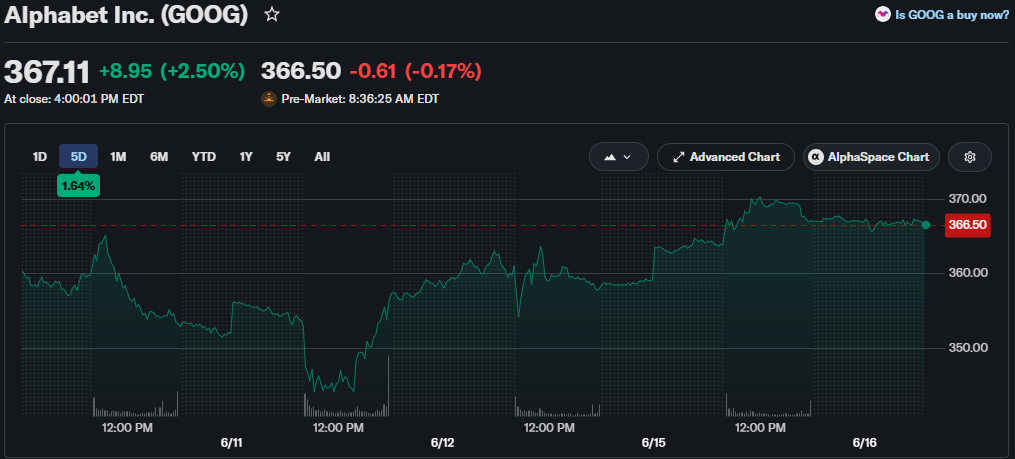
The Mechanic Of Mandatory Conversion
Understanding the operational priority of these specialized shares is essential for corporate asset allocators. As preferred equity, these instruments hold a higher claim on assets than common stock, meaning their fixed dividends must be paid out before any distributions reach standard shareholders.
This structural priority offers an insulated layer of security that appeals directly to risk-averse institutional accounts seeking predictable cash flows.
Howbeit, the hybrid nature of mandatory convertibles means their open-market pricing behaves like a cross between a bond and an equity contract.
Because the eventual transition into common shares is legally locked to a specific date, the trading values of GOOGM and GOOGN will track the underlying common stock increasingly closer as maturity approaches.
This unique correlation introduces a distinct type of volatility, requiring investors to monitor equity trends even while pocketing fixed yields.
Comparative Analysis: Common Versus Hybrid Equity
When choosing between these asset classes, institutional players must weigh immediate cash flow against unhedged market exposure.
Standard common stock yields under a quarter of a percent, but it offers unrestricted participation in corporate expansion and full voting rights in corporate governance.
This traditional route remains the baseline for growth portfolios that prioritize long-term wealth compounding over current monthly income requirements.
In contrast, the hybrid preferred tier shifts the portfolio’s core focus toward immediate, low-volatility revenue generation. By locking in a yield that is roughly 25 times higher than the common equity payout, investors insulation from minor market sideways drift.
However, this high-yielding premium functions fundamentally as an insurance policy, where the premium paid is the forfeiture of explosive capital gains if the underlying tech sector breaks out over the next three years.
Structural Conversion Brackets And Downside Exposure
The core risk parameters of this hybrid issue are governed by strict operational limits on the ultimate conversion ratios. For downside protection, the conversion allocation is tightly capped at a maximum of 0.1408 shares for Class A holders and 0.1421 shares for Class C holders.
If the underlying common stock declines below the critical price boundaries of $355 for Class A or $352 for Class C at the time of conversion, the preferred shares will absorb all subsequent market losses.
Conversely, the upside participation matrix is bound by minimum conversion thresholds established at 0.1126 shares for Class A and 0.1137 shares for Class C. Under these structural parameters, the aggregate value of the preferred units remains entirely fixed during upward equity moves until the common stock climbs past $444 for Class A or $440 for Class C.
Beyond these specific pricing ceilings, preferred shareholders will begin to participate fully in the open-ended gains of the primary company.
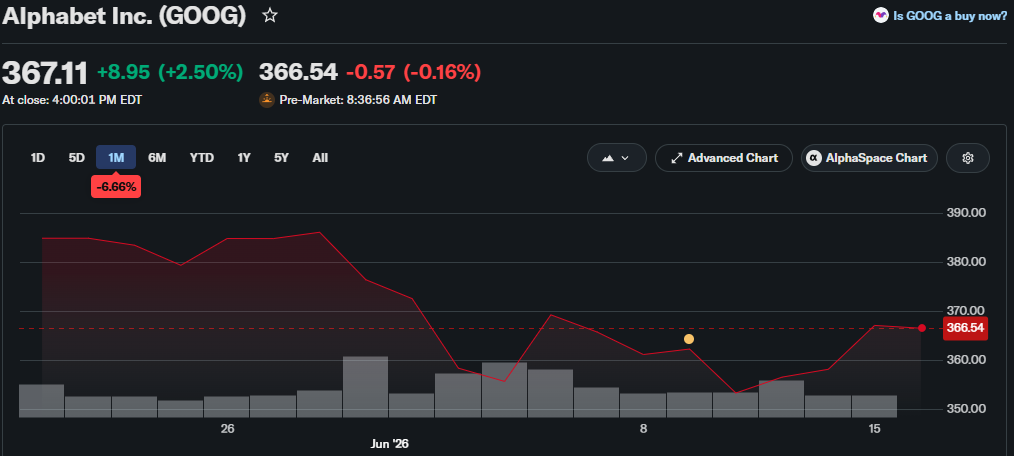
Key Takeaway On Hybrid Corporate Equities
The deployment of these mandatory convertible preferred shares highlights a growing corporate trend of balancing massive liquidity generation with structured investor incentives. For market participants, the primary lesson is that an outsized 6% distribution yield in a mega-cap tech asset always comes with a structural trade-off.
This specific instrument functions perfectly for lower-volatility income generation over a fixed three-year timeline, but it artificially caps explosive growth potential.
This structural ceiling means that if the tech giant experiences an unexpected, massive upward surge driven by exponential technological breakthroughs, preferred holders will lag significantly behind common equity positions.
The fixed conversion corridors act as an invisible anchor on your capital, trading off the unbounded upside potential of a traditional equity holding for the safety of a guaranteed, high-yielding quarterly payment.