
Wall Street’s AI-driven rally hit a significant speed bump on June 23, 2026, with investors growing visibly uncomfortable about the gap between the capital being committed to AI infrastructure and the revenue those investments are expected to generate.
The Nasdaq fell 2.21% and the S&P 500 dropped 1.44% as technology stocks led the decline for the second consecutive session. A senior broker at Kepler-Group explains what the market is actually questioning about AI economics heading into June 24, and why this conversation is different from prior valuation concerns that resolved without lasting damage to the sector.
The Capex Problem in Plain Numbers
The four major hyperscalers have collectively committed approximately $750 billion in capital expenditures toward AI infrastructure. That number has been cited as a bullish signal throughout 2026, and it remains one in isolation.
But markets are beginning to run a different calculation. Capital deployed now generates depreciation charges and interest costs immediately. Revenue from AI products and services arrives later, on a timeline that no company in the space has committed to publicly with any precision.
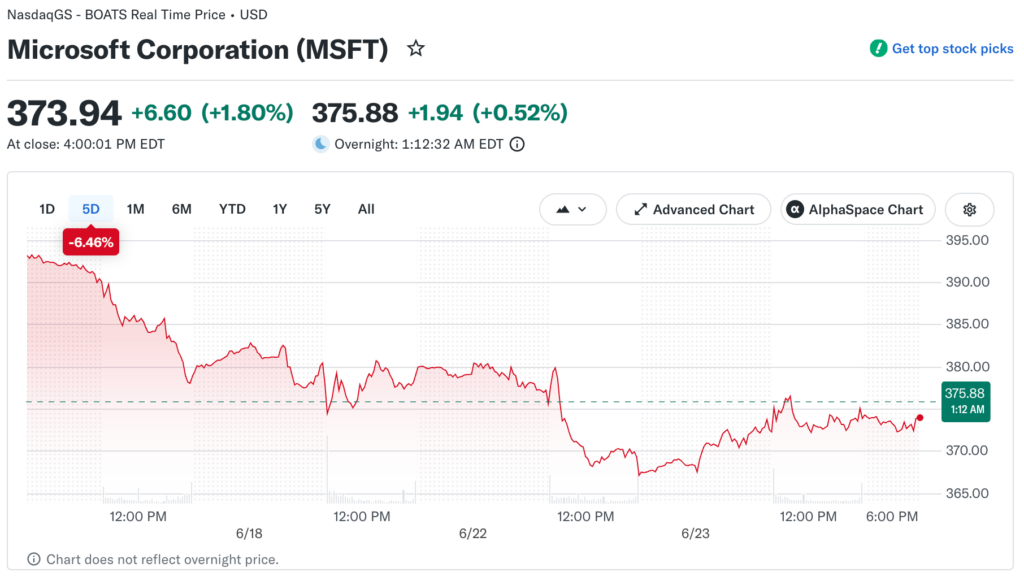
Microsoft, Alphabet, and Meta have each disclosed AI capital spending running ahead of the revenue lines investors can point to as direct returns on that spending. The concern is not that AI revenue will never materialize. It is that the gap between spending today and revenue tomorrow is wider and longer than current stock valuations are pricing in. Alphabet fell 5% on June 23 on exactly that concern, with no company-specific negative development driving the move.
What the VIX at 19.49 Is Telling Investors
The Cboe Volatility Index rose 12.79% to 19.49 on June 23, sitting just below the threshold of 20 that historically separates elevated uncertainty from genuine institutional fear. A VIX below 20 says markets are repricing risk rather than fleeing it, which is an important distinction because it suggests the selloff has a self-correcting mechanism.
Bank of America’s note warning of up to three potential rate hikes before year-end was the accelerant for the session. The probability of at least one rate hike by year-end had already climbed to 50%, up from 24% in early April, but the three-hike scenario had not been a mainstream consideration before the note circulated on June 23.
Markets moved to partially reprice that tail risk in a single afternoon, pushing selling pressure into the highest-multiple technology names without a clear mechanism to fully resolve the uncertainty before the week’s data releases arrive on Wednesday and Thursday.
Where the Value Is Actually Rotating
The June 23 session was not uniformly negative despite the Nasdaq’s 2.21% decline. Small and mid-cap indices posted modest gains. REITs advanced. Healthcare held firm.
Financial stocks moved higher. Energy names closed positive despite crude oil falling roughly 3% on Iran ceasefire progress. That pattern mirrors what happened after the June 17 Fed decision, with investors moving away from high-multiple growth names toward sectors with more near-term earnings predictability.
The DRAM ETF reached new all-time highs on June 23 even as Micron’s individual stock fell 11.4%. That divergence is a clean signal that the AI memory demand thesis is intact at the sector level even as individual stock valuations are being recalibrated heading into Wednesday’s earnings report. Investors who can distinguish between the sector thesis and individual stock risk are finding the current volatility more navigable than the headline index moves suggest.
Cerebras Systems and the New Entrant Dynamic
Cerebras Systems reported its first earnings as a public company on June 23, following its May 2026 IPO. Cerebras makes wafer-scale AI processing chips that compete with NVIDIA in specific inference workloads and has attracted attention from data center operators looking for alternatives to NVIDIA’s dominant GPU architecture.
The report arrived on a day when AI chip stocks broadly declined, compressing the market’s ability to fairly evaluate what Cerebras’s first public numbers actually revealed about genuine demand for alternative AI compute. For investors tracking the emerging competitive landscape in AI chips, the Cerebras debut deserved more analytical attention than the macro noise on June 23 allowed it to receive.
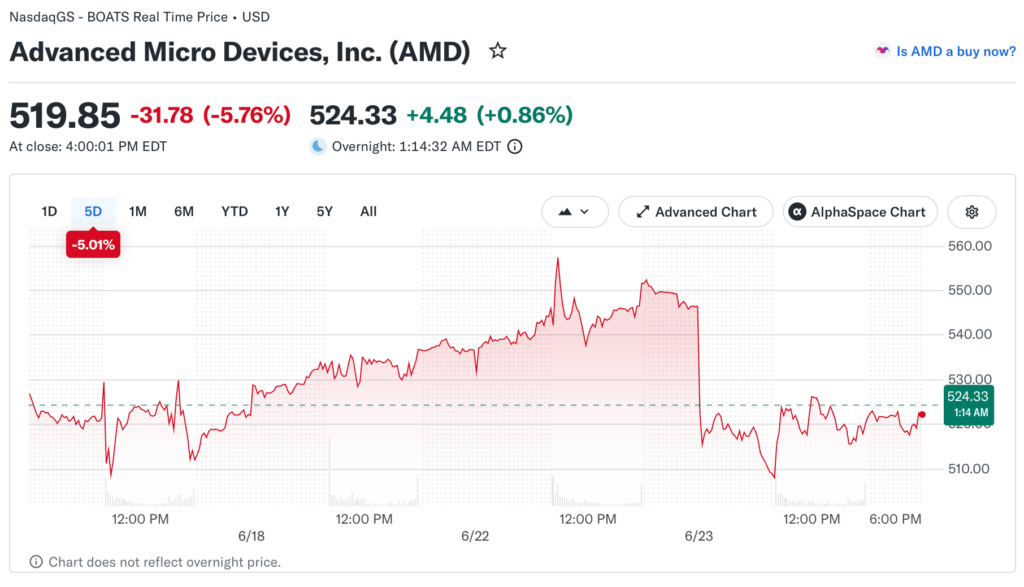
NVIDIA’s market position is real and well-documented, but Cerebras, Intel’s foundry ambitions with Apple, and AMD’s growing data center share all suggest the next phase of AI hardware spending will distribute across more suppliers than the current market structure implies.
What Matters Most on June 24
Micron’s earnings after the close on June 24 will either validate or challenge the AI demand thesis that the broader technology sector’s valuations are built on. A strong Micron result, defined by revenue above the $34.66 billion consensus and guidance confirming HBM supply remains fully allocated, would substantially reduce the uncertainty that Bank of America’s rate-hike note introduced on June 23.
A weaker result or cautious guidance would amplify the concerns visible in the VIX and semiconductor selloff, creating a more difficult setup for technology stocks heading into the June 26 PCE reading that will determine the Fed’s next policy move.