
Gold traded near $4,126 per ounce on Monday, November 9, extending a rally that began the previous week when prices bounced sharply from the October low of $3,870.
The metal posted a 1.35% gain on the session, with December COMEX futures settling at $4,129.10 after touching an intraday high of $4,143.30. The advance marked gold’s fifth consecutive positive session and its strongest weekly close since August, lifting the yellow metal back above the critical $4,100 threshold.
Analysts at AchievementsAI assess whether the current recovery represents the start of a sustained uptrend toward the $4,200 resistance zone, or whether the October CPI report due Tuesday could stall the rally if inflation readings come in hotter than expected and reinforce the case for a December rate hike from the Federal Reserve.
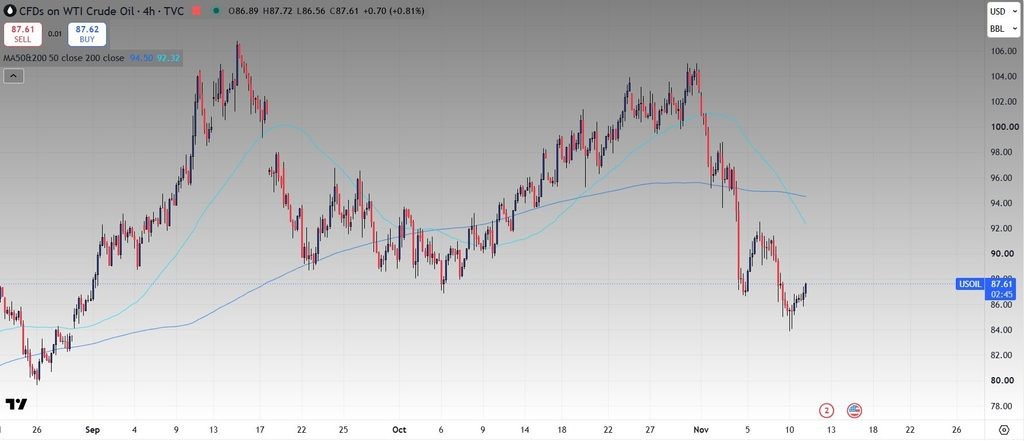
Oil Collapse and Dollar Weakness Drive Safe-Haven Inflows
The primary catalyst behind gold’s recovery has been the sharp decline in crude oil prices. Brent crude fell 4.18% to $94.21 per barrel on Monday, dropping below $100 for the first time since early October.
The move followed signals from the administration suggesting a de-escalation in tensions with Iran, which had been a key driver of the energy price spike since late February.
Lower oil prices feed directly into the gold thesis through two channels. First, they ease inflation expectations, reducing the likelihood that the Federal Reserve will need to maintain aggressive monetary tightening beyond the December meeting.
Second, they weaken the US dollar, which fell 0.36% on the Bloomberg Dollar Spot Index to 101.93, making gold cheaper for international buyers holding other currencies.
Central bank purchases have also provided a structural floor beneath the market. The World Gold Council reported that central banks bought a net 321 tonnes in Q3, representing a 42% increase year over year.
This sustained accumulation, particularly from emerging market central banks in Asia and the Middle East diversifying away from dollar reserves, has placed a bid under gold even during periods of rising real yields.
The combination of geopolitical hedging and de-dollarisation demand has created a buying base that did not exist during previous tightening cycles.
Unlike 2022 and 2023, when gold struggled to hold gains above $2,000 in the face of aggressive Fed rate hikes, the current environment has demonstrated that central bank demand can offset the headwind from higher opportunity costs.
Technical Setup Suggests Further Upside, but Resistance Looms at $4,157
On the daily chart, gold has formed a base pattern with a series of higher lows above the $4,050 level since the October 30 reversal. The 1-hour RSI reached approximately 78 during Monday’s push toward $4,148 before pulling back to 48 as the session consolidated into the close.
This pattern suggests short-term overbought conditions have already been worked off, leaving room for another leg higher.
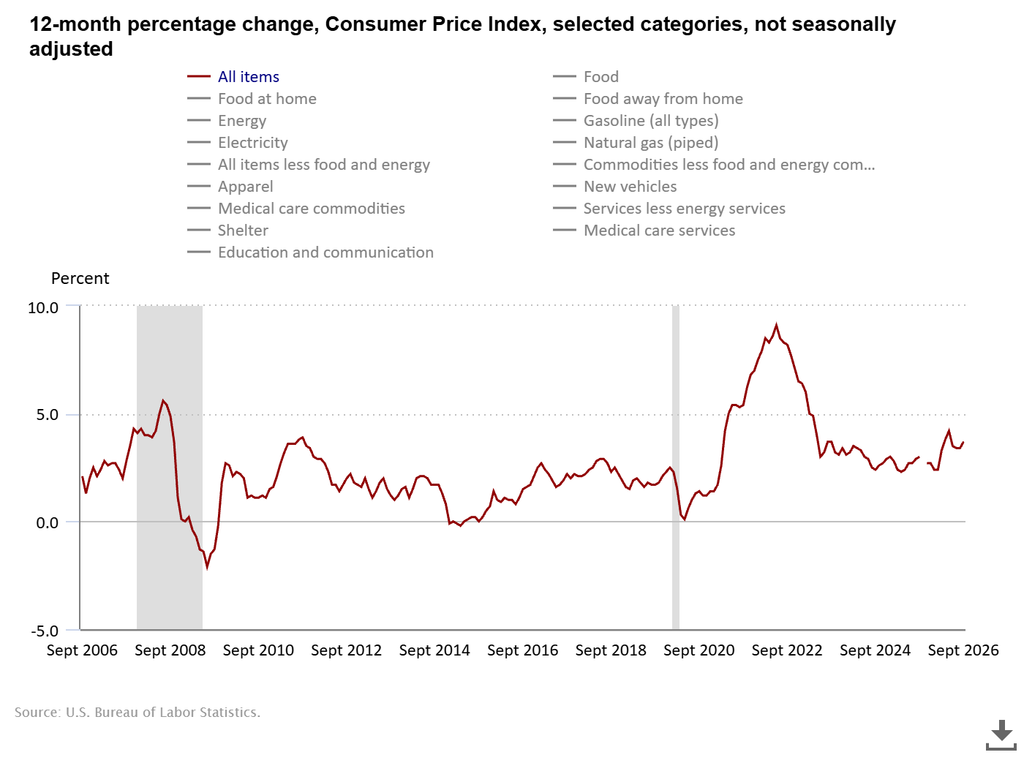
CPI Report Presents the Key Near-Term Risk for Gold Bulls
Tuesday’s October Consumer Price Index report represents the most important data point for gold this week. Consensus forecasts point to a monthly increase of +0.3% for both headline and core CPI.
A reading at or below consensus would likely extend the rally by reinforcing expectations that inflation is moderating despite elevated energy costs over the prior quarter.
However, a hotter-than-expected print could trigger a sharp reversal. The Fed funds futures market currently prices roughly an 80% probability of a quarter-point rate hike at the December meeting.
Up from 71% before last Friday’s stronger-than-expected payrolls report that showed 165,000 jobs added versus the 65,000 consensus. A CPI surprise to the upside would push that probability closer to 90% and likely send gold back below $4,100.
Goldman Sachs recently cut its end-2026 gold target from $4,650 to $4,150, citing the impact of higher-for-longer real rates on non-yielding assets.
Kitco’s weekly survey showed Wall Street analysts split, with 31% bullish, 38% bearish, and 31% neutral on the near-term outlook. Retail sentiment was far more optimistic, with 68% of voters expecting higher prices over the coming week.
Gold’s ability to rally alongside rising Treasury yields, with the 10-year at 4.87%, represents an unusual dynamic that reflects the strength of the safe-haven bid and the structural central bank buying floor.
Whether that bid can withstand a hawkish CPI surprise will likely determine whether gold reclaims the $4,200 level or retreats toward the base of the current range before the December FOMC meeting.