
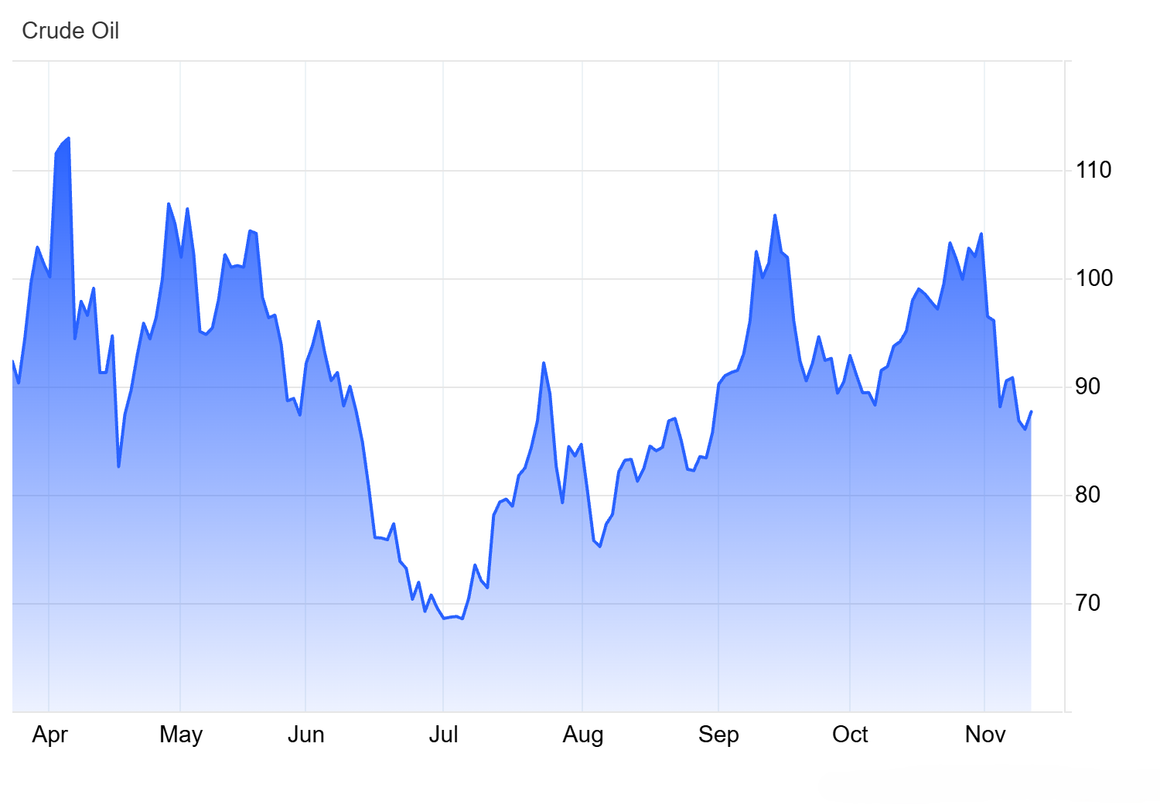
Brent crude futures is set at $92.57 per barrel on Monday, November 9, falling 5.85% in the session and extending a decline that has taken the global benchmark from above $112 at the start of the month to its lowest level since early October. WTI crude on NYMEX settled at $86.85, declined 4.38% on the day.
The combined decline represents one of the sharpest weekly reversals in the 2026 oil market, erasing gains that had accumulated over several weeks of geopolitical risk premium.
AchievementsAI assesses whether the selloff represents a structural repricing of the geopolitical risk premium that had kept crude elevated, or whether the move is a tactical overcorrection that leaves oil vulnerable to a sharp snapback if the diplomatic backdrop deteriorates.
The coming week’s CPI data and OPEC demand outlook updates will provide further directional cues.
Geopolitical De-Escalation Removes the War Premium from Crude
The primary driver behind crude’s decline has been a decisive shift in the diplomatic tone surrounding the Middle East conflict.
Statements from the administration downplaying the prospect of further military strikes against Iran removed the tail-risk premium that had been keeping Brent above $100 for much of October, when fears of a broader regional escalation peaked.
Brent had traded above $105 as recently as November 4, when the midterm election results triggered a broad reassessment of fiscal and energy policy expectations.
The subsequent combination of a congressional shift, a stronger dollar retreat, and explicit de-escalation rhetoric produced a $20-plus decline in less than a week, representing one of the steepest corrections outside of a recession-driven demand collapse.
The speed of the move suggests that speculative long positioning had become extremely stretched during the October rally.
Managed money net longs in Brent had expanded to multi-month highs, and the unwinding of those crowded positions accelerated the decline once the $100 level broke on the downside, triggering stop-loss orders and margin calls across the futures complex.
Demand-Side Concerns Add Structural Pressure Beyond Geopolitics
Beyond the geopolitical catalyst, the demand outlook has softened materially. China’s October manufacturing PMI came in at 49.2, remaining in contractionary territory for the second consecutive month and suggesting that the world’s largest crude importer continues to face industrial headwinds.
European industrial production data has also disappointed, with Germany’s output declining 0.4% month over month in September.
OPEC’s latest monthly report maintained its 2026 global demand growth forecast at approximately 1.8 million barrels per day, but several investment banks have trimmed their own estimates to below 1.2 million barrels per day.
The widening divergence between OPEC’s official projections and the market’s implied demand expectations has created significant uncertainty about where the equilibrium price sits once the geopolitical premium has been fully unwound from the barrel.
US production continues to act as a structural ceiling on prices. Weekly EIA data showed domestic crude output holding near 13.5 million barrels per day, close to record highs.
Shale producers in the Permian Basin have maintained discipline on capital spending but continue to deliver incremental efficiency gains through longer lateral wells and improved completion techniques, keeping output elevated despite a declining rig count.
Technical Levels and Scenarios for Q4 Oil Markets
On the daily chart, Brent has broken decisively below its 50-day SMA and is now approaching the 200-day SMA near $90. The RSI on the daily timeframe has dropped to approximately 28, placing the contract in oversold territory for the first time since July.
While oversold readings can persist in a strong downtrend, they often precede at least a short-term corrective bounce before the next directional move.
Immediate support sits at the $90 psychological level, followed by the $87 area that corresponds to Monday’s WTI settlement and the June consolidation zone on Brent.
On the upside, resistance has formed at $97 to $100, a zone that was previously supported and now represents a significant overhead barrier that bulls would need to reclaim to shift the near-term outlook.
The key variable for the remainder of Q4 is whether the diplomatic progress proves durable. A resumption of military tensions or an unexpected supply disruption in the Strait of Hormuz would rapidly reprice crude higher, potentially back above $100 within days.
Conversely, a sustained easing of tensions combined with weak Chinese demand data could push Brent toward the $85 level, which would represent the pre-conflict equilibrium price from early 2026.
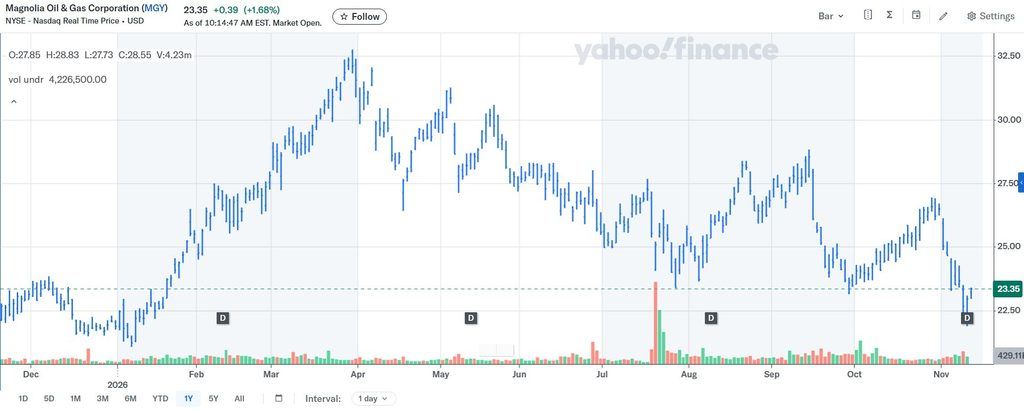
Energy equities have already begun to reflect the lower crude environment. The S&P 500 energy sector was among the weakest performers on Monday, with Sasol falling 6.84% and Magnolia Oil & Gas declining 2.88%.
Airlines rallied sharply on the prospect of lower jet fuel costs, with American Airlines gaining 6.94%. The rotation from energy producers to energy consumers underscores the market’s conviction that the oil pullback has further room to run before stabilising.