
Bitcoin traded near $105,879 on Monday, November 10, up 1.2% in 24 hours after dipping to a session low of $104,768.
The largest cryptocurrency by market capitalization held above the psychological $105,000 level despite a second consecutive week of billion-dollar outflows from crypto investment products, with total industry redemptions reaching $1.3 billion across all digital asset funds during the period.
Analysts at AchievementsAI assess the divergence between institutional fund flows and spot price resilience, examining whether Bitcoin’s ability to absorb persistent selling pressure signals underlying structural strength in the market.
Also whether the sustained outflows point to a deeper correction ahead of the December Federal Reserve rate decision.
Institutional Outflows Contrast with Resilient Spot Market Dynamics
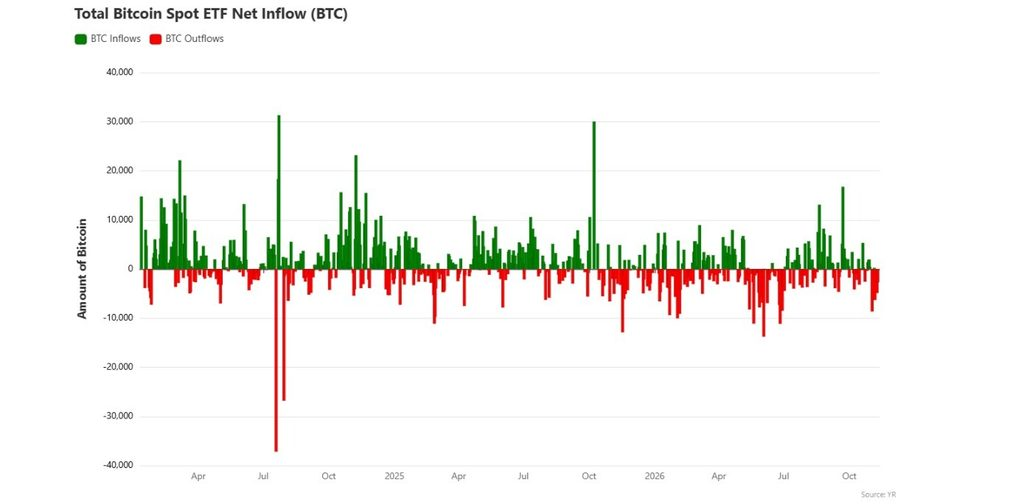
The outflow data paints a cautious picture of institutional sentiment toward digital assets. Bitcoin-specific products alone shed $932 million during the week, while Ethereum products lost $438 million.
Short Bitcoin funds recorded their largest inflows since May, suggesting that some institutional participants are actively positioning for further downside rather than simply reducing exposure.
Spot Bitcoin ETFs, which had briefly attracted net inflows the previous week, reversed course with multi-day redemptions that added sustained selling pressure to the broader crypto market.
The outflows represent a continuation of the deleveraging trend that began in October, when rising Treasury yields and a stronger dollar reduced the appeal of risk assets across the investment spectrum and prompted institutions to reduce their crypto allocations.
Despite the institutional withdrawal, spot market dynamics have been more constructive than the fund flow data might suggest. Liquidation data showed just $6.79 million in Bitcoin liquidations on the session, predominantly from short positions being squeezed.
This relatively modest figure indicates that the leveraged trading community has not built excessive directional exposure at current levels, reducing the risk of a cascade-style liquidation event that could accelerate a sell-off.
On-Chain Metrics and Derivatives Positioning Show a Market in Equilibrium
Bitcoin’s aggregate open interest stood at $68.69 billion, essentially flat on the day with a marginal 0.03% decline.
The stability of open interest alongside modest funding rates of 0.005 across major perpetual futures venues suggests a market in equilibrium rather than one building toward a sharp directional move in either direction.
The RSI reads 60.37 on the daily timeframe, indicating moderate bullish momentum without reaching overbought conditions that would typically precede a mean-reversion pullback.
Bitcoin dominance sits at 57.97%, reflecting a continued preference for the largest cryptocurrency over altcoins during this period of uncertainty. The Crypto Fear and Greed Index has dropped to 29, placing overall market sentiment firmly in the “fear” territory.
Historically, extreme fear readings have often coincided with attractive entry points for longer-term holders who use sentiment indicators as contrarian signals.
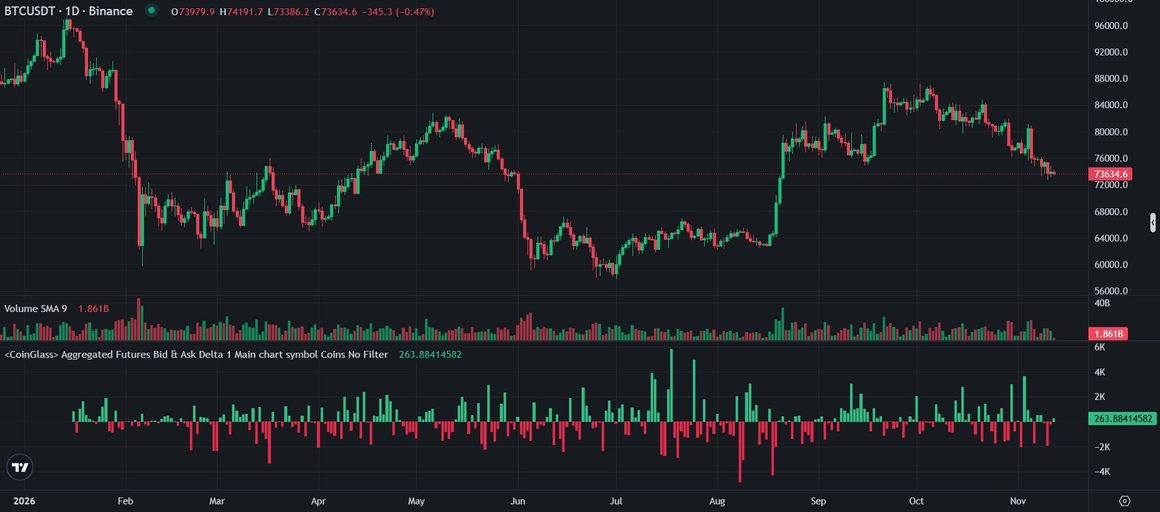
The divergence between the fear reading and the relatively constructive technical picture is notable. Price remains above its key moving averages, and the $105,000 support zone has held on multiple retests throughout early November.
Resistance Zone and Macro Catalysts Ahead for Bitcoin
Overhead resistance is concentrated in the $111,500 to $115,000 range, where large ask orders have accumulated near the $112,000 level according to order book data from major spot exchanges.
A sustained break above $115,000 would open the path toward $117,000 and potentially reignite the broader bull narrative that stalled after October’s risk-off rotation across global markets.
On the downside, the $104,000 level represents immediate support, followed by the $100,000 psychological floor that carries significant technical and sentiment importance.
The October low near $98,000 serves as the line in the sand for the medium-term bullish thesis; a decisive break below that level on elevated volume would signal a more significant shift in market structure and could open the path toward $92,000.
The macro backdrop presents both risks and potential catalysts in the near term. Tuesday’s October CPI report will directly influence expectations for the next Fed meeting, where markets currently price an 80% probability of a quarter-point rate hike.
A dovish inflation surprise could provide the spark for a breakout above the $112,000 resistance zone, while a hot reading would likely push Treasury yields higher and Bitcoin lower, testing the crucial $100,000 support level.
Regulatory developments also remain a factor for digital asset markets heading into year-end. The planned introduction of a leveraged spot trading framework for digital assets in the United States is expected to pull volume from offshore exchanges and could improve liquidity conditions for Bitcoin.
The broader question of crypto’s integration within the traditional financial system remains unresolved heading into 2027, but incremental progress on the regulatory front has provided a constructive backdrop for longer-term institutional adoption.