
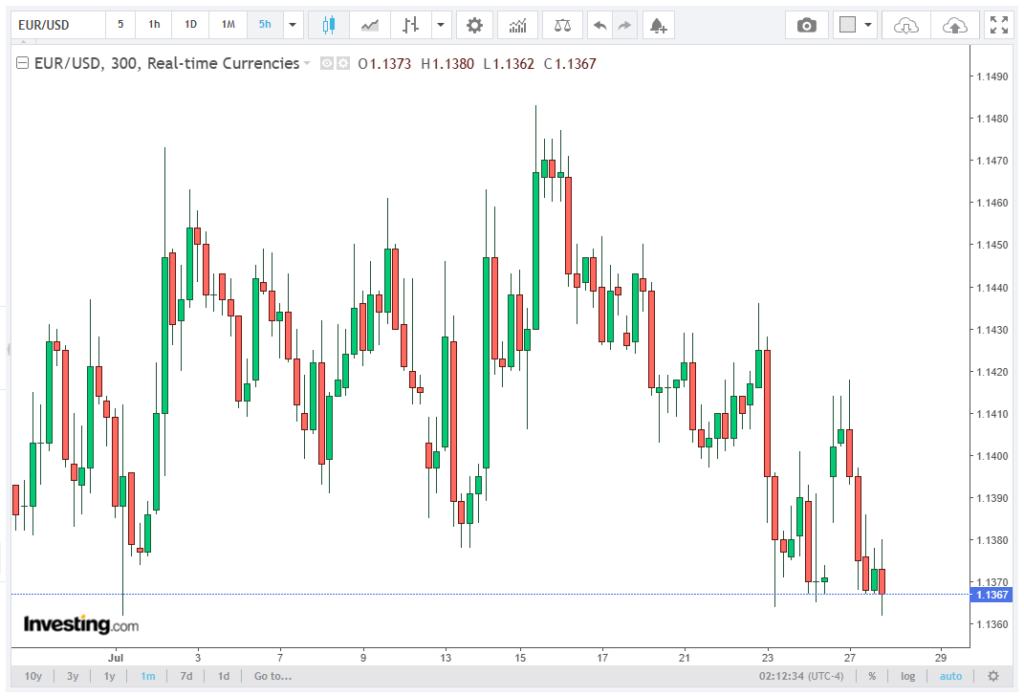
The EUR/USD currency pair extended its decline during Tuesday’s early European session, falling toward a monthly low near 1.1362 as the US Dollar (USD) continued to attract demand ahead of the Federal Reserve’s monetary policy decision.
The pair remains under pressure as traders reduce exposure to risk assets and position for potential shifts in the US interest rate outlook. The accompanying article features Rubinax’s brokers’ in-depth perspective on this topic.
The US Dollar Index (DXY) strengthened toward its monthly high near 101.59, reflecting increased demand for the Greenback ahead of the Federal Reserve announcement. The latest Dollar gains have been supported by expectations that US monetary policy will remain restrictive, while markets evaluate the possibility of further rate adjustments in the coming months.
The current EUR/USD downside momentum highlights the importance of central bank divergence, with investors closely comparing the potential policy paths of the Federal Reserve (Fed) and the European Central Bank (ECB).
Federal Reserve Rate Decision Becomes Key Market Catalyst
Financial markets widely expect the Federal Reserve to maintain its benchmark interest rate range at 3.50%-3.75% during the upcoming policy meeting. The CME FedWatch tool currently indicates a 62% probability of unchanged rates, suggesting that a rate hold is largely priced into market expectations.
However, the focus will remain on the Fed policy statement, updated economic assessments, and communication regarding future monetary policy normalization. Traders are monitoring whether policymakers signal concerns about persistent inflation risks, economic resilience, or potential adjustments to the current restrictive stance.
Market pricing also indicates elevated expectations for future tightening, with the probability of a 25 basis point rate increase at the September meeting estimated at 80.8%. This outlook continues to support the US Dollar, as higher expected interest rates increase the attractiveness of Dollar-denominated assets.
The absence of clear forward policy guidance could increase market volatility, forcing investors to rely more heavily on incoming inflation data, employment indicators, and economic growth figures.
Euro Faces Pressure Before Critical Inflation Releases
The Euro remains vulnerable as investors await the release of key Eurozone inflation indicators, particularly the German preliminary Harmonized Index of Consumer Prices (HICP) data and the broader Eurozone preliminary HICP report for July.
The upcoming inflation figures are expected to play a major role in determining future ECB interest rate expectations. Persistent inflation above target levels could reinforce expectations for additional monetary tightening, while weaker price growth may increase expectations for a more cautious ECB approach.
The HICP inflation data will provide fresh insight into the direction of consumer price pressures, especially after previous concerns that inflation could remain elevated for longer than expected. A stronger inflation reading may support the Euro, while softer inflation could increase selling pressure on the single currency.
ECB Maintains Focus on Inflation Control and Possible Rate Increase
ECB policymakers continue to emphasize the importance of controlling inflationary pressures across the Eurozone economy. Recent comments from ECB Governing Council member Peter Kazimir highlighted expectations that at least one additional interest rate increase may be required to ensure inflation moves sustainably toward the central bank’s target.
The ECB faces a complex policy environment, balancing the need to control inflation against concerns surrounding economic growth, business activity, and financial conditions. Higher interest rates can reduce inflation by limiting demand, but they may also weigh on economic expansion.
EUR/USD Technical Outlook Remains Bearish Below Key Levels
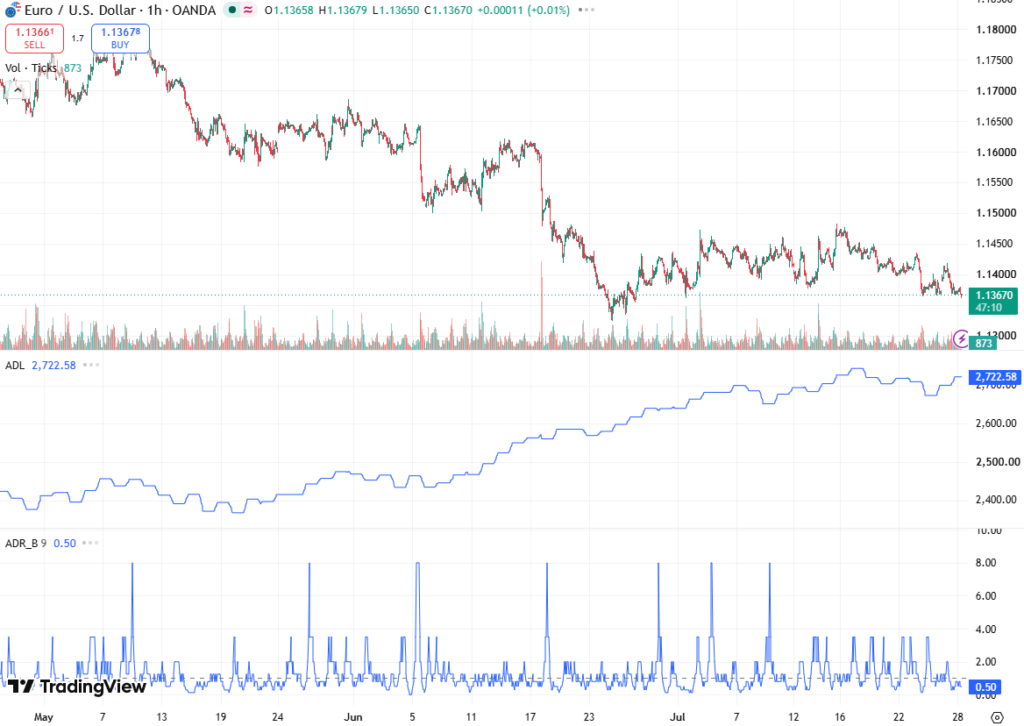
From a technical perspective, the EUR/USD pair remains under pressure after breaking toward the 1.1362 monthly low. The recent decline suggests that sellers maintain control in the short term, particularly while the pair trades below key resistance areas.
A sustained move below 1.1360 could expose the currency pair to further downside risks, with traders watching additional support zones for potential stabilization. On the upside, a recovery above important resistance levels would be required to weaken the current bearish structure.
Momentum indicators continue to reflect cautious market sentiment, with traders prioritizing developments from the Federal Reserve meeting and upcoming Eurozone inflation releases.
Market Outlook: Fed Signals and Inflation Data to Drive EUR/USD Direction
The near-term trajectory of EUR/USD will depend heavily on the interaction between Federal Reserve policy expectations, US Dollar demand, and Eurozone inflation performance.
A more restrictive Fed outlook could strengthen the Dollar and maintain downside pressure on the Euro, while stronger European inflation data could improve expectations for additional ECB tightening.
With the pair trading near its monthly low at 1.1362, currency markets remain highly sensitive to shifts in interest rate expectations, inflation forecasts, and central bank communication. The upcoming policy decision and inflation reports are likely to determine whether the Euro can recover or whether the Dollar-led decline continues.