
South Korea’s Kospi index fell 6.3 percent on July 16, 2026, making it the worst-performing major Asian benchmark on a day when semiconductor stocks across the region faced a wave of profit-taking.
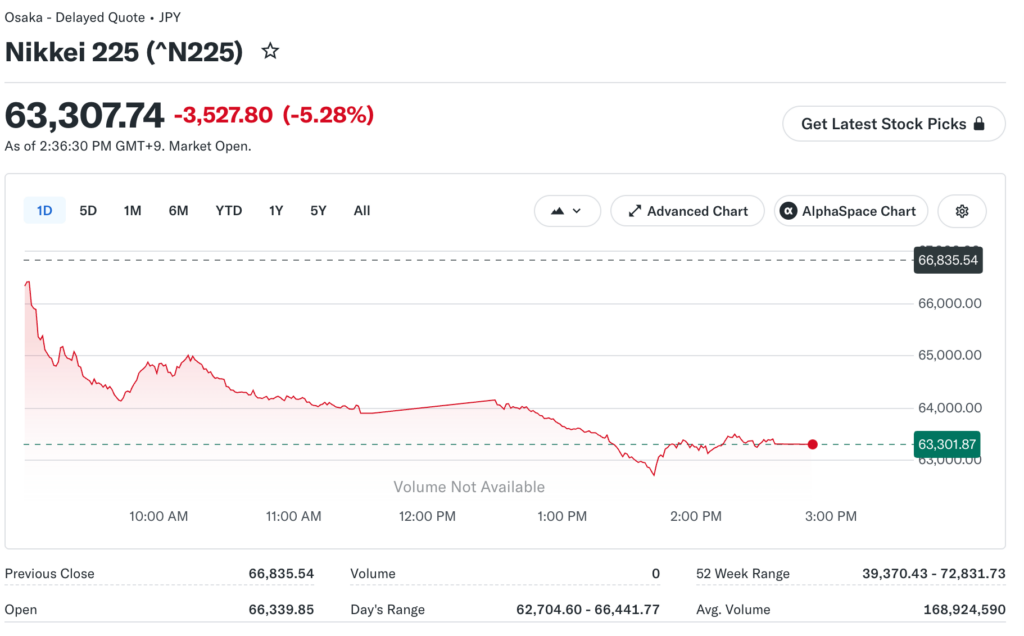
Japan’s Nikkei 225 dropped 3.2 percent on the same session. The selloff followed a 1.6 percent decline in the Nasdaq the prior evening as US investors began questioning whether AI infrastructure investment could justify the multiples embedded in chip stocks.
A lead financial expert at Fondesia emphasises that what happened in Seoul on July 16 is not just a one-day volatility event. It is a signal about how concentrated AI-related semiconductor exposure has become in Asian equity markets. It is also a signal about how quickly that concentration can reverse when sentiment shifts.
South Korea’s Market and Its AI Chip Dependency
The Kospi’s 6.3 percent single-session decline is larger than the overall index move might suggest. South Korea’s benchmark is heavily weighted toward Samsung Electronics and SK Hynix. These two memory chip manufacturers have been primary beneficiaries of AI-driven HBM demand through 2025 and 2026.
When market sentiment shifts away from AI hardware valuations, South Korea’s index absorbs the impact disproportionately compared to more diversified global benchmarks.
SK Hynix had only recently completed a successful Nasdaq IPO on July 10, 2026, where the stock jumped 13 percent on its first trading day. By July 13, the stock had fallen more than 10 percent in Seoul trading as profit-taking set in.
That sequence, a strong IPO followed by rapid reversal, is a classic pattern when a market theme has attracted large volumes of position-building that later require unwinding. It does not necessarily mean the underlying demand story has changed. It means the price had moved too far ahead of what reported earnings could confirm in the near term.
The Nikkei’s 3.2 Percent Drop and Japan’s AI Exposure
Japan’s Nikkei 225 fell 3.2 percent on July 16, with the decline concentrated in technology and electronics names. Japan’s chipmakers and electronics manufacturers had been among the beneficiaries of the AI infrastructure spending cycle. Companies like Renesas Electronics, Advantest, and Tokyo Electron all rose significantly from prior-year levels on AI demand expectations.
Advantest in particular had been one of the highest-profile Japanese AI beneficiaries. Its chip testing equipment is a critical step in producing the HBM chips that power AI data centers.
When those chips face valuation pressure, the testing equipment suppliers face it too. The Nikkei’s 3.2 percent fall captures how quickly that downstream impact can spread through the Japanese technology supply chain.
Hong Kong Moved in the Opposite Direction
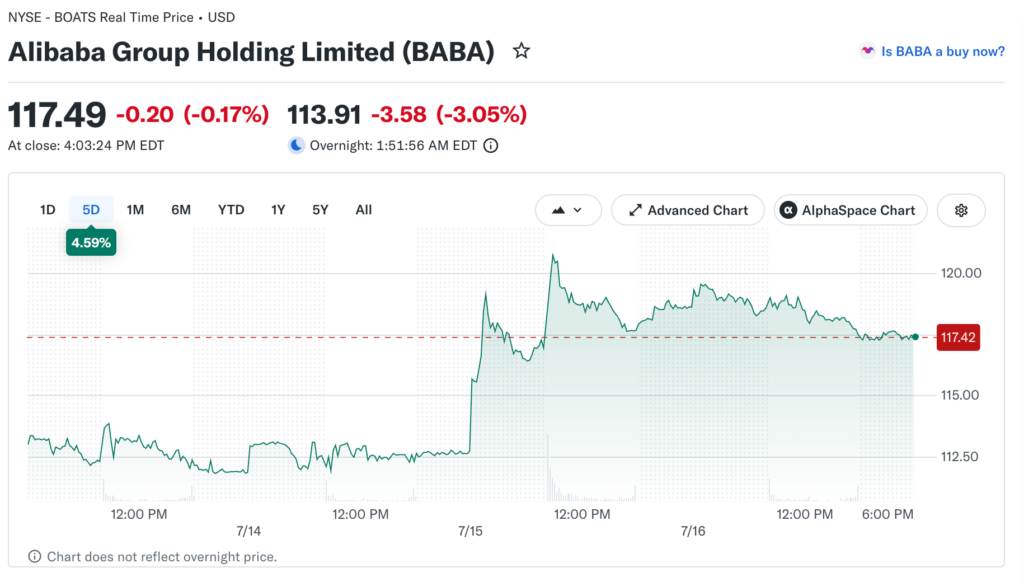
While South Korea and Japan were falling sharply, Hong Kong’s Hang Seng index gained 1.5 percent on July 16. The gains were led by real estate and consumer cyclicals. Alibaba rose 3.26 percent and Baidu gained 2.51 percent, both driven by an AI partnership announcement with Apple.
The deal involves deploying AI tools in the Chinese market through Alibaba and Baidu’s infrastructure. That type of concrete commercial arrangement gives the market a specific earnings driver to underwrite. It does not require investors to trust future capital expenditure conversion that may or may not materialize in reported results.
What the July 17 Session Looks Like for Asia
Bloomberg reported that Asian equity index futures were pointing to further declines for Japan and Hong Kong on July 17. This followed continued Nasdaq weakness after the close on July 16. Netflix’s 8 percent after-hours drop following Q2 earnings added sentiment weight to an already cautious session.
Contracts on the Nasdaq 100 slid 0.3 percent in futures trading on July 17, setting a negative tone for Asia-Pacific opens. Investors with Korean or Japanese chip stock exposure are navigating a combination of position unwinds and fresh sentiment pressure from the US session. Both forces are operating in the same direction at the same time.
That combination is typically when single-session percentage moves become the most amplified. The most important analytical task in this environment is distinguishing a positioning-driven selloff from a fundamentally justified one. The two require very different responses from investors with existing exposure.
Reading the Signal Without Overreacting to It
A 6.3 percent Kospi decline does not necessarily indicate a sustained bear move in Korean equities or AI semiconductor demand. It indicates that concentrated positioning in a single theme had accumulated to levels where any negative sentiment trigger produces amplified index moves.
The underlying AI memory demand cycle, which drove Micron to its strongest quarter on record in June 2026, remains structurally intact. It is supported by committed hyperscaler capital expenditure that has not been revised downward. South Korean and Japanese chipmakers are still operating in one of the strongest demand environments the memory industry has seen.
The July 16 selloff is a position rebalancing event rather than a fundamental reversal. Investors who make that distinction clearly will navigate the coming sessions more effectively. Those treating a valuation correction and a business deterioration as the same signal will likely make the more costly positioning errors.