
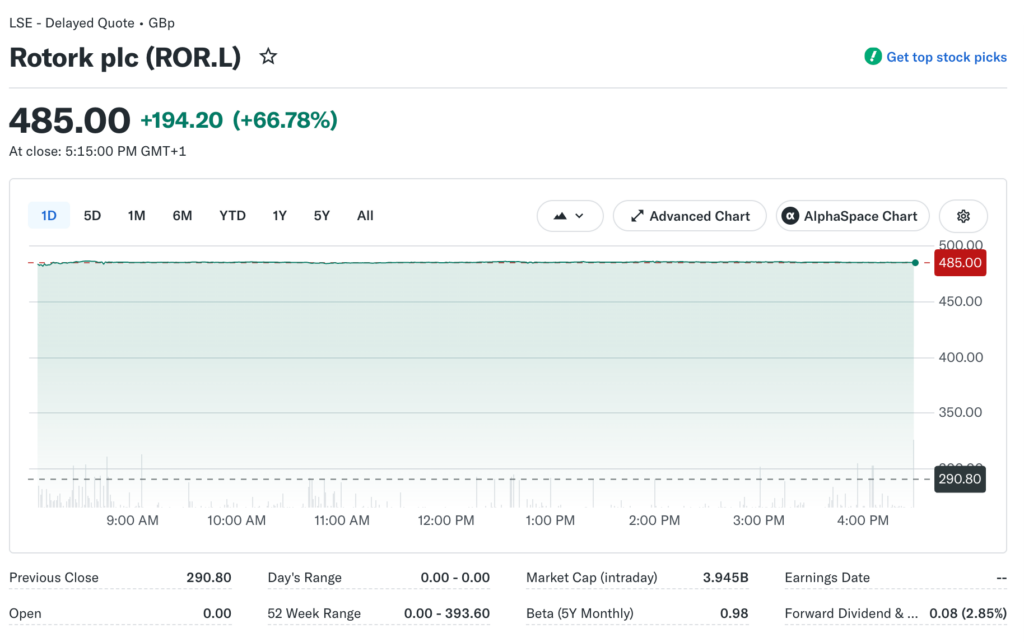
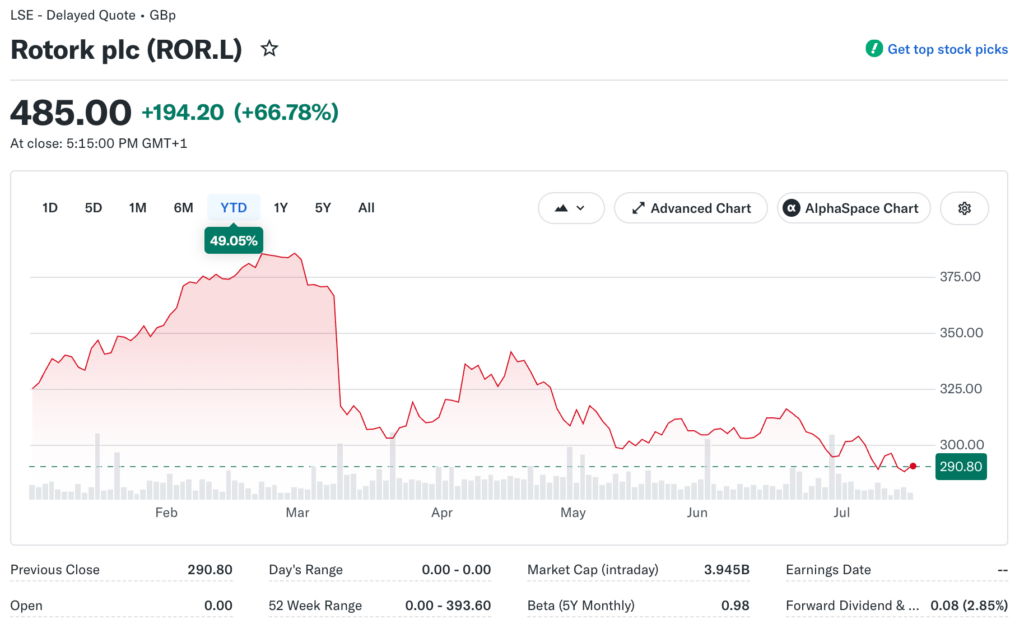
Rotork shares surged 66.85 percent on July 16, 2026, after Swiss engineering group ABB offered £4.1 billion for the FTSE 250-listed industrial flow control equipment maker. The cash offer of 506 pence per share represented a 73 percent premium to Rotork’s previous closing price. It was also a 63 percent premium to the average price over the prior three months.
The brand’s junior broker highlights why this deal tells investors something important about how British assets are valued globally. It is the latest in a long string of overseas acquisitions of UK industrial companies.
Understanding the mechanics and the pattern matters for FTSE 250 positioning heading into the second half of 2026. Senior brokers at Fondesia have been tracking this trend closely, noting that the pace of UK industrial acquisitions has been accelerating.
The Deal Structure and What It Means for Shareholders
ABB is paying 506 pence per share for each Rotork share, with the offer also including a dividend component. The acquisition values Rotork at an enterprise value of roughly £4.08 billion. It was struck at a 19.5 times multiple on the company’s 2025 adjusted EBITDA.
ABB’s chief executive stated publicly that the group sees synergies that would pull that multiple down to the mid-teens level over time.
He also noted that ABB still has approximately $14 billion in remaining acquisition capacity after the Rotork deal. Rotork’s board recommended the offer, indicating directors believe the price captures fair value for a business that had been trading below international peers on valuation multiples.
A Pattern That Is Drawing Scrutiny
Rotork’s agreement with ABB is not a standalone event. It is the latest in a series of overseas acquisitions of UK-listed industrial companies. The list includes Spectris, Dowlais, Renold, DS Smith, and TI Fluid Systems.
Peel Hunt analyst Harry Philips described the combined Rotork and Gooch and Housego deals as further evidence of the appeal of UK-listed industrial companies to overseas acquirers. Peel Hunt had warned earlier in July that Britain is effectively selling the family silver. The firm recorded 154 takeover bids for UK companies worth more than £100 million since the start of 2023.
The discount at which UK industrial stocks trade relative to European and American peers has been a persistent feature of the post-Brexit environment. Lower domestic valuations create entry points for foreign buyers that simply do not exist for equivalently positioned businesses listed in Germany, France, or the United States.
The resulting wave of bids removes discounted assets from the UK market rather than allowing them to rerate upward organically for existing British investors.
What the FTSE 250 Math Actually Looked Like
The mechanical impact of the Rotork deal on the FTSE 250 index is worth understanding carefully. Rotork made up approximately 0.84 percent of the Vanguard FTSE 250 tracker as of May 31. Its 66.85 percent jump on July 16 added roughly 132 points to the FTSE 250 index, while the index itself closed up only about 78 points.
That means the rest of the FTSE 250 basket was actually lower by approximately 54 points, or 0.23 percent, on the same day. A single acquisition target created a misleading headline performance number that masked weakness in the broader mid-cap market. Investors holding passive FTSE 250 exposure should understand that this mechanical effect can significantly distort the daily index reading.
The London Market’s Broader Position
The FTSE 100 slipped 0.34 percent on July 16 even as the FTSE 250 appeared to gain on the Rotork effect. London’s blue-chip index faced pressure from Asian chip stock weakness. South Korea’s Kospi was down 6.3 percent and Japan’s Nikkei was falling 3.2 percent on the same day.
The FTSE 100 has been somewhat insulated from the AI chip volatility driving sharp swings in US and Asian technology indices. IG chief market analyst Chris Beauchamp noted that stocks with little direct AI chip exposure are currently showing resilience. UK GDP rose 0.1 percent in May, with the three-month GDP growth figure reaching 0.8 percent, the highest pace in 13 months.
What Investors Should Take From the Rotork Deal
The Rotork acquisition highlights two things simultaneously for UK equity investors. British industrial businesses carry genuine fundamental value that global acquirers are willing to pay significant premiums to access. But that value is being harvested by overseas buyers rather than being captured through domestic rerating.
ABB’s CEO signaling that the company still has $14 billion in acquisition firepower after a £4.1 billion deal suggests the current wave of UK industrial takeovers may not have exhausted itself. Investors watching the FTSE 250 are already examining which names share the characteristics that made Rotork attractive.
Strong cash generation, niche market leadership, and international revenue are precisely the profiles drawing overseas interest at premium prices in the current deal environment. For active investors, the FTSE 250 discount to European peers remains an ongoing opportunity as long as UK assets stay undervalued.