
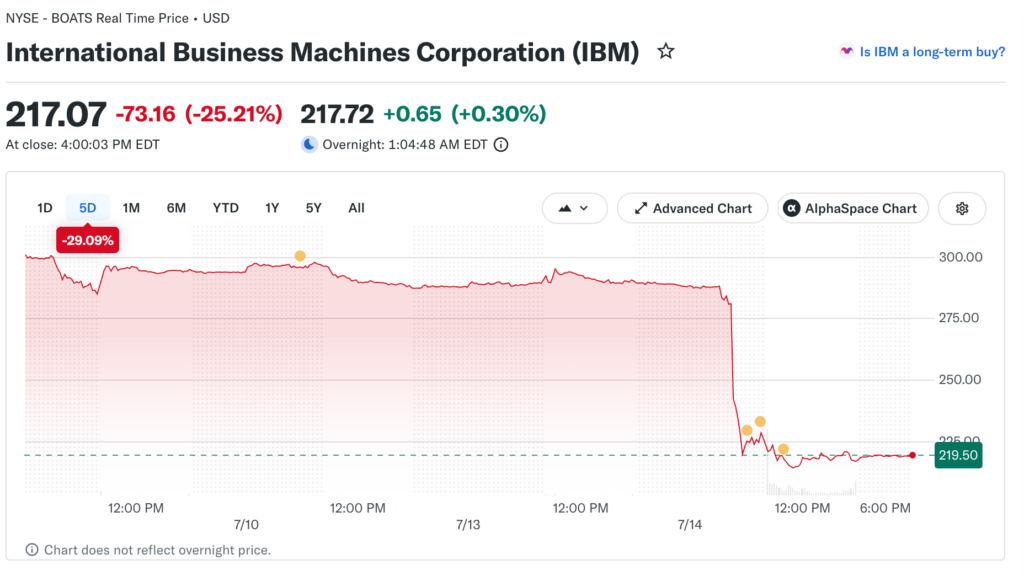
This week’s plunge in IBM stock stands out as one of the sharper single-day technology losses in some time.
Shares lost close to a quarter of their value after management flagged a coming earnings shortfall, pointing to softer orders across its software and infrastructure units. Pressure from that decline showed up directly in the Dow Jones Industrial Average, though the broader index still managed to finish Tuesday only modestly lower, closing at 52,508.27.
A single-session move of that size tends to expose the real gap between retail trading habits and genuine wealth management. A senior advisor at Prime Lake Capital notes that this gap rarely gets discussed in marketing material, yet it becomes unmistakable the moment a headline like this one lands inside a client’s actual portfolio.
What Retail Trading Actually Optimizes For
Retail trading platforms are generally built around speed and access. An investor can react to a headline within seconds, buying or selling a position before fully digesting what the news actually means for the underlying business. That speed feels like control, but it often works against long-term outcomes.
A sharp move like IBM’s this week can trigger reflexive selling among investors who hold the stock directly through a retail account, sometimes locking in a loss before the broader market has finished pricing in the actual impact of the news.
Where Wealth Management Approaches the Same Event Differently
Portfolio management built around a documented plan treats an event like a single-day earnings warning as one data point within a larger strategy, not an isolated trigger for immediate action. The question is not whether to react, but whether the underlying investment thesis for holding that position has actually changed.
This does not mean ignoring bad news. It means evaluating it against a client’s full portfolio, time horizon, and diversification, rather than making an isolated decision under pressure. A portfolio strategist at Prime Lake Capital reviews concentrated positions like this specifically for that reason, checking exposure across a client’s full holdings rather than reacting to one stock in isolation.
The concentration risk most investors underestimate
Many retail investors hold outsized positions in a small number of well-known companies, often built up gradually through payroll contributions or long-held conviction. IBM’s slide this week is a reminder that even large, established companies can move sharply on a single earnings disappointment.
Diversification across sectors and asset types reduces the impact of any one stock’s bad week on an entire portfolio. This does not guarantee positive returns or eliminate risk. It changes how much damage a single disappointing headline can do to a client’s broader financial plan.
What a Documented Plan Actually Changes About the Reaction
A documented investment plan typically includes some version of a rebalancing threshold, a rule that specifies how large a single holding can grow before it gets trimmed back toward its intended weight. Portfolios built without this kind of rule tend to drift over time, often without the investor noticing until a sharp move like IBM’s this week exposes exactly how concentrated a position had become.
This structural discipline matters more than any single reaction to a specific headline. An investor with a documented rebalancing rule already in place does not need to decide, in the moment, whether IBM’s warning changes anything meaningful.
Why Speed Without a Framework Tends to Backfire
Retail trading platforms often emphasize how quickly an investor can act, treating speed itself as a benefit. Speed without a framework for evaluating what a specific headline actually means for a company’s long-term value tends to produce reactive decisions rather than sound ones.
A wealth advisor at Prime Lake Capital notes that the investors who handled IBM’s drop most calmly this week were generally the ones who already knew, before the headline hit, exactly how large their exposure was and what threshold would trigger an actual portfolio change.
What Bank Earnings This Week Add to the Picture
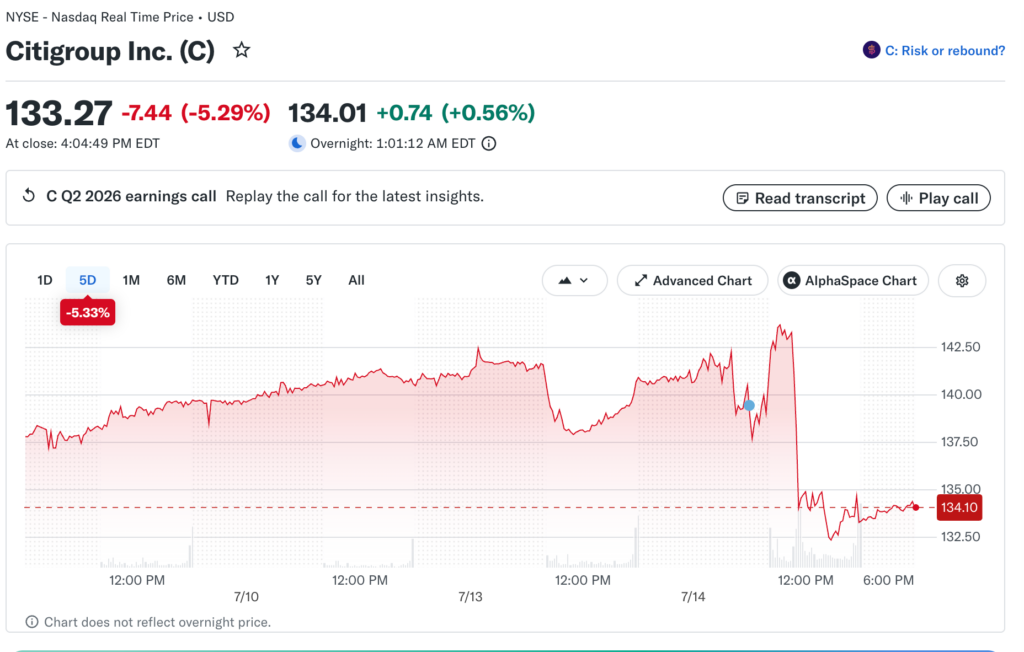
The same week brought stronger results elsewhere. Goldman Sachs reported earnings well above analyst expectations, while Citigroup posted revenue ahead of consensus estimates, even as its shares slipped slightly in premarket trading. These mixed signals across a single earnings season illustrate why single-stock reactions rarely tell the full story of where markets stand.
A wealth advisor at Prime Lake Capital notes that reading a full earnings season, across sectors and company sizes, gives a far clearer picture than reacting to any one company’s results in isolation, however dramatic that single result looks in the moment.
The Discipline of Retail Trading Rarely Rewards
Speed has real value in certain financial decisions. It has far less value in building a retirement portfolio meant to last decades. Investors who felt the urge to react instantly to IBM’s drop this week, and those who felt reassured by Goldman’s strong quarter, experienced the same lesson from opposite directions.
Neither single data point should drive a long-term plan on its own. A personalized advisory relationship exists specifically to separate genuine strategic shifts from single-week noise, however loud that noise happens to be.