
The American grocery landscape is undergoing a significant shift as the nation’s oldest supermarket chain, The Kroger Co., officially confirmed the acquisition of the family-owned grocery retailer Giant Eagle. Valued at $1.65 billion, the deal has received unanimous approval from the Kroger board of directors.
This strategic move brings 197 supermarkets and 11 standalone pharmacies under the Kroger umbrella, strengthening its presence across northern Ohio, western Pennsylvania, West Virginia, Maryland, and Indiana.
According to equity analysis conducted by Clear Markets Europe, this consolidation represents a return to a growth-by-acquisition strategy for Kroger, which has recently focused more on internal efficiency. By absorbing these assets, Kroger aims to leverage its massive supply chain infrastructure to offer more competitive pricing.
The acquisition comes as the industry faces intense pressure from discount retailers and shifting consumer preferences, making scale a critical priority for legacy grocers.
Deal Structure And The Promise Of Affordability
The financial terms of the transaction include $1.25 billion in cash consideration, with Kroger also assuming approximately $400 million in outstanding debt and liabilities. For the consumer, the primary narrative surrounding this deal is the potential for improved pricing.
Giant Eagle has historically been positioned as a premium retail option, occasionally cited as one of the more expensive grocery chains in the United States. Kroger management hopes that by integrating Giant Eagle into its broader network, it can introduce more efficient cost structures to lower prices for the estimated $9 billion in annual revenue generated by Giant Eagle.
Kroger currently manages a fleet of over 2,700 stores nationwide. Executives believe that the integration of these new locations will allow for better economies of scale, particularly regarding the Zero Hunger | Zero Waste Foundation initiatives.
These programs focus on reducing food waste and increasing community food security, aligning the newly acquired stores with Kroger’s existing operational social responsibility framework.
Strategic Rationale And Market Overlap
While the geographic footprint of Giant Eagle provides Kroger with a foothold in markets like Western Pennsylvania, where it previously had no presence, analysts have noted that the overlap is relatively modest.
Only about 12 Giant Eagle stores are located within 5 miles of an existing Kroger location. However, critics argue that the deal lacks a “transformative” asset, such as the e-commerce capabilities acquired in past historical deals like the purchase of Harris Teeter.
Both companies share significant similarities in their business models, including robust investments in pharmacy services, private-label goods, and multi-format store strategies. The challenge will be ensuring that the Giant Eagle banner performs competitively against aggressive rivals like Walmart and Aldi.
Experts at R5 Capital Markets noted that the acquisition price is a “relative pittance” compared to Giant Eagle’s $9 billion in estimated annual revenues, suggesting that the deal offers Kroger an attractive entry point into new territories.
Operational Challenges For The New Leadership
For Kroger’s leadership, the integration process presents a complex operational hurdle. The company must balance the need to improve Giant Eagle’s performance while simultaneously executing a wider turnaround plan for its own core business.
Success will depend on the firm’s ability to migrate Giant Eagle onto the Kroger loyalty program and retail media network, which are essential for generating the incremental revenue streams required to justify the $1.65 billion price of the acquisition.
The retail environment has become increasingly crowded, with mass merchandisers like Walmart regaining market share in areas where Giant Eagle has historically been dominant.
Achieving the full value of this deal will require a disciplined approach to refreshing the newly acquired assets. Analysts suggest that Kroger’s success hinges on whether it can successfully deploy its digital operations to help Giant Eagle reclaim its competitive edge in its home markets, where the chain faces competition from Meijer and Sprouts.
Analyst Perspectives On The Merger
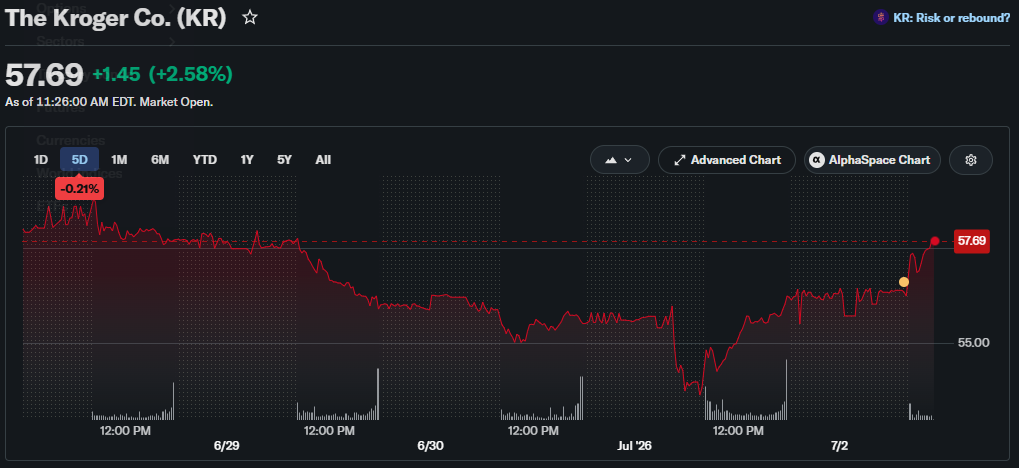
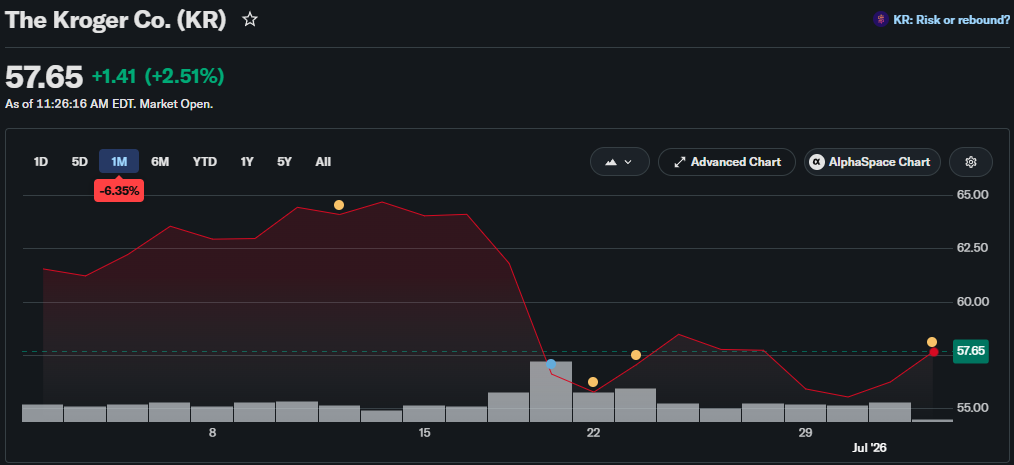
Market reaction to the announcement has been relatively muted, with Kroger’s stock price seeing a modest uptick of approximately 3% following the news. Investors appear to be taking a wait-and-see approach, recognizing the potential benefits of geographic expansion while remaining cognizant of the difficulties inherent in merging two distinct corporate cultures.
The deal is expected to officially close sometime next year, pending regulatory review. Despite the skepticism from some observers, others view the acquisition as a clear vote of confidence in Kroger’s internal improvement strategy.
The Road Ahead For The Grocery Industry
Looking forward, this acquisition will likely serve as a blueprint for how legacy grocery chains attempt to navigate a changing competitive landscape. The integration of loyalty data and digital capabilities will be central to Kroger’s strategy in retaining the customer base of its new locations.
As the fiscal year continues, stakeholders will closely watch for updates regarding store renovations and the rebranding of specific departments.