
USD/CAD moved toward 1.3920 after the Canadian dollar climbed to its strongest level in two months. Higher oil prices and a much stronger-than-expected Canadian jobs report helped support the loonie, while traders remained cautious ahead of fresh US inflation data.
In this article, experts at Kepler Group examine whether USD/CAD can break beneath 1.3900 or whether renewed dollar demand could produce a recovery toward 1.4000.
Canadian Jobs Deliver a Major Surprise
Canada added 75,100 jobs in July, far above the 16,500 increase economists had expected.
The unemployment rate also fell from 6.5% to 6.4%, its lowest level in two years.
The strength of the report reduced immediate concern about the Canadian economy and provided fresh support for the currency.
Private-sector hiring was particularly encouraging, with gains across retail, finance, insurance, and professional services.
Wage Growth Adds a More Balanced Signal
The employment report was strong, but wage growth cooled.
Average hourly earnings for permanent employees increased 3.0% year over year in July, down from 3.7% in June.
Slower wage growth reduces some inflation pressure even as employment improves.
That combination gives the Bank of Canada more room to leave rates unchanged while monitoring whether economic momentum continues.
Parabolic SAR Keeps Pressure on USD/CAD
The first chart uses Parabolic SAR dots alongside USD/CAD candlesticks.
Dots above price generally favor sellers, while dots below price indicate that buyers are regaining control.
The current structure remains bearish for USD/CAD, with the indicator supporting the recent move lower.
A continued decline would keep 1.3900 and 1.3850 in focus. A reversal in the SAR position could signal a stronger rebound.
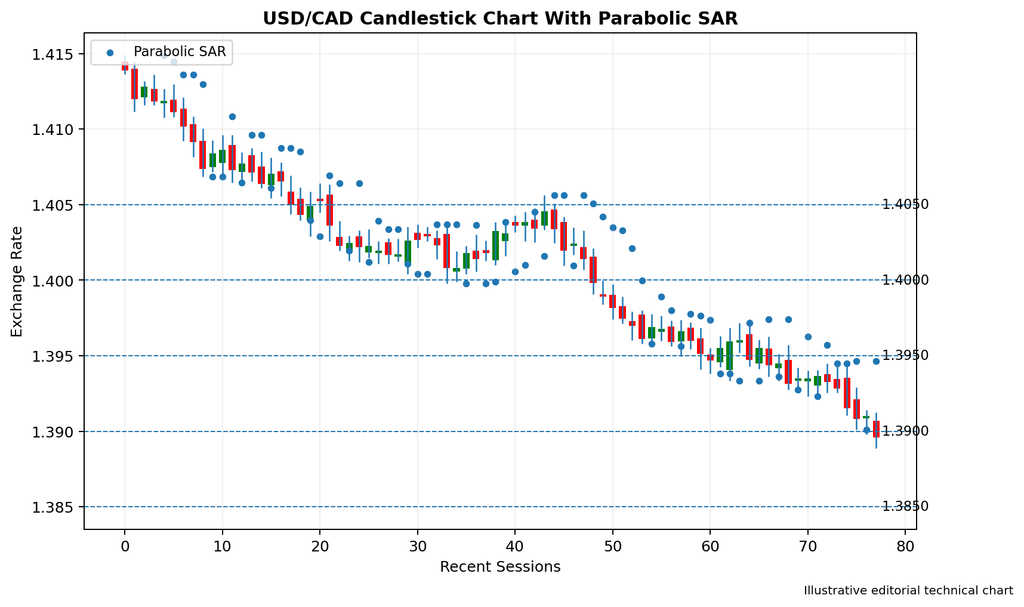
Image 1: USD/CAD Candlestick Chart With Parabolic SAR
Support Is Building Around 1.3900
The first major support area sits near 1.3900.
The pair has already traded close to this level after reaching 1.3916.
A confirmed break below 1.3900 could expose 1.3850, followed by 1.3800.
A daily close below 1.3900 would strengthen the argument that the Canadian dollar’s recovery is becoming more established.
Resistance Appears Near 1.4000
The first important resistance area is positioned around 1.4000.
A recovery through this level could expose 1.4050 and 1.4100.
A sustained close above 1.4050 would weaken the current bearish structure and suggest that dollar demand is returning.
That outcome would become more likely if US inflation comes in stronger than expected or oil prices reverse lower.
Money Flow Index Shows Strong Canadian-Dollar Demand
The second chart uses the Money Flow Index, which combines price changes with estimated trading volume.
Readings above 80 can indicate that a move has become stretched, while readings below 20 suggest oversold conditions.
The indicator shows strong downward momentum in USD/CAD, reflecting persistent demand for the Canadian dollar.
If the MFI begins turning higher from lower levels, it may warn that the decline is losing strength.
Image 2: USD/CAD Four-Hour Chart With Money Flow Index
Oil Prices Remain a Major Driver
Oil continues to play an important role because Canada is a major crude exporter.
US oil prices recently rose 1.3% to $83.16 per barrel, helping support the Canadian dollar.
Higher oil prices usually improve Canada’s trade outlook and can increase demand for the loonie.
If crude continues rising, USD/CAD may struggle to regain 1.4000. A sharp oil reversal would remove one of the currency’s strongest current supports.
The Bank of Canada Can Remain Patient
The Bank of Canada has kept its policy rate at 2.25% since October.
Recent employment strength gives policymakers more reason to wait rather than rush into another policy change.
The combination of stronger jobs and slower wage growth supports a patient approach.
That leaves the Canadian dollar more dependent on incoming data, oil prices, and developments in US monetary policy.
US Inflation Could Change the Picture
Attention now shifts to US CPI. Economists expect July consumer prices to rise 0.1% month over month, while annual inflation is forecast near 3.4%.
A softer US inflation reading could weaken the dollar further and push USD/CAD below 1.3900.
Stronger inflation could revive expectations of another Federal Reserve rate increase and support a rebound in the pair.
Trading Implications
USD/CAD retains a bearish short-term outlook while trading below 1.4000.
A confirmed break under 1.3900 could expose 1.3850 and 1.3800.
A recovery above 1.4000 would weaken immediate selling pressure, while a sustained move through 1.4050 could shift attention toward 1.4100.
Higher oil prices, strong Canadian data, and softer US inflation would favor the loonie. Stronger US CPI or falling crude prices would support USD/CAD.
Conclusion
USD/CAD is testing the 1.3900 region as stronger Canadian employment and higher oil prices support the loonie.
Resistance is positioned near 1.4000, 1.4050, and 1.4100. Support can be found around 1.3900, 1.3850, and 1.3800.
The current structure favors further Canadian-dollar strength, but US inflation could quickly change the direction of the pair.