
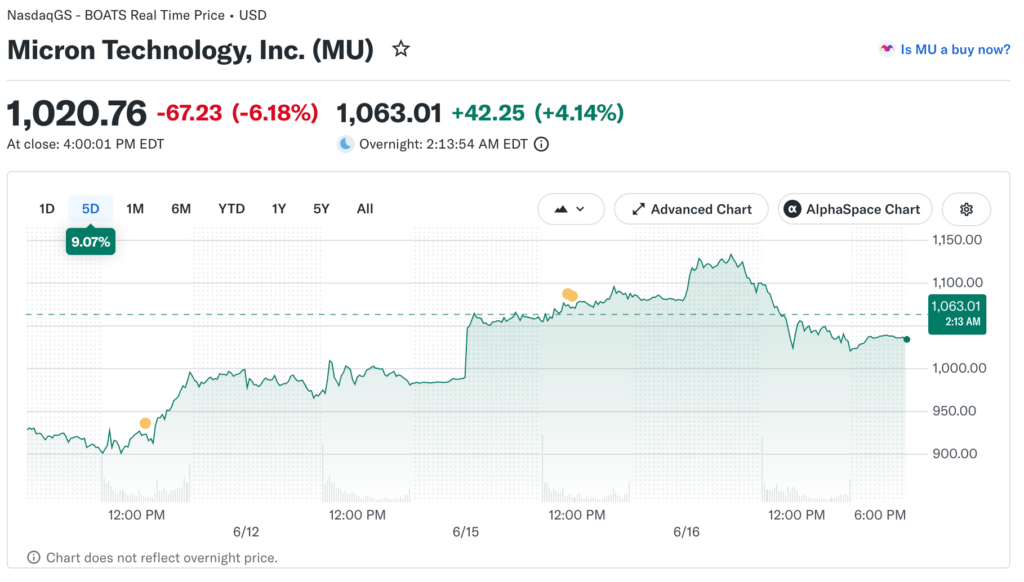
Micron Technology (MU) surged 8% to around $1,060, and Western Digital (WDC) jumped 8% to $607 on June 15, 2026, as news of a US-Iran peace agreement reopened risk appetite across global equities.
A financial analyst at Nummixo takes a closer look at what is driving the memory and storage stock rally, how much of the move is geopolitical relief versus genuine AI demand fundamentals, and what the upcoming Micron earnings report on June 24 actually reveals about the sector’s durability.
The Peace Deal Opens the Valve
The US-Iran ceasefire announced on June 15 triggered an immediate and broad repricing across risk assets globally. Oil prices fell sharply toward $80 per barrel, easing inflation expectations that had been building for months and signaling a potential full reopening of the Strait of Hormuz to normal tanker traffic.
That shift in energy pricing directly reduces the “higher for longer” rate narrative that had been compressing technology and semiconductor valuations throughout the spring. Lower oil means lower inflation pressure, and lower inflation pressure means the Fed has more room to eventually ease financial conditions.
Memory and storage stocks moved the fastest of any sector following the ceasefire announcement. Western Digital led S&P 500 and Nasdaq 100 gainers, adding as much as 13.8% at the session high, while SanDisk (SNDK) rose 6% to around $2,101, and the DRAM ETF and Seagate Technology Holdings (STX) each gained between 6% and 7%.
Micron’s 2026 Run in Full Context
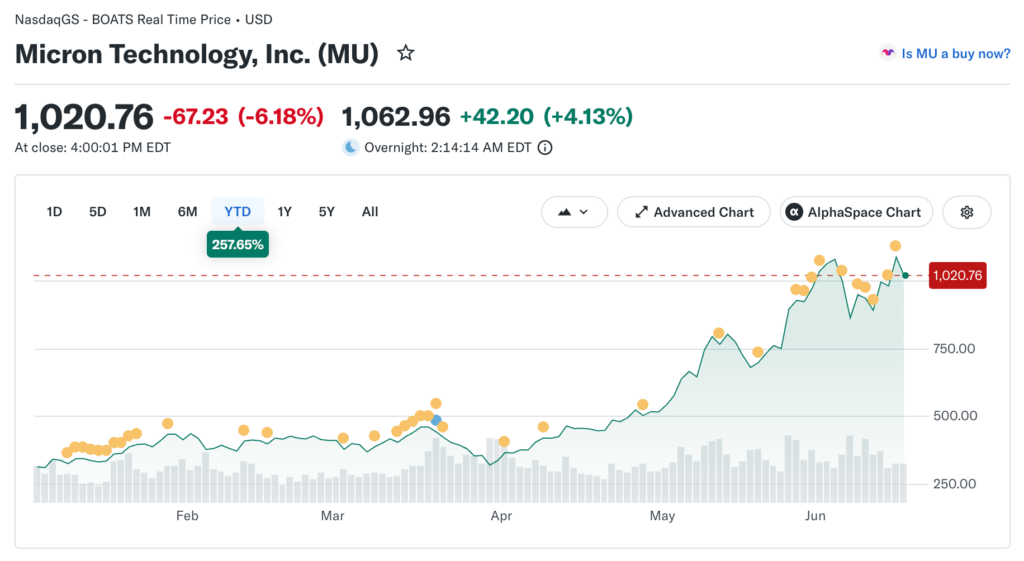
Micron has been one of the defining stock trades of the entire year, and the numbers behind that claim are genuinely striking. Shares climbed from a 52-week low of $103.38 to an all-time high of $1,089.29 on June 3, a nearly 10x move fueled by the AI high-bandwidth memory supercycle, multiple record earnings beats, and inclusion in the S&P 100 Index.
Year-to-date total return through that June 3 peak reached 250%, placing Micron in the top 1% of all Nasdaq performers for 2026. The ceasefire relief bounce then pushed shares back above the critical $1,000 level after a meaningful pullback from that high.
Retail sentiment on StockTwits turned bearish even during the relief rally, and Polymarket data showed only a 43% probability that Micron would close above $1,000 by month-end. That divergence between price action and sentiment signals a genuine risk of consolidation beneath the surface, despite the powerful momentum still behind the name.
Two Very Different Valuation Pictures
Micron’s trailing price-to-earnings ratio is 46x, which may seem stretched in isolation. The forward P/E compresses to roughly 10x if June quarter guidance plays out as analysts currently expect, reflecting the explosive earnings growth the AI memory cycle is generating in real time.
Polymarket puts the odds of a Micron earnings beat on June 24 at 98%, based on strong signals of high-bandwidth memory demand from the major hyperscalers. Western Digital’s exposure to enterprise storage and AI workloads places it in a similar demand environment, though with less HBM concentration and a slightly different risk profile heading into the report.
The gap between trailing and forward multiples is not a warning sign in this case. It is a reflection of how rapidly the earnings base is expanding as AI infrastructure spending accelerates through the back half of 2026.
What June 24 Will Actually Reveal
Investors should focus less on the headline earnings beat and more on HBM3E allocation rates and on whether the company raises its full-year revenue guidance above the current consensus. Commentary on customer inventory levels at the hyperscaler level will carry equal or greater weight than the reported numbers for the quarter.
If major customers have been running down buffer inventory built during the supply disruption period, replenishment demand adds another meaningful layer of upside to already elevated order books.
If inventory levels remain elevated at customer sites, growth expectations across the sector need to be revised, regardless of how strong the current quarter’s numbers appear on the surface.
The Concentration Risk Still Being Underpriced
A single large hyperscaler reducing its capital expenditure guidance in upcoming earnings could reset memory stock valuations faster than the ceasefire-driven rally built them up. The fundamental thesis behind Micron and Western Digital is strong and well-supported by actual order data, but at 46x trailing earnings, both stocks are priced for a cycle that continues without meaningful interruption.
Earnings confirmation on June 24 is the next real checkpoint for the entire memory sector. If Micron raises guidance and confirms HBM3E supply is fully allocated through the end of 2026, Western Digital and SanDisk benefit directly as adjacent names in the same supply chain, keeping the AI memory trade structurally intact heading into Q3.