
The global semiconductor industry is attracting renewed investor interest as Intel’s resurgence in chip manufacturing sparks debate about the future of advanced semiconductor production. After years of working to rebuild its technological edge, Intel has become one of the market’s most closely followed turnaround stories.
Brokers from Fondesia explore whether Intel’s recent progress can meaningfully challenge TSMC’s leadership position or whether the industry leader remains firmly ahead in the race for advanced chip manufacturing.
Intel’s Unexpected Comeback Gains Momentum
Intel has experienced a significant resurgence in investor confidence, driven by growing optimism surrounding its foundry business and manufacturing strategy. Recent reports of a potential Apple collaboration, alongside other major partnerships, have strengthened market expectations for the company’s future growth.
A key driver of this momentum is Intel’s advanced 18A manufacturing process, which has entered large-scale production and represents an important step in competing with leading chipmakers. By expanding beyond its own products and pursuing third-party manufacturing opportunities, Intel is attempting to create new revenue streams and reestablish itself as a major force in the semiconductor industry.

Building a Foundry Business from the Ground Up
Intel’s strategy extends beyond chip design, as the company aims to become a major contract chip manufacturer serving external technology companies. Growing interest from potential customers involved in artificial intelligence and advanced computing has increased optimism that its foundry business is gaining momentum.
However, the transition is still in progress. Although the foundry division has reported growth, most of its revenue continues to come from producing chips for Intel itself rather than external clients. The long-term success of the strategy will depend on Intel’s ability to attract significant third-party demand and expand its external customer base.
The Financial Challenges Remain Significant
Despite increasing optimism, Intel still faces significant financial challenges. Its foundry business remains unprofitable, largely due to the substantial costs required to build advanced semiconductor facilities and maintain cutting-edge manufacturing technology.
Developing competitive chip production capabilities requires billions of dollars in investment and ongoing research spending, meaning investors must weigh Intel’s long-term growth potential against current financial pressures. While the company has made notable progress, achieving profitability in its foundry segment remains one of its most important objectives.
Why TSMC Continues to Dominate
While Intel’s recent progress has attracted attention, TSMC remains the dominant force in advanced semiconductor manufacturing. The company serves as a key production partner for many of the world’s largest technology firms across artificial intelligence, smartphones, data centers, and high-performance computing.
Most importantly, TSMC continues to lead the market for cutting-edge chip production, supplying the advanced processors that power some of today’s fastest-growing industries. Its combination of manufacturing expertise, massive production scale, and operational efficiency creates a competitive advantage that remains difficult for rivals to replicate.
Demand for Advanced Chips Remains Exceptionally Strong
A key factor supporting both Intel and TSMC is the rapidly growing demand for advanced semiconductors, driven by expansion in artificial intelligence, cloud computing, data centers, and high-performance computing. As organizations invest more heavily in AI technologies, the need for increasingly powerful chips continues to rise.
TSMC has reported robust demand from AI-focused customers and is investing aggressively to expand production capacity. However, building new manufacturing facilities requires significant time and capital, meaning supply constraints may persist in certain segments of the market. This dynamic could create opportunities for additional chip manufacturers, including Intel, to gain market share as demand continues to outpace supply.
Can Intel Become a Meaningful Alternative?
The key question for investors is whether Intel can develop into a credible alternative to TSMC as demand for advanced chip manufacturing continues to grow. Current market conditions may support this goal, as many technology companies are seeking greater supply-chain diversification and additional manufacturing capacity rather than relying on a single supplier.
Intel’s expanding presence in the United States could also provide a strategic advantage, supported by government initiatives aimed at strengthening domestic semiconductor production. However, while the opportunity is significant, success will ultimately depend on Intel’s ability to consistently execute its strategy and attract major customers over the coming years.
Investment Outlook: Turnaround Story or Established Leader?
For investors, the choice between the two companies largely comes down to growth potential versus proven leadership. Intel offers exposure to a high-risk, high-reward turnaround opportunity, with the potential for significant long-term gains if it can attract major customers, improve profitability, and successfully expand its manufacturing business.
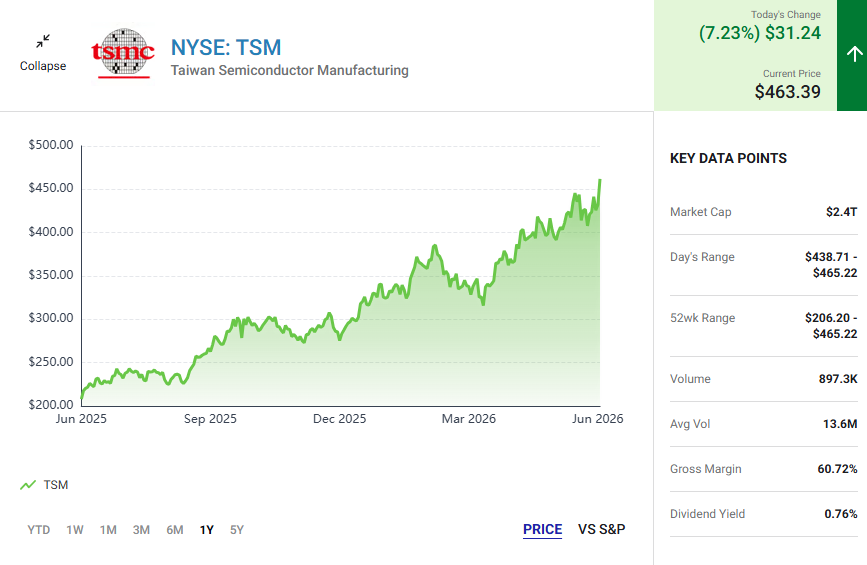
TSMC, meanwhile, represents a more established investment case. The company benefits from industry-leading market share, strong profitability, and a dominant position in advanced semiconductor manufacturing, supported by growing demand from the AI sector. While Intel offers upside potential, TSMC currently provides greater operational certainty and market leadership.
Conclusion
The semiconductor industry is entering a new phase as Intel works to challenge TSMC’s long-established leadership in advanced chip manufacturing. While Intel’s foundry comeback has attracted significant investor interest, TSMC continues to maintain advantages in scale, profitability, technology, and customer relationships.
For investors, Intel represents a compelling turnaround story with substantial growth potential, while TSMC remains the industry benchmark and market leader. As artificial intelligence continues to drive demand for advanced semiconductors, both companies are positioned to benefit, making the competition between them one of the most closely watched developments in the technology sector.