
The EUR/USD exchange rate remains under significant selling pressure as stronger-than-expected US economic data reinforces demand for the US dollar ahead of the Federal Open Market Committee (FOMC) interest rate decision. This article examines the topic thoroughly, incorporating perspectives from Wisentkamm’s skilled brokers.
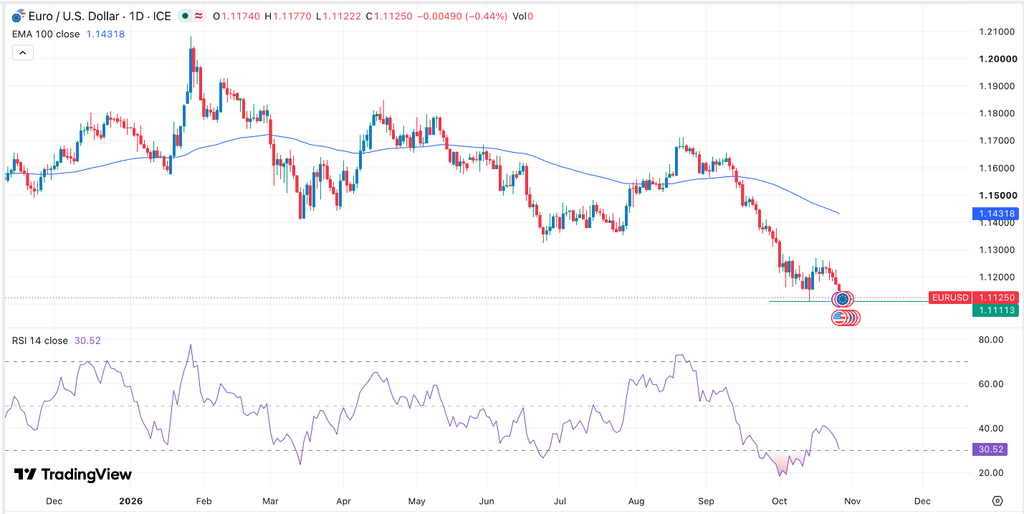
The pair declined to 1.1125, its lowest swing level since October 14, leaving it approximately 5% below its September peak. The latest price action highlights deteriorating momentum, with sellers maintaining control near a critical technical support zone.
The economic releases have challenged expectations of slowing US activity, potentially reducing the probability of near-term monetary easing. As the Federal Reserve and European Central Bank (ECB) prepare their policy decisions, traders are focusing on interest rate differentials, inflation expectations, and forward guidance.
These factors could determine whether EUR/USD declines toward 1.1050 or stages a corrective recovery.
Strong US Data Reinforces the Dollar’s Fundamental Advantage
The Conference Board Consumer Confidence Index increased to 91.7 in October, exceeding the consensus estimate of 81.2 and improving from 84.2 previously. The 10.5-point upside surprise indicates stronger household sentiment than markets anticipated.
Consumer confidence is an important leading indicator because household consumption represents the largest component of US gross domestic product (GDP). Improving sentiment can support consumer expenditure, strengthen domestic demand, and reduce concerns about an economic slowdown.
The housing sector also delivered an upside surprise, with new home sales reaching 676,000, compared with expectations of 651,000. The result exceeded forecasts by 25,000, or approximately 3.84%, highlighting resilience in a sector sensitive to borrowing costs.
FOMC Decision: Interest Rates and Yield Expectations
Economists expect the Federal Reserve to maintain interest rates within the 3.75%–4.00% range while evaluating inflation dynamics and the effects of previous monetary tightening. With an unchanged decision potentially priced in, the main catalyst will be the policy statement and forward guidance.
A hawkish assessment of economic growth or persistent inflation could reinforce expectations that US interest rates will remain elevated for longer. This could support Treasury yields and the dollar, placing additional downward pressure on EUR/USD. A less restrictive policy message could weaken the dollar and encourage short-covering in the euro.
The upcoming US third-quarter GDP estimate and September Personal Consumption Expenditures (PCE) inflation report will provide further insight into economic momentum and underlying price pressures.
Strong GDP growth combined with persistent PCE inflation could reinforce expectations of prolonged monetary restriction, increasing the likelihood of a sustained bearish move.
ECB Policy Outlook and EUR/USD Rate Differentials
The European Central Bank is also expected to leave interest rates unchanged while assessing the effects of previous tightening. Market reactions will depend on its assessment of inflation persistence, economic activity, and future monetary policy.
If the Federal Reserve adopts a hawkish tone while the ECB expresses greater concern about economic weakness, the resulting monetary policy divergence could widen the relative yield advantage of dollar-denominated assets, favoring further EUR/USD depreciation.
A more restrictive ECB message could support the euro, particularly if US economic data subsequently disappoints. Traders should monitor US Treasury yields, euro-area bond yields, and short-term interest rate expectations alongside both central bank announcements.
EUR/USD Technical Analysis: 1.1110 Support Under Pressure
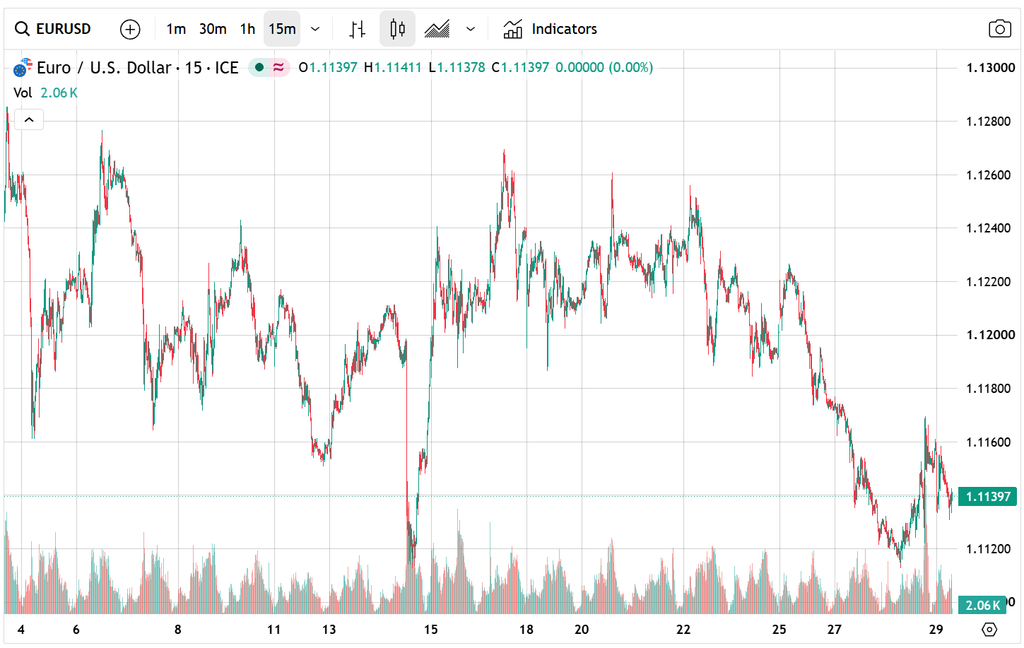
On the daily timeframe, EUR/USD has recorded five consecutive sessions of losses and is trading near the critical 1.1111–1.1125 support region. Persistent selling indicates that bearish momentum remains dominant ahead of the policy decisions.
The pair has fallen below its 50-day moving average and the Supertrend indicator, reinforcing the bearish technical bias. Meanwhile, the declining Relative Strength Index (RSI) confirms weakening momentum, although further declines could eventually encourage a corrective rebound.
The immediate trigger is a decisive break below 1.1110. A daily close beneath this threshold would strengthen the bearish structure and expose 1.1050 as the next significant downside target. From 1.1125, a decline to 1.1050 represents approximately 75 pips, or 0.67%.
If selling accelerates, EUR/USD could reach this target without a sustained recovery above broken technical indicators. A move back above the 50-day moving average and Supertrend resistance, by contrast, would weaken the bearish configuration and increase the probability of a corrective recovery.
Conclusion
The EUR/USD outlook remains bearish as stronger US economic data reinforces dollar demand ahead of the FOMC decision. The 5% retreat from the September peak, five consecutive declining sessions, and negative signals from the 50-day moving average, Supertrend, and RSI indicate elevated downside risk.
A confirmed break below 1.1110 would expose 1.1050, with US GDP, PCE inflation, and central bank guidance serving as critical catalysts. The ECB decision could alter the outlook through changes in relative interest rate expectations.
Until EUR/USD reclaims its broken technical indicators, the path of least resistance remains downward, although event-driven volatility could trigger sharp countertrend movements.