
Global energy markets are experiencing a definitive shift in price discovery as geopolitical de-escalation strategies directly counteract structural commodity deficits. Institutional energy traders are aggressively unwinding long positions following diplomatic breakthroughs that promise to normalize high-traffic maritime energy logistics corridors.
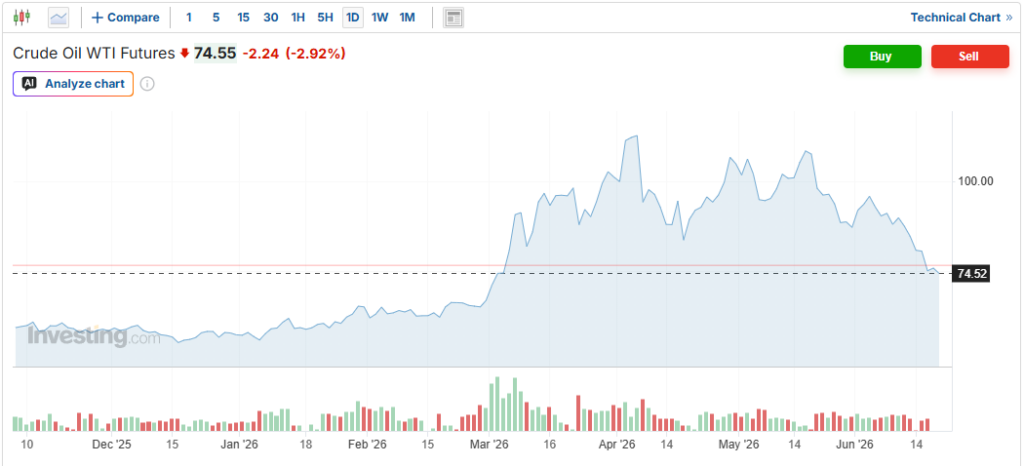
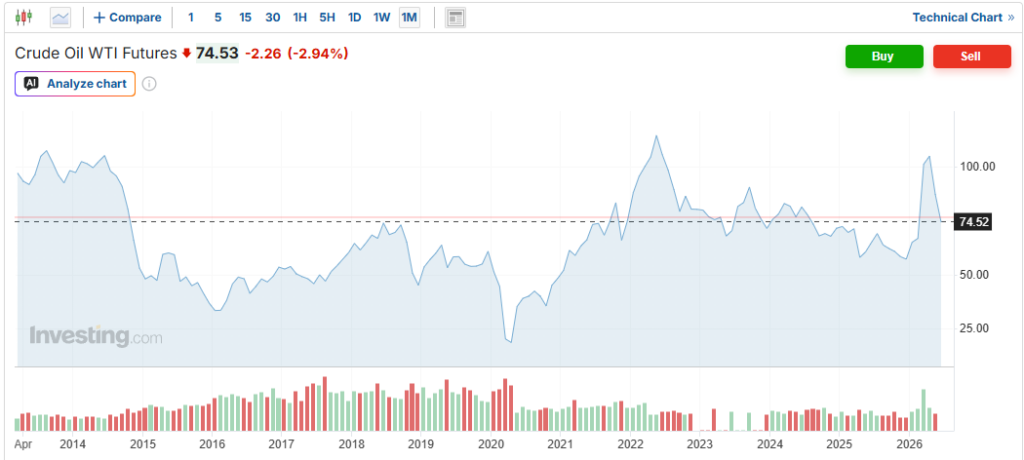
The resulting market sentiment has pushed the primary domestic crude benchmark to its lowest valuation point in precisely three months.
Benchmark crude contracts drifted lower during the session, remaining on a trajectory that suggests a substantial 10% decline over the current weekly window. Traders are reacting with extreme velocity to reports that regional adversaries have finalized a diplomatic framework to permanently restore unimpeded transit. This swift pivot in risk sentiment has effectively sidelined traditional bullish arguments rooted in underlying resource scarcity.
The sudden influx of diplomatic optimism has created a rigid ceiling for energy prices, forcing the WTI benchmark beneath the $74.00 per barrel threshold. This crude oil data compiled by the financial researchers at Bankolla highlighted that spot prices briefly touched a multi-month low of $73.36 during the session.
This downward momentum persists despite underlying data showing that the broader energy sector is facing its most constrained supply environment in decades.
Diplomatic Accords And Maritime Logistics Normalization
The finalized international agreement explicitly mandates the restoration of toll-free, secure passage through critical maritime energy corridors in exchange for comprehensive sanctions relief and economic reconstruction commitments.
Representatives from the involved global powers have scheduled follow-up technical negotiations to formally implement the de-escalation framework and begin the process of unfreezing vital financial assets. This rapid diplomatic progress has completely altered the risk premium historically applied to energy futures.
By removing the probability of immediate supply chain blockades, the agreement has allowed global shipping logistics to price in a more efficient transit environment. Energy allocators are currently prioritizing the potential for a sudden surge in regional export volumes over existing physical inventory constraints.
This outlook is compelling widespread portfolio rotation, as traders seek to benefit from the normalization of global maritime energy transit lanes.
Inventory Depletion Metrics And Structural Market Disconnects
Paradoxically, the physical fundamentals of the energy market remain at their most bullish level in recent history. Government energy agencies recently confirmed that commercial crude stockpiles declined by a massive 8.26 million barrels for the week concluding June 12. This drawdown nearly doubled the 4.6 million-barrel expectation maintained by consensus analysts, marking the tenth consecutive weekly inventory decline.
Regulatory bodies have issued formal warnings that these systemic drawdowns have left aggregate domestic energy reserves at their lowest levels observed in over 40 years. Under normal market conditions, this degree of physical shortage would trigger an aggressive rally in energy futures.
However, the current trading environment is entirely preoccupied with the geopolitical impact of the new peace agreement, causing participants to disregard even the most alarming indicators of physical supply failure.
Speculative Position Unwinding And Market Sentiment Shifts
The rapid revaluation of energy assets is being heavily amplified by a widespread liquidation of long-term speculative positions held by institutional hedge funds. As the geopolitical risk premium evaporates, programmatic trading algorithms are aggressively triggering automated sell signals to lock in profits from the prior period of high-volatility pricing.
This coordinated unwinding of bullish bets is creating significant downward momentum that far exceeds the fundamental impact of the diplomatic news itself.
Additionally, energy sector allocators are now shifting capital into alternative high-yield asset classes as the immediate catalyst for oil-based inflation begins to fade. This structural rotation out of commodities is likely to persist until the market identifies a new price floor supported by physical purchase demand.
Now that the lower valuation ranges have been established, traders are keeping a close eye on whether or not they will attract bargain hunters who are still aware of the long-term reality of resource scarcity.
Future Operational Risks And Price Stabilization Targets
The energy market is now entering a critical stabilization phase where the delta between geopolitical optimism and physical supply reality will be tested. Should the implementation of the peace deal encounter administrative or technical friction during upcoming sessions, the benchmark is likely to see a violent short-covering rally.
Bulls are actively scouting for any sign of diplomatic stalling that might refocus market attention on the persistent 40-year inventory lows.
On the other hand, if the diplomatic framework continues to be successfully implemented, it is anticipated that the benchmark will locate its new equilibrium within a trading channel that is lower.
Risk managers are advising energy desks to maintain strict discipline, as the high-velocity nature of the current news cycle remains prone to sudden, high-magnitude price swings. Navigating these conditions requires maintaining diversified hedges against both physical scarcity and the shifting landscape of global maritime energy politics.