
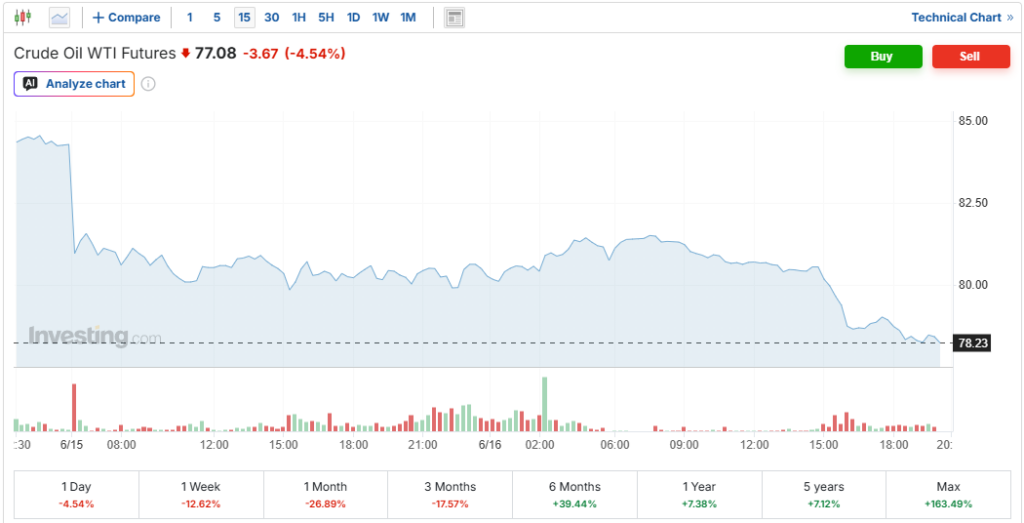
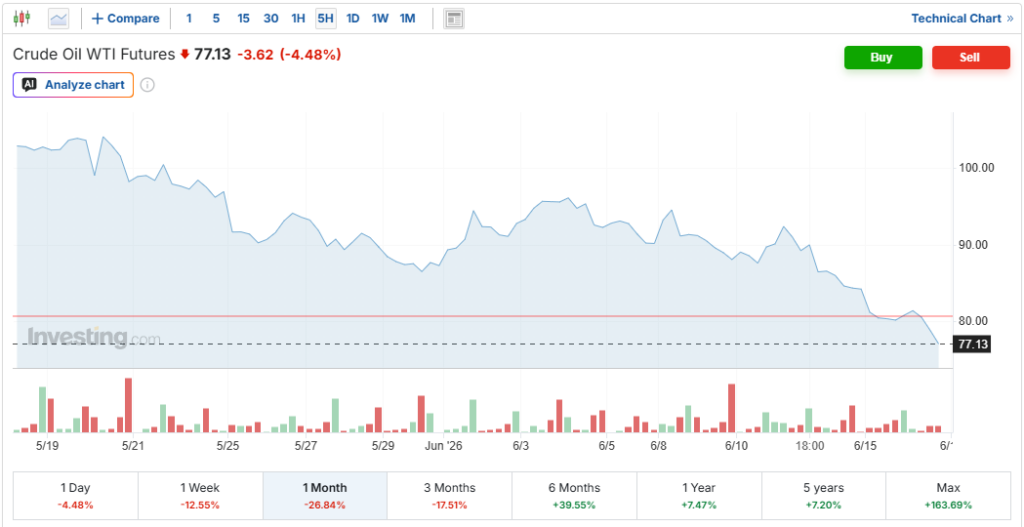
The global energy market experienced a massive valuation adjustment as international crude futures plummeted directly to their lowest operational thresholds in a quarter. This downward trajectory intensified during Tuesday’s session, extending a sharp, aggressive sell-off from the prior day as macroeconomic energy investors rapidly adjusted their geopolitical risk premiums.
The primary catalyst driving this liquid capital reallocation is the emerging legal framework for a comprehensive diplomatic settlement across the Middle East. While spot prices face immediate downward pressure, institutional energy allocators are focusing heavily on the structural logistics of restoring vital maritime shipping networks.
The commodity research team at Winseterra indicates that the ongoing structural volatility is tightly bound to the unresolved fine print of the underlying maritime truce. The escalating diplomatic momentum coincides directly with the formal assembly of global leaders at the annual G7 summit in Évian-les-Bains, France, starting today.
A highly anticipated memorandum of understanding is projected for formal public release later this week, which should clarify the permanent legal parameters of the regional settlement. Until these frameworks are verified, energy prices are expected to remain highly sensitive to incoming political communiqués.
During early market hours, international benchmark Brent crude futures fell sharply by 2.7% to settle near $80.91 per barrel. Simultaneously, the domestic gauge, West Texas Intermediate (WTI) futures, experienced an even more pronounced contraction, dropping beneath the key psychological support level to trade down 2.8% at $78.46.
This sudden market breakdown followed a brief overnight stabilization period where active futures ticked minorly upward before completely reversing course. The intra-day price swings reflect a heightened state of near-term uncertainty as the broader investment community awaits granular operational details regarding the proposed peace accord.
Provisional Treaties And Maritime Openings
The foundational framework for the current market reset rests upon a provisional agreement reached over the weekend. The diplomatic architecture establishes a formal 60-day ceasefire extension alongside an explicit mandate to completely reopen critical shipping channels to unhindered commercial transit.
Senior administration leadership confirmed that the peace framework has been formally authorized, indicating that the vital trade corridors will fully restore operations by Friday. Furthermore, official statements emphasize that transit will proceed entirely free of localized maritime tolls, with a formal ratification ceremony scheduled in Geneva.
Major global container logistics corporations, including German container shipping giant Hapag-Lloyd, have expressed strong optimism regarding the imminent cessation of regional military actions. Corporate leadership characterized the diplomatic breakthrough as highly positive news for active crews, corporate clients, and broader international supply chains.
Several logistics conglomerates have already announced internal tactical updates, noting plans to route their remaining four stranded container vessels directly through the Strait of Hormuz over the coming weekend if localized conditions permit.
Tanker Fleet Operators Maintain Operational Caution
Despite the widespread corporate optimism echoing across container logistics firms, the executive leadership of the world’s premier oil tanker operators is modeling a far more conservative path toward normalcy.
Prior to the geopolitical disruptions that emerged at the conclusion of February, this primary maritime chokepoint facilitated the transit of approximately 20% of the aggregate global oil supply.
It is difficult for fleet managers to expose high-value energy assets to persistent naval hazards without first verifying their stability on the ground. This is because of the massive concentration of physical commodity flow that exists.
Senior leadership at prominent Asian maritime conglomerates, including the Chief Executive of Mitsui OSK Lines, suggested that a true normalization of commercial tanker traffic could require multiple weeks of sustained peace.
Institutional fleet managers are emphasizing that a simple diplomatic signature between sovereign nations is insufficient to trigger an immediate resumption of maximum transit volumes. For shipping lines to comfortably authorize multi-million-barrel crude shipments through the waterway, the high-level legal accords must first translate into tangible, verified security changes across the local maritime environment.
Structural Volatility And The Macro Energy Outlook
The divergence in operational timelines between generic container shipping firms and specialized oil tanker fleets creates a unique pricing dynamic for crude. While the spot market is rapidly pricing out the geopolitical risk premium, the physical relocation of oil assets faces a distinct logistical lag.
This supply-chain friction ensures that while paper contracts trade at three-month lows, the actual physical delivery mechanism remains temporarily constrained by cautious corporate compliance protocols.
Moving forward, the primary risk metric for energy traders is the speed at which commercial transit volumes scale back to historical baselines. If maritime traffic resumes without operational incident over the next 14 days, crude prices may face an additional leg down as global supply channels achieve maximum optimization.
Conversely, any localized friction or delay in implementing the toll-free transit framework could spark a rapid short-covering rally, driving WTI futures back toward its previous premium levels.