
Circle Internet Group, issuer of the widely used USD Coin stablecoin, is facing new questions about its long-term competitive position even as its CEO predicts explosive growth for the broader stablecoin market.
Brokers from Risance dive into why Circle’s early-mover advantage may not be enough to guarantee its stock keeps pace with the market it helped pioneer.
A Bold Prediction for the Stablecoin Market
Circle’s revenue model is primarily driven by interest income generated from the U.S. dollars and Treasury assets backing its USD Coin (USDC) stablecoin. The company’s CEO has projected that the stablecoin market could expand from approximately $1 trillion today to tens of trillions of dollars in the coming years, highlighting the sector’s significant growth potential.
However, this ambitious market forecast raises a key question for investors: will Circle’s stock performance grow at a similar rate as the broader stablecoin industry? While a larger market could create new opportunities, Circle’s future success will depend on its ability to maintain market share, manage competition, and convert industry growth into sustainable shareholder value.
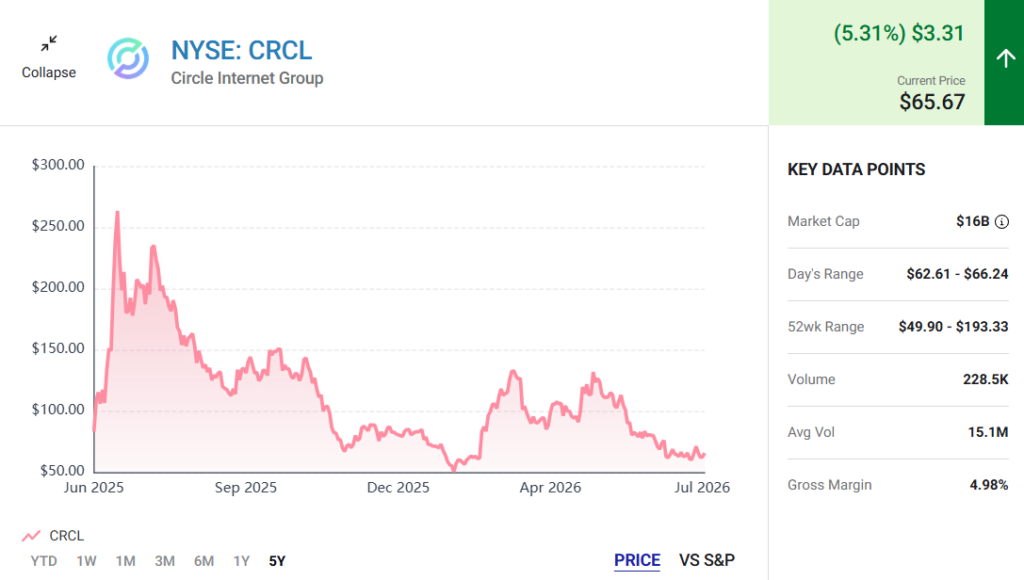
A New Rival Is Entering the Market
Circle’s primary challenge is not the potential expansion of the stablecoin market, but the increasing competition within the industry. A new digital currency, Open USD, backed by a coalition of more than 140 financial, technology, and retail companies, is expected to launch later this year.
The introduction of this new competitor could create additional pressure on Circle’s USD Coin (USDC) by challenging its market share and adoption. As more major players enter the stablecoin space, Circle will need to strengthen its ecosystem, maintain user trust, and demonstrate clear advantages to preserve its position in a rapidly evolving market.
Why This Competitor Looks Different
The new competitor introduces a different approach to the stablecoin market compared with Circle’s USDC model. While USDC is managed directly by Circle, the new stablecoin will be governed by an independent coalition of financial, technology, and retail companies, potentially creating a broader ecosystem and shared decision-making structure.
One of its most notable supporters is Coinbase, a founding partner of USDC, which has played an important role in Circle’s growth through its reserve-sharing arrangement. This agreement is scheduled for automatic renewal on August 18, making Coinbase’s involvement particularly significant.
Another potential advantage for the new entrant is its zero-cost minting and redemption structure, which could put pressure on Circle’s existing revenue model. By reducing fees for users and businesses, the competitor may attract adoption and challenge USDC’s market position, forcing Circle to adapt as competition in the stablecoin sector intensifies.
The Financial Picture Looks Reasonable on Paper
Circle’s long-term growth outlook remains positive based on current analyst expectations, with projections pointing to significant expansion in both revenue and profitability. Analysts estimate that Circle’s revenue could nearly double from $2.75 billion in 2025 to $5.25 billion by 2028, reflecting continued growth in the stablecoin market and increasing adoption of digital payment solutions.
At the same time, adjusted EBITDA is expected to more than double from $582 million to $1.31 billion over the same period, indicating potential improvements in operational scale and earnings power. These forecasts suggest that Circle has the opportunity to benefit from the broader growth of the stablecoin industry.
However, the company’s ability to achieve these targets will depend on maintaining market share, managing competition, and successfully converting industry expansion into sustainable financial performance.
A Valuation That Comes With Real Volatility
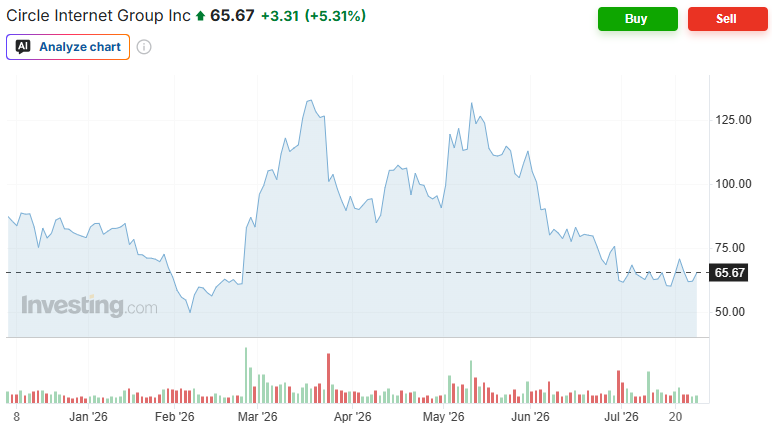
Circle’s current valuation reflects both potential opportunity and ongoing market concerns. With an enterprise value of $13.23 billion, the company trades at approximately 21 times this year’s adjusted EBITDA, a valuation that may appear reasonable depending on future growth expectations.
However, Circle’s stock has fallen nearly 70% over the past 12 months, highlighting investor caution. The decline has been driven by concerns surrounding uncertain macroeconomic conditions, regulatory challenges, and increasing competition within the stablecoin market.
While Circle remains positioned in a growing industry, investors continue to evaluate whether its long-term growth potential can justify current expectations. .
Why Market Growth Alone Isn’t Enough
The stablecoin market is expected to experience significant growth as businesses, governments, and investors increasingly adopt digital alternatives to traditional currencies.
However, Circle’s early leadership position does not guarantee long-term market dominance, as new competitors with different business models and technologies continue to enter the sector.
For investors, the key consideration is whether Circle can expand its own market share alongside the overall growth of the stablecoin industry. The difference between benefiting from a rapidly expanding market and maintaining a leading position within that market will be a crucial factor in determining Circle’s future performance and valuation.