
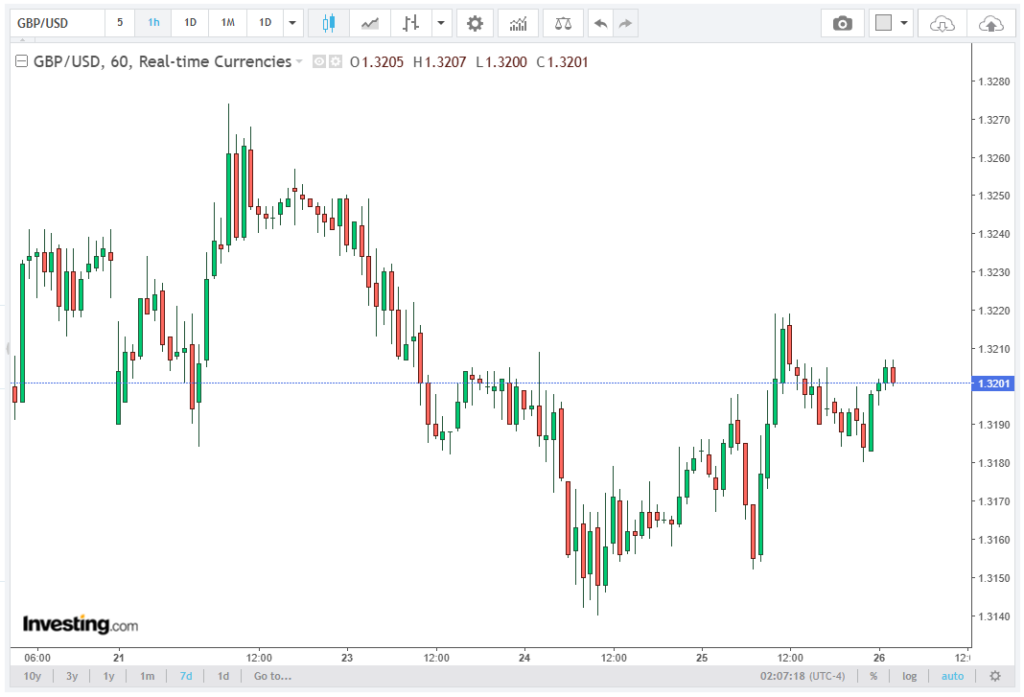
The British Pound (GBP) advanced against the US Dollar (USD) during Friday’s early European session, with the GBP/USD pair climbing toward the 1.3200 mark.
The currency pair extended modest gains as investors reacted to evolving political developments in the United Kingdom while also reassessing the outlook for US monetary policy following the latest Personal Consumption Expenditures (PCE) inflation data.
The combination of renewed confidence in sterling and easing expectations for additional Federal Reserve interest rate hikes has provided support for the pair. The brokers at Fonndure take an in-depth look at this topic throughout this article.
Political Transition Supports Sterling
One of the primary drivers behind the British Pound’s recent strength is growing market attention on the expected appointment of a new UK finance minister under a potential Andy Burnham-led administration. Investors believe the selection could influence the government’s future fiscal policy, economic strategy, and relationship with financial markets.
Current Finance Minister Rachel Reeves is widely expected to be replaced if Andy Burnham succeeds Keir Starmer as Prime Minister. As speculation intensifies over Burnham’s leadership team, traders are positioning themselves ahead of the official announcement, viewing the political transition as a potential catalyst for sterling.
According to Nick Rees, Head of Macro Analysis at Monex Europe, the path toward a Burnham leadership appears to be becoming clearer. He noted that the diminishing political obstacles surrounding Burnham’s rise are offering marginal support to the British currency.
US PCE Inflation Data Shapes Fed Expectations
Across the Atlantic, the latest US inflation figures have significantly influenced market sentiment toward the US Dollar, reinforcing expectations that the Federal Reserve may keep interest rates higher for longer.
Data released by the US Bureau of Economic Analysis (BEA) showed that the headline Personal Consumption Expenditures (PCE) Price Index increased 4.1% year-over-year in May, accelerating from 3.3% in April.
Although inflation remained substantially above the Federal Reserve’s 2% target, the reading matched market expectations and therefore did not trigger renewed concerns about more aggressive monetary tightening.
Meanwhile, the Core PCE Price Index, which excludes the more volatile food and energy categories and serves as the Federal Reserve’s preferred inflation gauge, rose 3.4% annually, compared with 3.3% previously. The figure represented the strongest annual reading since October 2023 but was also fully in line with economists’ forecasts.
Although inflation remained substantially above the Federal Reserve’s 2% target, the reading matched market expectations and therefore did not trigger renewed concerns about more aggressive monetary tightening.
Falling Oil Prices Ease Inflation Concerns
Another important factor influencing market expectations is the recent decline in global oil prices. Crude prices retreated to pre-war levels following news that the United States and Iran reached a preliminary peace agreement.
Lower energy prices could reduce inflationary pressures in the coming months by decreasing transportation and production costs across various sectors. Many economists now believe inflation may have either peaked or is approaching its highest point in the current cycle.
If energy prices continue to remain subdued, the Federal Reserve could gain additional flexibility in its policy decisions, reducing the likelihood of further aggressive tightening, while also easing inflationary pressures more broadly.
This outlook has weakened demand for the US Dollar, allowing currencies such as the British Pound to recover ground.
Rate Hike Expectations Continue to Decline
Interest rate expectations shifted noticeably following the latest inflation release.
According to the CME FedWatch Tool, financial markets are now pricing in approximately a 28.9% probability of at least a 25-basis-point rate hike at the Federal Reserve’s July meeting, down from 34.2% in the previous session.
Expectations for the September meeting also moderated, with the implied probability of another rate increase falling to 60.1%, compared with 65.7% earlier in the week.
The decline in rate hike expectations has contributed to softer US Treasury yields and reduced support for the greenback, encouraging investors to rotate toward higher-yielding or politically supported currencies, including sterling.
GBP/USD Technical Outlook
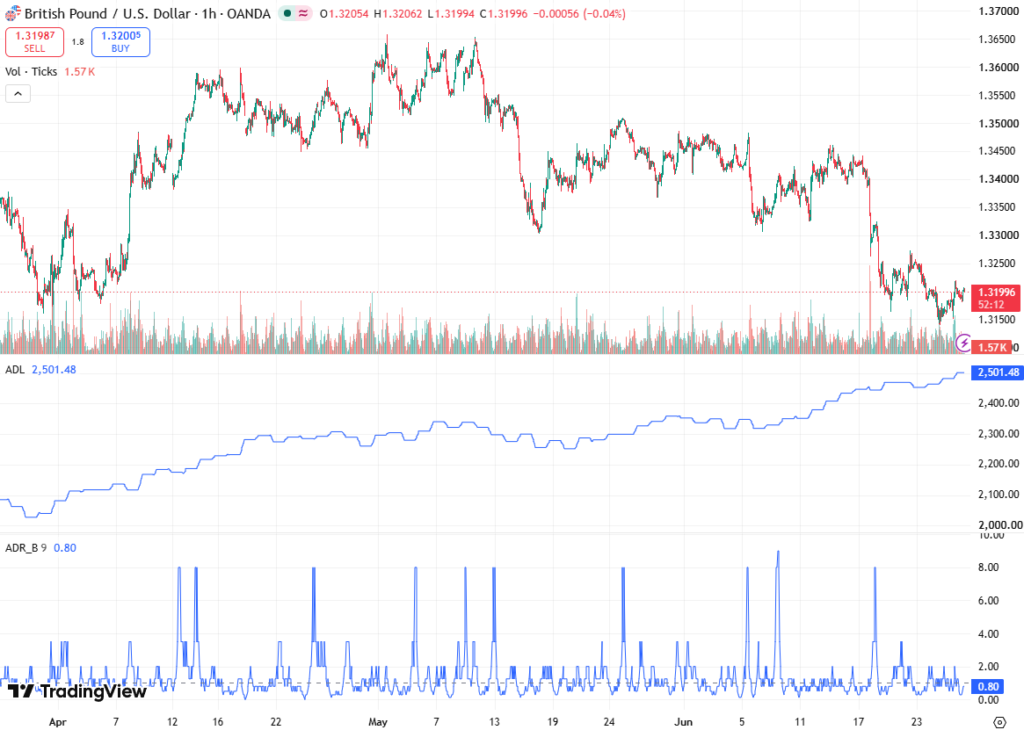
From a technical perspective, the GBP/USD pair continues to trade near the psychologically significant 1.3200 level. Sustained trading above this threshold could reinforce bullish momentum, encouraging buyers to target higher resistance zones in subsequent sessions.
However, upside progress may remain limited until markets receive greater clarity regarding both the UK political landscape and the Federal Reserve’s policy trajectory. Any unexpected developments surrounding Burnham’s cabinet appointments or stronger-than-expected US economic indicators could quickly alter investor sentiment.
For now, the combination of political optimism in the United Kingdom and softening expectations for additional US rate hikes continues to underpin sterling, leaving the GBP/USD pair well-positioned heading into the next round of economic and political catalysts.