
Brent crude fell more than 4% on Monday to around $83.60 per barrel after renewed diplomatic efforts reduced concern about further disruption to Middle East oil exports. WTI also declined as traders reconsidered the geopolitical premium built into prices during July.
In this article, experts at IFCM Invest examine whether Brent can stabilize above $82 or whether improving shipping conditions could push the market back toward $80.
Diplomacy Removes Part of the Risk Premium
Oil prices had risen sharply as conflict threatened production and tanker movements through the Strait of Hormuz.
That premium began unwinding after further attacks were paused and the possibility of talks raised hopes that regional oil traffic may normalize.
The selloff shows how much of Brent’s recent price was linked to disruption risk rather than consumption growth.
If negotiations progress and tanker traffic improves, traders may continue removing that premium. A breakdown in talks could quickly reverse the decline.
Brent Falls Back From Recent Highs
Brent had traded near $90 during the previous week as markets reacted to restricted shipping and fears of a prolonged confrontation.
Monday’s move took the contract toward $83.57, nearly 5% lower on the session.
A decline of this size suggests that positions were heavily concentrated on continued supply disruption.
Once the outlook changed, profit-taking and the closing of bullish positions accelerated the move lower.
The Chandelier Exit Signals a Trend Reversal
The first chart uses candlesticks alongside a 22-period Chandelier Exit. The indicator combines recent highs with average volatility and helps show when an established trend is weakening.
Brent has dropped beneath the Chandelier Exit, indicating that the short-term bullish structure has broken down.
Remaining below the indicator would keep $82 and $80 in focus. A recovery above it would suggest buyers are returning.
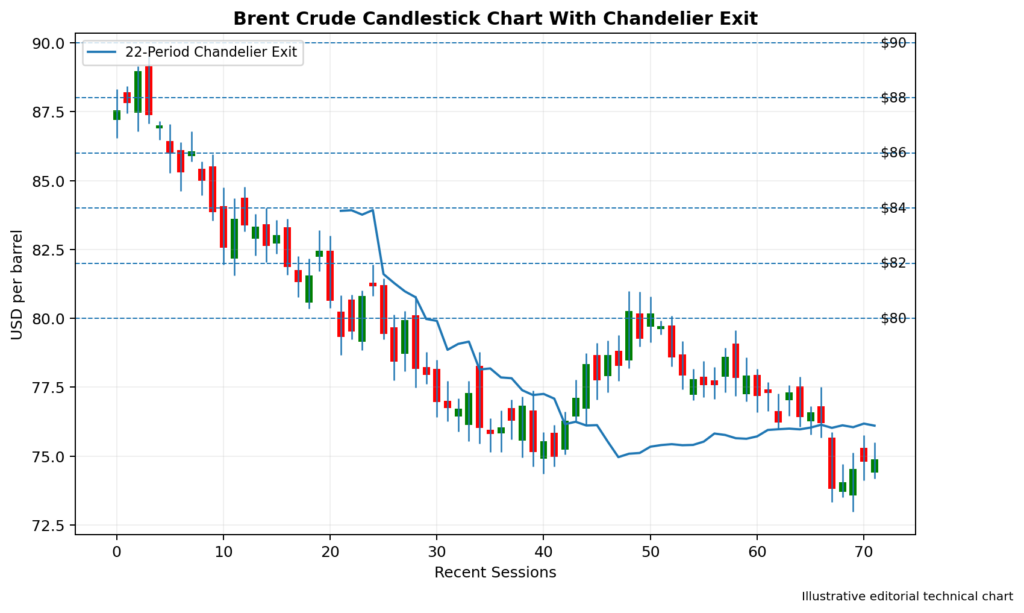
Image 1: Brent Crude Candlestick Chart With Chandelier Exit
Resistance Begins Around $86
The first important resistance area is positioned near $86 per barrel. A recovery above this level could expose $88, followed by $90.
A daily close above $88 would show that geopolitical concern is returning or that the selloff has moved too far.
Further gains would probably require renewed shipping disruption or evidence that negotiations are failing.
Without those catalysts, rebounds toward $86 may attract sellers.
Support Appears Near $82
Initial support sits around $82. Holding above this level would allow Brent to stabilize after the sharp decline.
A break below $82 could expose $80, followed by $78.
A sustained move beneath $80 would confirm that the July rally has been largely reversed.
The $80 region may still attract buyers because it carries psychological importance and sits near an earlier consolidation area.
On-Balance Volume Shows Distribution
The second chart uses On-Balance Volume, or OBV. The indicator adds estimated volume during rising sessions and subtracts it during declines.
OBV has turned lower alongside price, confirming that the move is supported by heavier distribution rather than a minor pullback.
A continued decline would reinforce the case for a move toward $82 or $80.
A recovery in OBV before price rises could indicate that buyers are beginning to return.
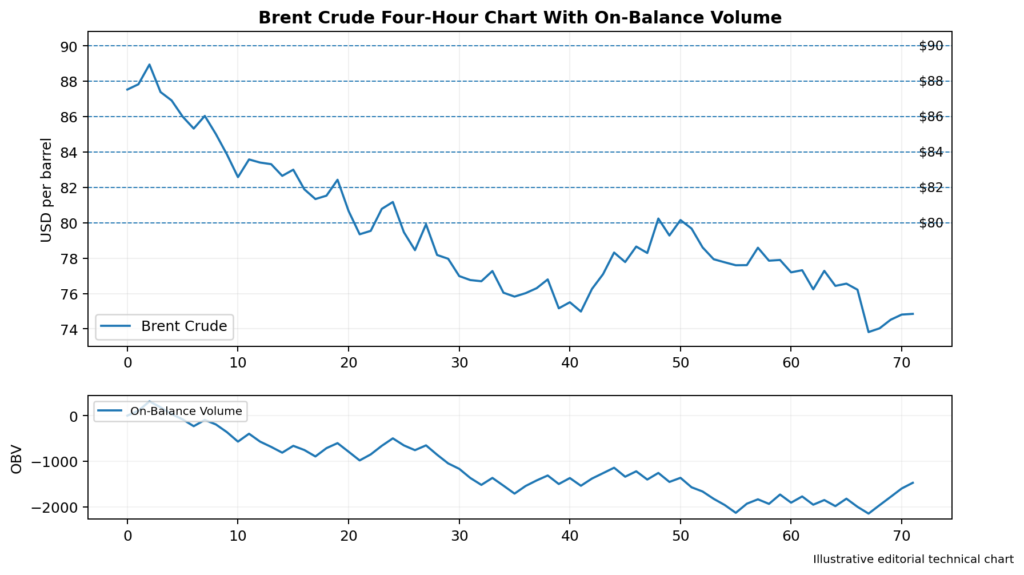
Image 2: Brent Crude Four-Hour Chart With On-Balance Volume
Lower Oil Prices Ease Inflation Pressure
Falling energy costs helped reduce concern that inflation would remain elevated, while bond yields eased from recent highs.
Cheaper oil may reduce pressure on central banks to keep interest rates restrictive for longer.
That can support equities and bonds, although it is less favorable for energy producers and oil-exporting economies.
OPEC+ Supply Adds to the Pressure
The prospect of higher OPEC+ output has also contributed to the weaker tone.
Reports indicated that the producer group plans to increase output quotas from September, adding supply as geopolitical risk may be easing.
Additional production would make it harder for Brent to recover unless demand improves or regional disruption returns.
Actual output may still fall below targets, but expectations of more barrels can influence futures prices.
Shipping Conditions Remain Crucial
The market’s next move may depend on whether tankers can pass through the Strait of Hormuz without further disruption.
A sustained improvement would allow more crude and refined products to reach buyers, reducing freight and insurance costs.
Oil can remain physically available but expensive when transport routes become unreliable.
That is why shipping data may matter as much as production figures during the coming sessions.
Demand Still Looks Uneven
Lower prices may eventually support consumption, but global demand growth remains uncertain.
High borrowing costs, slower industrial activity, and uneven manufacturing conditions continue to limit confidence.
Without a clear improvement in consumption, Brent may struggle to return to $90 once the geopolitical premium fades.
Trading Implications
Brent holds a cautious short-term outlook while trading below $86 and beneath its Chandelier Exit.
A confirmed recovery above $86 could expose $88 and $90.
A move below $82 would weaken the structure further, while a sustained decline beneath $80 could shift attention toward $78.
Diplomatic progress, improved tanker traffic, and higher OPEC+ output would favor lower prices. Renewed disruption would support a recovery.
Conclusion
Brent crude has fallen toward $84 as renewed diplomacy reduces fears of prolonged supply disruption.
Resistance is positioned near $86, $88, and $90. Support can be found around $82, $80, and $78.
The technical picture has weakened considerably, and Brent may need to reclaim $86 before the recent decline begins to look temporary.