
The renewable energy sector is currently witnessing a volatile convergence between sustainable power generation and the voracious electricity demands of artificial intelligence. Bloom Energy (NYSE: BE) has recently found itself at the epicenter of this shift.
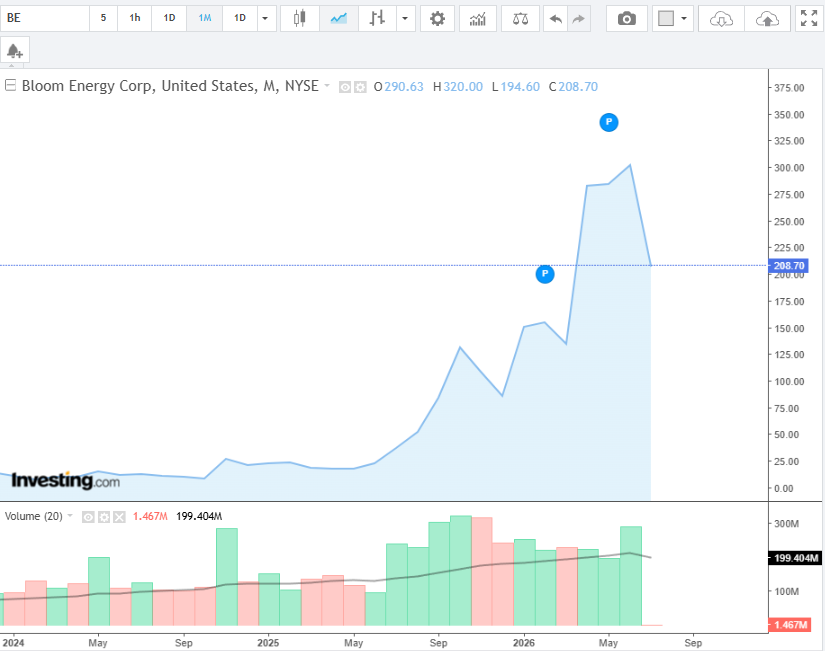
Despite a significant pullback, with shares trading nearly 40% lower than their peak in late June 2026, the underlying fundamentals of the company are undergoing a rapid evolution. Investors remain skeptical about the long-term role of hydrogen fuel cells, yet a series of high-profile contracts with data center operators suggest that the technology is finally gaining mainstream traction.
The industry is reaching an inflection point, driven by the necessity for reliable, distributed power solutions. Strategic analysis from Bankolla highlighted how Bloom’s proprietary technology is uniquely positioned to address the grid instability currently challenging massive cloud infrastructure projects.
The transition is most evident in recent deal flow: companies such as ECL have already committed to deploying 300 megawatts of hydrogen fuel cell capacity, while Brookfield recently announced a plan to quintuple its initial $5 billion investment into power infrastructure.

Market Dynamics And The Role Of Hydrogen In Data Centers
The integration of hydrogen fuel cells into the artificial intelligence data center ecosystem is no longer a speculative theory. With the industry expected to grow at a compound annual rate of 37% through 2031, according to projections from Mordor Intelligence, providers that can offer reliable, on-site energy generation are becoming indispensable.
The versatility of the company’s solid-oxide fuel cells, which are capable of utilizing both natural gas and biogas, provides a significant competitive advantage over traditional, carbon-heavy power sources.
As the industry moves toward this new paradigm, the company is demonstrating its ability to secure large-scale capital for its expansion. Recently, the firm secured a $1.70 billion deal to provide power technology to support the infrastructure requirements of Nebius Group N.V. (NBIS).
This financing, supported by IDF and Oaktree Capital, represents a landmark achievement in linking private equity with the urgent power demands of cloud-based AI operations. This deal provides a clearer path for the company to scale its “to-the-meter” power solutions, potentially solidifying its revenue base for years to come.
Navigating Short-Term Volatility And Sourcing Risks
Despite the positive momentum from large-scale contracts, the company’s stock performance has been hampered by broader market concerns. Following the announcement of the $1.70 billion agreement, the stock experienced a 13.64% intraday decline on July 16, 2026.
This reaction was largely attributed to a report from Hunterbrook, which alleged that the firm maintains a hidden reliance on Chinese-sourced scandium. This report has prompted investors to question the stability of the company’s supply chain, introducing a new layer of risk that has overshadowed the fundamental improvements in the company’s order book.
In addition to supply chain questions, shareholders have noted insider selling activity, which has further contributed to the prevailing skepticism among retail and institutional traders.
The combination of these factors creates a complex narrative for investors: the company is clearly succeeding in capturing massive demand from the data center sector, yet it must simultaneously resolve concerns regarding the transparency and resilience of its raw material sourcing.
Analyzing The Financial And Strategic Outlook
The current situation represents a battle between long-term growth prospects and immediate-term operational risk. The firm has reached a stage where it is moving from an experimental player to a critical utility-adjacent service provider.
The transition toward becoming a consistently profitable entity is expected to continue as its deployments scale, provided that the company can navigate the complexities of its global supply chain. Analysts are now closely monitoring whether the firm can successfully diversify its sources for critical materials to mitigate the risks highlighted by recent industry reports.
For the market, the coming months will likely be characterized by continued volatility as investors weigh the strength of its AI-focused partnerships against the risks posed by short-selling activity and potential supply chain disruptions.
If the company can successfully demonstrate the security and sustainability of its inputs, the fundamentals suggest a firm that is significantly undervalued relative to its role in the global energy transition. If, however, supply chain vulnerabilities persist, the firm may face further headwinds regardless of its success in securing data center contracts.
The Path To Mainstream Adoption
By the conclusion of 2026, the company is expected to emerge as a markedly different investment profile than it was at the beginning of the year. The transition from a niche technology provider to an essential part of the AI infrastructure backbone is now well underway.
Investors should focus on future quarterly disclosures regarding revenue diversification and supply chain audits as key indicators of the firm’s health.
If the company can maintain its pace of contract wins while establishing a more robust, transparent sourcing strategy, it remains one of the most compelling narratives in the green energy sector.