
Bitcoin spent much of Wednesday falling toward a two-week low before receiving a late boost from an unexpected source: a memory-chip earnings report. According to Findtech Group‘s digital assets team, the selloff initially reflected broad risk-off sentiment that spread across nearly every major cryptocurrency, putting pressure on both Bitcoin and the wider digital asset market.
However, sentiment shifted after the closing bell as stronger-than-expected developments from the semiconductor sector helped improve confidence in AI-related growth themes and broader risk assets. The move provided a late lifeline for Bitcoin, helping the cryptocurrency recover from session lows and easing some of the pressure that had weighed on the market throughout the day.
A Rough Ride to $62K
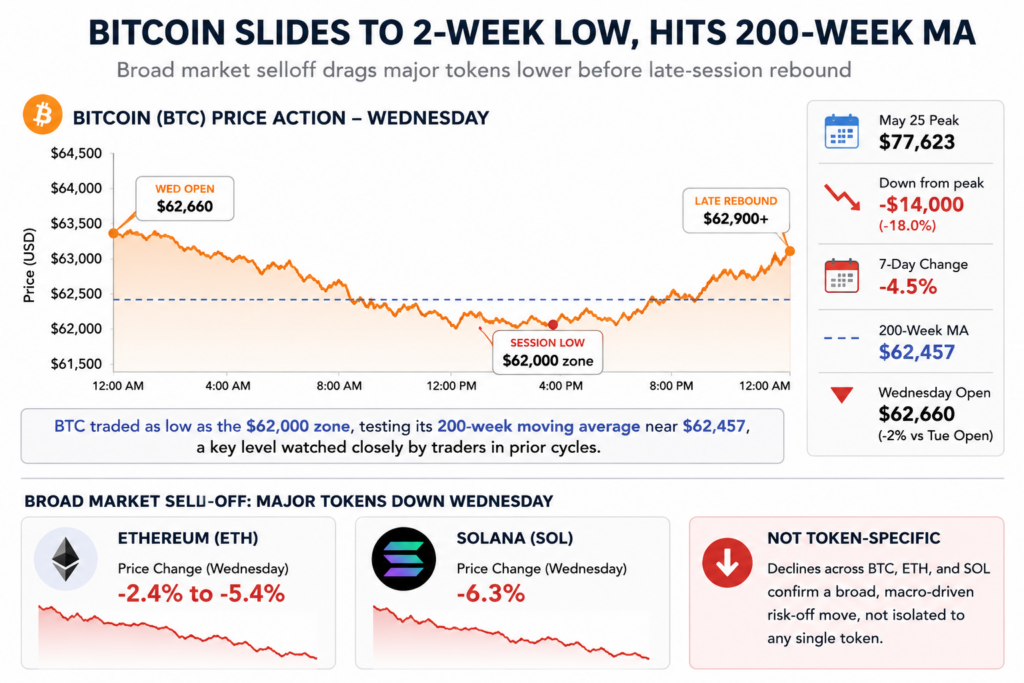
Bitcoin opened Wednesday at $62,660, down 2% from Tuesday’s open, and traded as low as the $62,000 zone during the session, putting it roughly 4.5% lower over the past seven days and about $14,000 below its May 25 peak of $77,623. That decline brought BTC right down to its 200-week moving average near $62,457, a level traders have watched closely as a potential floor in prior cycles.
The damage wasn’t limited to Bitcoin. Ethereum fell between 2.4% and 5.4% on the day, and Solana dropped as much as 6.3%, confirming that this was a broad, macro-driven risk-off move rather than anything specific to one token.
The Chip Selloff That Spilled Into Crypto
The trigger came from outside crypto entirely. A roughly 10% crash in AI-related stocks that started in Seoul spread through global semiconductor names and into broader equities, dragging digital assets down with them. Nvidia briefly slipped below a $5 trillion market cap, and the tech-heavy Nasdaq fell 2.2% the day before.
Funds that piled into chipmakers and Bitcoin together during the past two years of liquidity-driven rallies have increasingly been trading them as a single basket, which means crypto now sells off in sympathy with semiconductors even when nothing crypto-specific has changed.
Leverage, Liquidations, and a Fear Gauge in the Teens
Forced selling added to the pressure, though it had already started cooling by Wednesday. Liquidations across crypto derivatives fell to about $346 million on the day, down from over $575 million the previous session, with roughly $278 million of that tied to long positions getting wiped out.
Trading volume actually picked up to around $76 billion, up from $68 billion, as the Fear and Greed Index dropped to 17 out of 100, deep into extreme fear territory.
Not everyone was selling. Michael Saylor’s Strategy resumed buying Bitcoin during the dip, a reminder that institutional appetite hasn’t fully disappeared even as sentiment soured.
The Fed Variable Nobody Wants to See
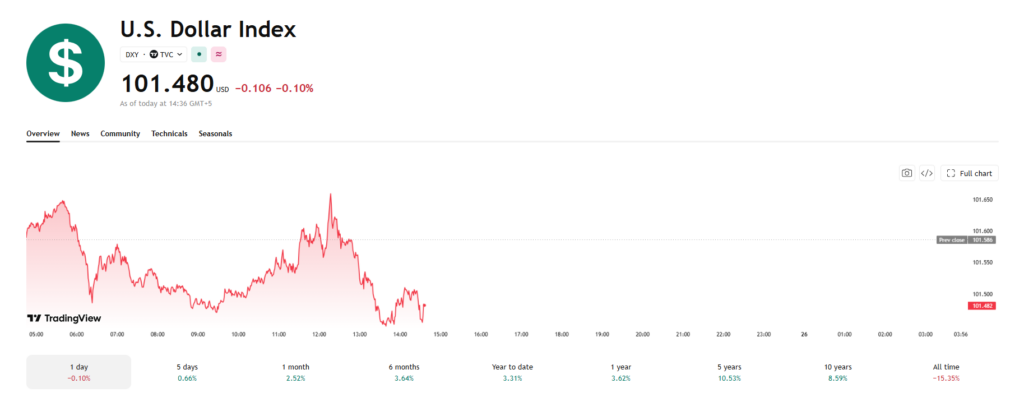
Adding to the pressure, the US Dollar Index climbed to 101.15, its highest level in more than a year, as rate-hike expectations crept back into the picture. Bank of America now expects three 25 basis point hikes in 2026, in September, October, and December, which would push rates to 4.50%, with no cuts expected before 2028.
Higher rates typically squeeze liquidity and make risk assets like crypto less attractive, which helps explain why both BTC and ETH reacted negatively as that narrative gained traction.
Micron’s Earnings Beat Throws Crypto a Lifeline
The mood shifted late Wednesday when Micron reported fiscal third-quarter results well above expectations. Adjusted earnings came in at $25.11 per share versus estimates of $20.71, on revenue of $41.5 billion against forecasts of $35.8 billion, with fourth-quarter revenue guidance landing at $50 billion, far ahead of the $43.4 billion consensus.
The beat helped settle nerves across risk assets. Bitcoin bounced about 3% off its session lows to near $61,000, Ethereum reclaimed the $1,600 level, and Solana pared its losses to around 2%. Crypto-linked equities joined the recovery too, with Coinbase, Circle, and Galaxy all rising 2% to 4% in after-hours trading.
What’s Next for Bitcoin
While the recent rebound offered some relief, it does not fully resolve the broader challenge facing the cryptocurrency market. Bitcoin is increasingly trading in line with AI and semiconductor-related risk assets, behaving more like a leveraged extension of the technology sector than a completely independent asset class.
With the Federal Reserve maintaining a more hawkish policy stance and Bitcoin’s 200-week moving average facing a significant test, the next major move may depend less on crypto-specific developments and more on broader market sentiment.
If confidence in technology stocks, AI investments, and risk assets continues to improve, Bitcoin could find additional support. However, renewed weakness across those sectors may place fresh pressure on digital assets as investors reassess risk exposure.