
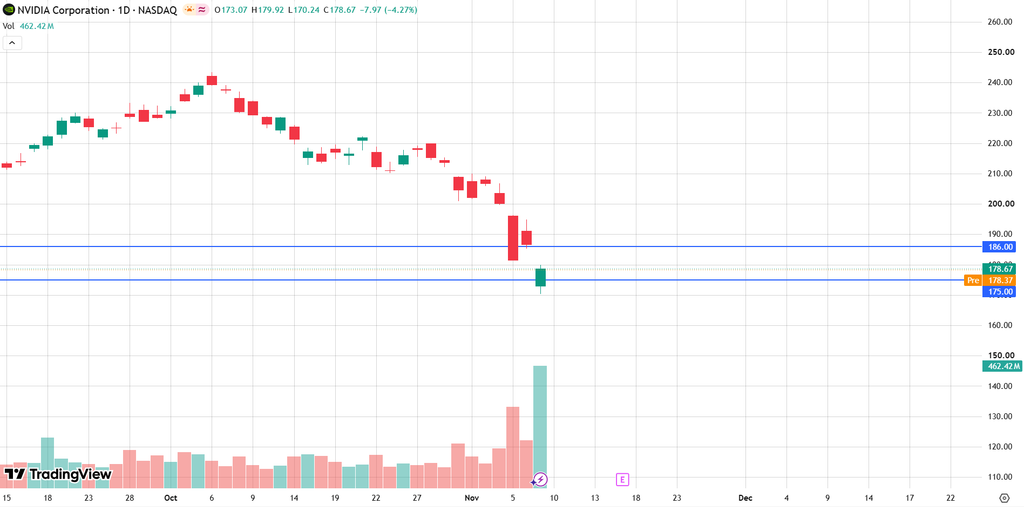
Nvidia shares dropped sharply on Monday, even as the rest of the market staged a strong rebound. The analysts at Risance examine the move, which took the stock to $178.67, and explain why a governance story, and not a product or earnings story, is suddenly the main driver for one of the world’s most valuable companies.
A Falling Stock On A Rising Day
The decline came on the first trading session after the chipmaker’s board announced an independent review of its founder and chief executive. Nvidia closed more than 4% lower, a notable drop for a company of this size.
The timing makes the move more striking. US stocks rallied on Monday after last Thursday’s sell-off. The Dow added about 2.1%, the S&P 500 about 2.3% and the Nasdaq about 2.7%. Nvidia moved against that tide, which shows that the pressure came from company-specific news rather than from general market conditions.
What The Board Announced
In a Sunday statement, the board said it had ordered an inquiry after press reports that foreign intelligence services had targeted its chief executive. The work will be led by directors with no ties to management, who will receive help from external lawyers.
The company also said that the executive supports the review and will cooperate with it. Details of the allegations remain contested and unproven, and the review is still at an early stage.
Why Leadership Risk Matters To Investors
Markets dislike uncertainty, and few things create it faster than questions about a company’s top leader. Nvidia’s rise in recent years has been closely linked with its founder, who has acted as the public face of the AI boom. When the top executive becomes the subject of a review, investors start asking about continuity and about how customers, partners and regulators might react.
None of this means the business itself has weakened. Demand for its processors, which power much of the artificial intelligence boom, has kept revenue growing for many quarters in a row, despite complaints about data center projects and worries that AI valuations are inflated. Still, the stock was priced for steady execution, and any sign of distraction at the top can lead to quick selling.
A Giant With A Large Market Value
Before the drop, Nvidia’s market capitalization stood above $4 trillion, which made it the second most valuable company in the world, behind Apple. A stock of that size attracts huge flows from funds, so even a small change in sentiment can move billions of dollars in a single session.
That also explains why the reaction was so visible. When large investors reduce exposure to a position this big, the effect is magnified, especially during a period when attention on AI valuations is already high.
Support And Resistance Levels
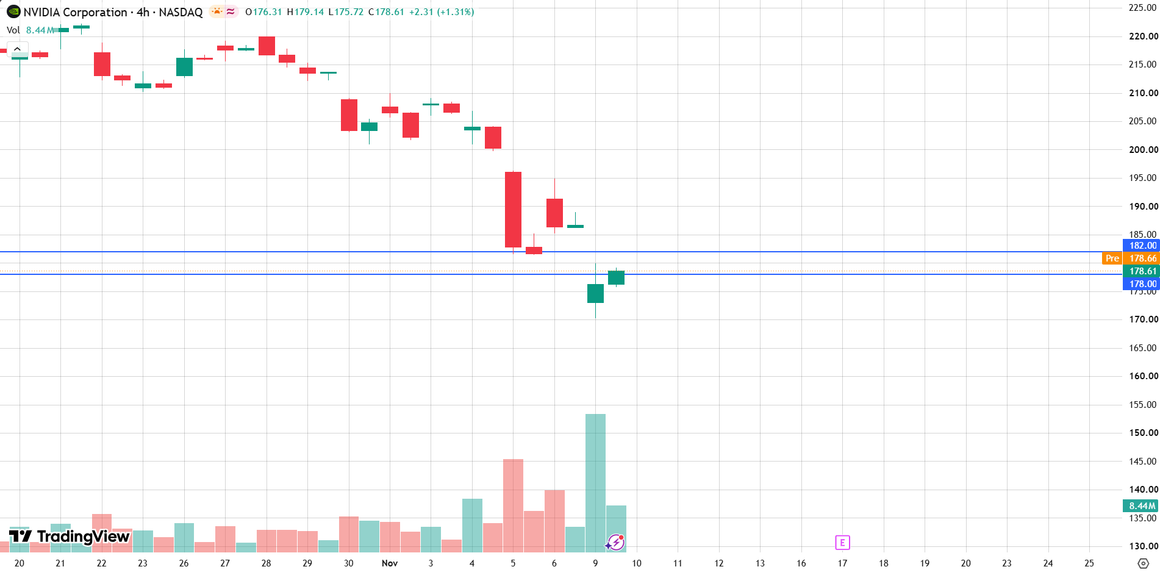
The stock now trades around $178, below the closing price of the previous session, which was near $186. That earlier close is the first major resistance, since buyers would need to recover the entire decline to show that the news has been absorbed. The round level of $182 is an earlier hurdle on the way.
On the downside, $175 is the nearest support, followed by $170. A decisive break below these levels would indicate that selling is spreading beyond the initial reaction.
What Traders Can Do
Headline risk is high, so caution makes sense. Traders who want to buy the dip may wait for a stabilization above $178, with small positions and a stop-loss below $175. Those who prefer to avoid event risk may stay aside until the board or the company gives more information about the review.
A move above $182 with strong volume would suggest that buyers are returning, while a close under $175 would favor sellers. Updates from the company will probably matter more than technical signals in the coming days.
Because the review could take time, volatility may remain elevated, and sudden moves in either direction are possible whenever new information about the company or its leadership reaches the market.
Conclusion
Nvidia fell while the market rose, a sign that investors are reacting to uncertainty about its leadership and not to a change in demand for its chips. The $175 support and the $186 earlier close are the levels to follow.
Traders following Stocks strategies should watch company announcements, the progress of the review and the reaction around these levels, since they will probably shape the next move in the shares.