
West Texas Intermediate crude oil slipped below the $100 mark during the second week of November 2026, with the front-month contract settling near $97.65 on Brent benchmark terms after shedding roughly $2.66 in a single session.
The decline followed a month in which the commodity retreated from October highs above $107, reflecting a market caught between persistent geopolitical risk premiums and growing concerns over the demand outlook.
Analysts from Fonndure examine the technical structure, the supply-side variables shaping price discovery, and the catalysts that could push crude decisively toward the next directional move.
The price action over recent weeks has underscored the difficulty of establishing conviction trades in an environment where diplomatic headlines can shift sentiment within hours.
Technical Landscape: Retreat From Triple Digits
WTI’s pullback from the October peak near $107 to the current zone around $97 to $98 has formed a descending channel on the daily chart.
The 200-day moving average near $88 remains well below current prices and has acted as the floor during every correction in 2026. A revisit of that level would require a significant deterioration in the geopolitical premium that has supported crude since spring.
The 14-day RSI reads approximately 42, placing the commodity in neutral territory with a mild bearish lean.
Crucially, the RSI has not yet reached the oversold threshold of 30 that preceded the April and July bounces, implying that further downside remains possible before technical buyers are likely to step in with conviction.
Supply Dynamics: OPEC+ Holds Steady While Inventories Send Mixed Signals
Seven OPEC+ participants agreed on November 1 to retain September production requirements for December, effectively pausing the group’s planned output increases.
The decision reflects a cautious approach to managing a market that is showing early signs of surplus on the demand side while remaining vulnerable to supply disruptions on the geopolitical front.
US commercial crude inventories fell by 900,000 barrels in the latest reporting week, tightening the domestic supply picture modestly.
However, the broader balance was mixed: gasoline stocks rose to 209.2 million barrels from 205.3 million, while distillate inventories declined to 102.8 million barrels from 104.3 million.
Ukrainian strikes on Russian refineries and export terminals decreased Russia’s fuel shipments to 3.45 million barrels per day in the four weeks to November 9, down 130,000 barrels from the prior week and the lowest level in two months.
Sustained export weakness from Russia would connect WTI more closely to overseas demand signals and could provide a floor under prices even as OPEC+ manages its own output trajectory.
US production data introduces a counterbalance. Domestic crude output held near 13.5 million barrels per day through October, within striking distance of the record set in September 2026.
Rig count stability suggests that American producers are positioned to fill any supply gap that OPEC+ restraint creates, capping the upside for WTI absent a genuine disruption.
Geopolitical Premium: The Middle East Factor
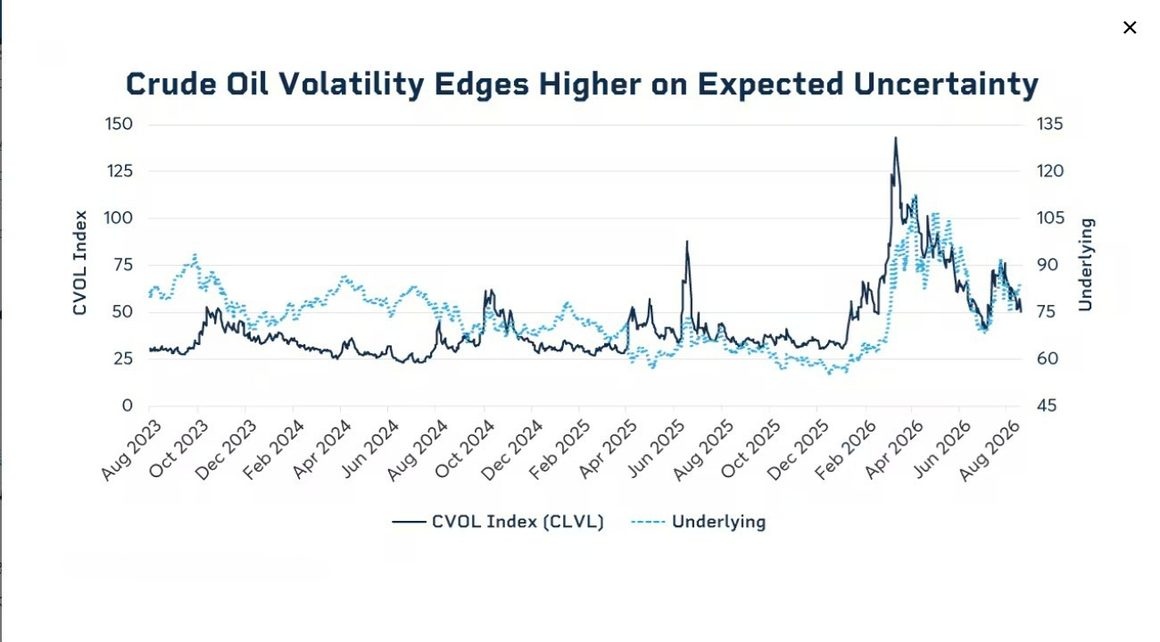
The oil market has traded with a persistent geopolitical premium throughout 2026, driven primarily by the conflict in the Middle East and its implications for energy transit routes.
The Strait of Hormuz, through which roughly 20% of global oil supply flows daily, has been the focal point of risk pricing since tensions escalated earlier in the year. Any disruption to passage through the strait would immediately tighten global supply by millions of barrels per day.
The November 9 decline was partly attributed to renewed hopes for diplomatic progress, though market participants remain sceptical that a durable resolution is imminent given the complexity of the negotiations involved.
The speculative price range for WTI through November is estimated at $89 to $111, reflecting the wide band of uncertainty.
The lower bound assumes a meaningful de-escalation of Middle East tensions combined with OPEC+ supply increases, while the upper bound accounts for a scenario in which transit disruptions intensify or inventory draws accelerate beyond current projections.
For the week ahead, the direction of crude will likely be determined by the interplay between diplomatic developments and the next round of US inventory data.
A second consecutive crude draw would reinforce the tightening narrative, while a build could accelerate the retreat toward the $93 support level.
China’s import appetite adds another variable: the world’s largest crude importer brought in roughly 11.1 million barrels per day in October, a modest rebound from the 10.5 million recorded in August but still below the record pace set in 2023.
Traders positioning for the next move should monitor both the physical market data and the headlines from the Middle East with equal attention.