
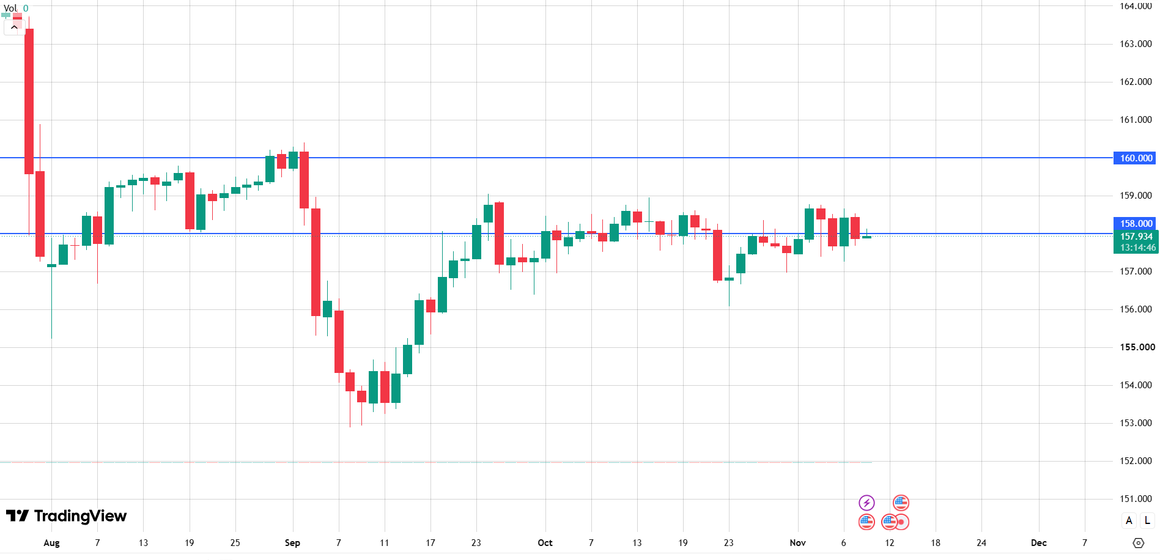
The Japanese yen has opened the week on a stronger footing, helped by a US dollar that is losing some of the momentum it gained at the end of last week. The market team at Fonndure reviews the new picture for USD/JPY, which is trading near 157.90 and now faces a busy calendar of US inflation data.
Yen Gains As The Dollar Slips
USD/JPY fell about 0.4% to the area of 157.91 as broad weakness in the dollar gave the yen some room. The move is modest, but it matters because it follows a sharp jump in the US currency after the employment report on Friday. Part of that rally has already been erased.
The Dollar Index, which reached 102.36 after the jobs data, has slipped back to about 101.80. That is a clear sign that traders are no longer in a hurry to buy the dollar at higher prices.
Cheaper Oil Eases Pressure On Yields
The main reason for the retreat is energy. Oil fell more than 3%, with WTI crude near $86 per barrel, after Washington signaled that new military strikes on Iran look less likely. Lower crude prices reduce the fear of a fresh wave of inflation in the United States.
Bond markets reacted at once. The yield on the 10-year US Treasury note slipped to 4.83%, close to a two-month low. For USD/JPY this matters a lot, because the pair tends to follow the gap between US and Japanese yields. When US yields drop, the dollar loses some of its appeal against the yen.
Strong Jobs Data Keeps The Fed In Focus
The dollar’s pullback does not erase a simple fact: American hiring is still healthy. October brought 165,000 new jobs, roughly two and a half times what economists had penciled in, and joblessness slipped a notch to 4.1%.
Numbers like these make it easier for the US central bank to justify another increase in borrowing costs. Futures markets now imply odds of about four in five that it adds a quarter point in December. Higher rates support the dollar, so the pair is being pulled by two opposing forces: cheaper oil on one side and a sturdy economy on the other.
US Inflation Is The Next Test
The consumer price report is due on Tuesday, and producer prices follow later in the week. A reading hotter than expected would support the hike scenario and could lift the dollar again.
Bank Of Japan Leans Toward Tightening
Japan is changing too. At its last meeting the central bank left its benchmark rate at 1.25%, yet it made clear that more tightening is on the table. At least one policymaker wanted to go further right away, and the leadership admitted that price growth could end up running hotter than planned.
Intervention Risk Remains Alive
Traders have not forgotten that Tokyo is ready to step in. In late July the government sold a huge amount of foreign currency to support the yen, roughly ¥8 trillion in one day and the biggest such operation ever recorded. Memories of that show of force keep dollar buyers nervous whenever the pair climbs quickly.
Support And Resistance Levels
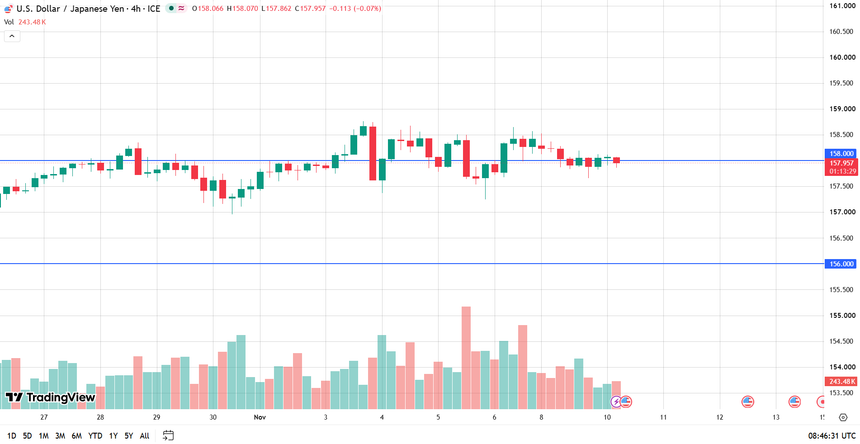
The market is moving near the round level of 158, which acts as the first resistance. A move above it would put 160 in sight, a psychological barrier where the risk of official action tends to rise.
On the downside, 156 is the first area to watch. A break lower would suggest that the dollar’s weakness has more room to run and that yen buyers are gaining control.
What Traders Can Do
With US inflation data due, patience is a reasonable approach. Some traders wait for the release before opening positions, while others reduce their size and place a stop-loss in advance.
A move above 158 after a hot inflation figure would favor buyers, while a drop under 156 after a soft figure would favor sellers.
Conclusion
USD/JPY is caught between a strong US economy that supports the dollar and falling oil and yields that weigh on it. The 156 to 158 area is the zone to follow, and the next inflation figures will probably decide which side takes control.
Traders following Forex strategies should watch US inflation, Treasury yields and any signal from Japan, since these factors are likely to guide the next move in the pair.