
Quantum computing hasn’t yet achieved the same commercial success as artificial intelligence, but it carries the potential to reshape many industries by solving problems traditional computers simply can’t handle.
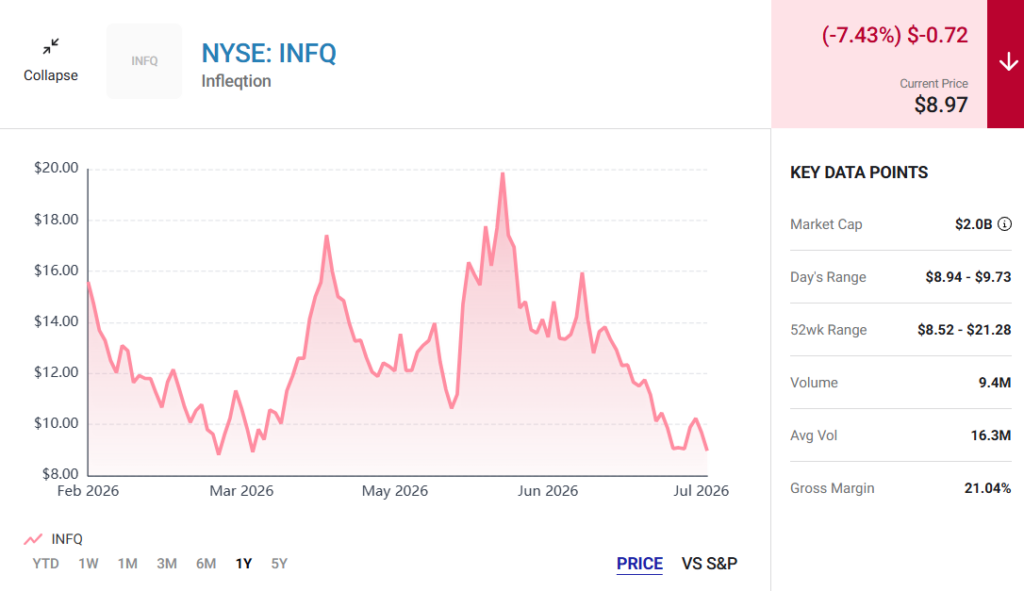
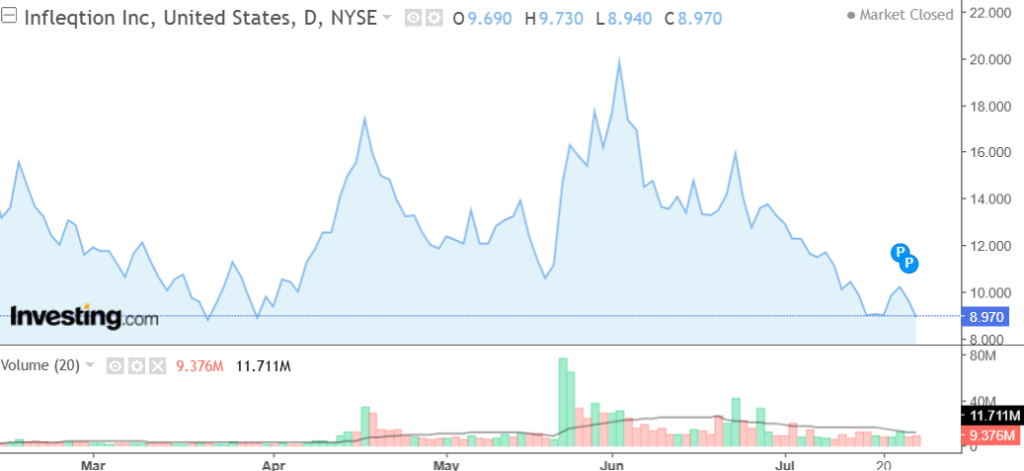
Brokers from Fonndure dive into this topic, noting that while well-known names like IonQ and Rigetti Computing have been extremely volatile, sometimes doubling or dropping 30% within a single month, Infleqtion offers a different profile worth considering, especially near its 52-week low.
That volatility gap alone makes Infleqtion an interesting name for investors seeking quantum exposure without quite as much whiplash.
A Direct Partnership With Nvidia
One of Infleqtion’s most significant strategic advantages is its partnership with Nvidia, a company with a market capitalisation approaching $5 trillion. Given Nvidia’s influence, any collaboration it enters tends to attract substantial market attention, amplifying Infleqtion’s visibility and credibility within both the AI and quantum ecosystems.
This relationship could unlock multi-billion-pound opportunities over time, particularly as Infleqtion works to commercialise technology that bridges quantum computing and existing AI infrastructure.
That positioning is critical. AI and quantum data centres are fundamentally different, and replacing existing AI infrastructure outright would be prohibitively expensive for most organisations.
Infleqtion’s approach acting as a connector between classical AI systems and emerging quantum capabilities offers a more practical path forward. If successful, it could allow customers to incrementally integrate quantum solutions without rebuilding their entire stack, significantly lowering adoption barriers.
Still, this potential remains long-term and execution-dependent, meaning the opportunity is substantial but far from guaranteed.
Bridging Two Very Different Computing Worlds
Infleqtion’s Sqale Quantum Processing Unit (QPU) will connect to Nvidia’s NVQLink, enabling integration with quantum supercomputing. Company leadership has described this approach as building toward a new era of seamless integration between quantum and classical computing resources on a single unified platform.
That positioning gives Infleqtion a meaningful head start in capitalizing on the growing intersection between quantum computing and AI infrastructure more broadly.
A Surprisingly Large Customer Base
Infleqtion’s customer base is already broader than its size might suggest, with the company reporting hundreds of quantum customers across governments, enterprises, and research institutions. This is a meaningful advantage, as these segments typically have substantial budgets, meaning even modest revenue per customer could scale significantly as quantum adoption increases.
That said, the current financial profile reflects the early-stage nature of the business. First-quarter revenue was $9.5 million, up 14% year over year, a modest growth rate that is fairly typical among pure-play quantum companies still developing commercial traction.
At the same time, GAAP operating losses reached $33.6 million, highlighting the heavy investment required to advance the technology. This imbalance between limited near-term revenue and substantial ongoing losses reinforces the investment case as high-risk, high-reward.
While the long-term opportunity remains compelling, execution and scaling will be critical to justify current expectations.
Betting on National Security and Space Applications
Infleqtion is steadily expanding its presence across high-value sectors, including national security, space, and hybrid quantum-AI applications. These are areas where performance advantages can justify significant spending, helping explain why the company expects at least $40 million in full-year 2026 revenue.
Beyond its core offerings, Infleqtion is also developing an atom-based radio-frequency sensing platform, an emerging capability that has already attracted growing customer interest. This is an important signal. It suggests that customers are moving beyond experimentation and beginning to allocate real capital toward quantum-enabled solutions.
That shift from curiosity to early-stage commercial commitment strengthens the company’s long-term narrative. If sustained, it could support broader adoption across multiple industries, particularly where precision sensing and advanced computation provide clear advantages.
Still, these developments remain early in their commercial lifecycle, meaning execution and continued customer conversion will be critical to turning promising demand into durable revenue growth.
The Valuation Remains a Genuine Concern
Infleqtion has several credible long-term catalysts, including its partnership with Nvidia, positioning within the quantum ecosystem, and a growing customer base. These factors provide a strong strategic foundation and suggest the company could play a meaningful role as the industry matures.
However, the valuation remains difficult to ignore. Even if Infleqtion achieves its $40 million full-year revenue target, a $2 billion market capitalisation implies a price-to-sales multiple of roughly 50. That level reflects significant future expectations already priced in, leaving little room for execution missteps.
At the same time, the company is still in a cash-burning phase, investing heavily to scale its technology. This combination of high valuation and ongoing losses increases overall risk.
As a result, the stock is best viewed as a speculative investment, suitable only as a small position within a diversified portfolio a high-risk, high-upside bet backed by strong institutional and industry support, but not yet a stable core holding.